To The Moon!
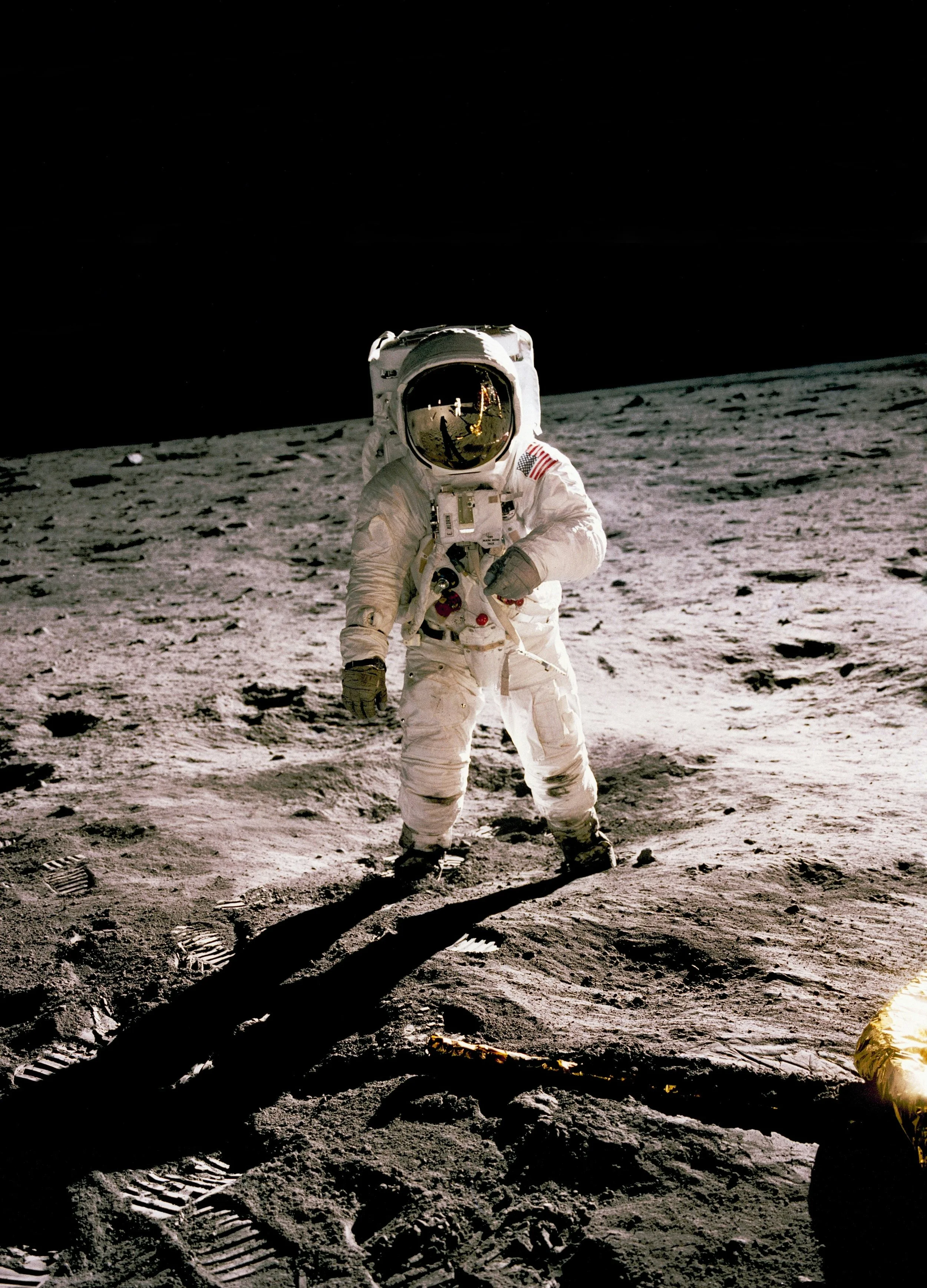
On a warm July night, 50 years, people huddled around their black-and-white televisions, moving the rabbit ear antennae in different directions to watch the first human step down onto the moon.
The step achieved the vision and challenge set forth by U.S. President John F. Kennedy (JFK) in 1961. It wasn’t made by one man, but by thousands. From engineers to human computers to seamstress to physicists. And a janitor.
That’s right, a janitor helped put man on the moon.
In 1962, JFK was visiting the NASA space center. During his visit, he noticed a janitor carrying a broom.
He walked over to him and said “Hi, I’m Jack Kennedy. What are you doing?” The janitor responded, “Well Mr. President, I’m helping put a man on the moon.”
In that one sentence, the man connected his work to the main purpose of all NASA employees. He knew that by providing a clean and safe work environment, he was helping engineers have the physical work space needed to do their calculations.
Together, they were all contributing towards putting a man on the moon.
Each person had their own part to contribute. Recognizing how their individual pieces connected to the vision helped each of them to be engaged and inspired.
There are rumblings that this story is urban legend. Offices would be cleaned at night, not during a presidential visit. Great care would be taken to ensure it was spotless. No one knows the Janitor’s name. Personally, I don’t believe it matters.
Whether this conversation took place or not, janitors helped put man on the moon.
Each person contributes to overall outcomes and achievements. Magic happens when leaders help each person realize how. When you are connected to a broader vision, you feel a sense of belonging, purpose and focus.
People want to work on things they believe in and know their work matters.
They feel connected to the future – giving them stability.
This is why one of the first questions asked when a new leader is named is “What is his/her vision?”
People want to understand if the vision aligns to what they believe is important. They want to know how their work is valued and answer “How do I contribute to this?” Without this, people lose their purpose, resilience, hope and engagement. With the connection and understanding, we are able to focus our energy on the work and strive for greater heights, collaboration and new thinking.
Andrew Carton, a Wharton Management professor recently went through 18,000 pages of NASA archives. What he found JFK did for NASA helps define what great leaders do to help any person understand their purpose in an organization, including janitors putting men on the moon.
Simply focus by stating a clearly desired outcome.
In the early 1960s, NASA had a broad three-part vision and several different objectives. JFK narrowed the vision to one thing: To develop a new frontier in space. He also narrowed the focus to one specific and clear outcome: To land a man safely on the moon and return him safely to earth before the decade was out. He gave everyone something to clearly understand, anchor against and determine how to work towards.
Let people choose how to achieve the outcome.
Each person could define specific objectives and priorities to achieve that outcome. Leaders could check in, coach progress and remove obstacles for employees. Employees are more engaged because they are empowered and choose how to bring their best work forward. The people closest to the work are in the best position to decide how to achieve the outcome, and research shows when you do this, you consistently get higher performance.
Communicate with story.
JFK helped people visualize putting a man safely on the taking a man to the moon and returning him home. He connected the challenge to scaling Everest for the first time, helping relate it to something the average person would understand. He used the storytelling to make the abstract real. He didn’t focus on the data and science that would be required to get to the moon. He focused on the story to draw people in and connect to their emotions. He described that it would be done because it was hard. That it was being done in pursuit of hope, knowledge and peace. He knew the stories would influence the commitment because data doesn’t change behavior – emotions do.
The simplification, focus and storytelling made it easy for each NASA employee to understand the role they played and display commitment. This focus is what helped them stay committed through challenges: JFK’s assassination, Apollo 1 fire and loss of three astronauts and other near disasters. Employees didn’t waiver. They knew how to contribute to achieve the outcome of putting a man on the moon.
Great leaders take the time and care to create this connection to purpose. They help refocus employees when they have lost their way. They help them realize their contributions and the impact if they weren’t there.
“Every character actor, in their own little sphere, is the lead.” Dabbs Greer
Want to learn more about communicating with stories?
Karen Eber is an author, TED and keynote speaker, and communication strategist who works with frontline leaders, senior executives, and C-suite teams at Fortune 500 companies. She partners with teams across sales, marketing, communications, HR, finance, operations, legal, and IT. She works across industries including healthcare, technology, financial services, manufacturing, energy, consumer goods, retail, professional services, education, and nonprofits — helping leaders turn complex information into clear, compelling stories that drive decisions and action. She is the author of The Perfect Story. Learn more about her keynotes and workshops at kareneber.com/speaking.