

Section Styles button-center-mobile text-center-mobile
Leading Through Change:
The Complete Guide




Written by Karen Eber, TED speaker (2.25M+ views), bestselling author of The Perfect Story, creator of the Five Factory Settings of the Brain, former Head of Culture and Chief Learning Officer at General Electric, and former Head of Leadership Development at Deloitte.
Change used to have a beginning, middle, and end.
That world is gone.
Change management plans used to span a beginning and an end. A leader could prepare people, manage the difficult middle, and help them reach the other side.. Change curves and models are dated because they operate from the same assumption: there is only one change at a time. They treat it as an initiative that you plan for when needed.
Today’s world is messy and complicated. Change layers upon change. A strategy shift now collides with a reorg, which collides with an AI rollout, which collides with market uncertainty, and there's no steady state left to return to before the next change is already underway.
Leadership isn't something that happens alongside change anymore. Leading is change, and the leaders who thrive are the ones who stop waiting for stability to return and learn to operate well without it.
This guide explores what what leading through change really is, why it matters more than ever, why it’s challenging, common misconceptions, and why it has become an essential leadership capability.
Five related articles from Karen’s blog. The full guide continues below.
Related Reading

Why Leading Through Change Matters More Than Ever
Organizations aren't moving through change anymore. They're living inside it, permanently.
Internal strategy shifts collide with market instability, technology disruption, and reorganizations that overlap before the last one has finished landing.
There's no "going back" or steady state to wait for.
Leading through change is no longer a periodic skill a leader reaches for once in a while. It's the leadership job itself, and leaders still operating as though it's temporary are running out of runway.

The Problem You Might Not Be Naming
We tend to think that adoption stalls because we haven’t communicated enough. The challenge is that those communications don’t give people a reason to care.
Most leaders describe resistance to change as a communication volume problem, people didn't get enough detail, so the fix is another town hall, another FAQ document, another slide walking through the plan again.
The pattern that actually shows up: people can accurately repeat back what's changing and still act like it isn't happening. Adoption subtly stalls. Nobody objects in the meeting, and nothing changes afterward. That's rarely a lack of information. It's usually that the change was never made personal, people understand what's happening in the abstract but haven't been shown what it means for them specifically, or where they fit in what comes next.
There's a second, less obvious pattern underneath the first: leaders under pressure often reach for certainty they don't actually have. A flexible guideline hardens into a rigid mandate. One outlier complaint triggers a policy applied to everyone. It feels decisive in the moment. It's called over-rotation, and it erodes the same trust the change was trying to build.

What Leading Through Change Really Means
Leading IS change.
Leading through change is the practice of building an ongoing leadership capability for operating inside constant, overlapping change. Leadership no longer involves managing a single change event from announcement to adoption. Changes pile up daily.
Leaders have to help employees find the path forward.
That means helping people function, focus, and perform while the ground keeps moving, without burning out the people trying to keep up, including the leader.

Why This Is Hard
People don’t fear change. They fear the loss of comfort and familiarity.
Leaders announcing a change have usually had weeks or months to sit with it emotionally before saying it out loud. The people hearing it for the first time haven't had that time, and a leader who's already moved past their own discomfort can badly misjudge how much the room still needs to sit with it. That gap makes it genuinely hard to slow down and acknowledge what's being lost, doing so can feel like admitting weakness or inviting more resistance exactly when buy-in matters most.
There's a neurological reason resistance runs deeper than logic. Change registers as a literal threat: the brain scans for danger, cortisol rises, and fight-or-flight activates the same way it would for any perceived risk. People are also adjusting to the loss of familiarity. When people don't have answers to their questions, they don't wait patiently, they invent their own, and those invented answers are rarely more generous than the truth would have been.
Pressure also pushes leaders toward false certainty. Sitting in ambiguity, admitting "I don't know," or holding a decision on a continuum instead of forcing it into yes or no all feel riskier than just picking a side and moving fast. That instinct is what produces over-rotation, and it's compounded by a third failure: leaders who over-rescue their teams during uncertainty, making every call so their people don't have to, can unintentionally teach learned helplessness. A team that's stopped offering ideas or pushing back isn't a team that agrees with its leader. It's a team that's learned its judgment doesn't change the outcome.
Who this hits hardest: every level below the decision, and disproportionately the people with the least context about why the change is happening and the least power to influence it.
Why Change Communication Fails
Start with anything other than the audience and your messaging will fail to connect.
Leading with logistics instead of meaning. A timeline tells people what's happening. It doesn't tell them why it matters to them specifically.
Skipping the acknowledgment of loss. Even good changes involve giving something up. Skipping that acknowledgment makes people trust the message less.
Over-rotating instead of sitting in the "and." A decisive-feeling mandate applied universally usually ignores the nuance a real decision requires, and creates more work unwinding it later than the original ambiguity would have.
Building the message for the believers. Most audiences are neutral or skeptical, not already convinced, and a message that assumes shared excitement never reaches the people who needed the most persuading.
The Cost of Doing Nothing
The cost of change compounds.
Change that isn't adopted has compounding costs. The new system gets rolled out or the process gets rebuilt without real behavior change requires more rework. The organization ends up paying for the change twice.
Unresolved resistance doesn't stay visible. It goes underground into disengagement or attrition of the people the organization most needed to retain through the transition. A harder-to-spot version of that cost is learned helplessness: a team that's stopped bringing ideas or pushing back doesn't look broken, it looks compliant, on schedule, hitting its numbers. That's exactly why it goes unnoticed until judgment and initiative have already disappeared from the people closest to the work.
Every poorly communicated change also makes the next one harder, since trust has to be rebuilt before the next ask can even be heard, and in a world where the next change is already arriving before the last one lands, that rebuilding time is a cost the organization increasingly doesn't have.
What This Looks Like When It’s Solved
People can disagree with a change and still act on it, because they trust why it's happening and know where they fit in what comes next.
Employees can name what's known and within their control today, instead of spinning on everything that isn't. A leader actively organizes the chaos into something they can act on rather than leaving them to sort a tangle of competing changes to sort through on their own.
Change fatigue drops because each change is communicated in a way that doesn't require re-litigating trust from scratch. Teams move through a transition in weeks instead of idling in it for a year.
A Better Way to Communicate Change
Start with the audience, not the announcement.
Think through their current mindset. Are they excited, skeptical or neutral? What do they need to hear? Start here before deciding what to say.
Make the change personal rather than abstract. People move when they can answer "what does this mean for me," not when they've been shown a burning platform framed around the business.
Name the why clearly and honestly, acknowledge what's being lost before describing what's gained. Don’t expect one message to do the whole job. Bigger changes need a series of stories, not a single announcement, and real momentum often begins once other voices start repeating the message on their own.
Separate what's known from what isn't, and help people focus on the one piece in front of them instead of the whole tangled mess of everything changing at once. As change evolves, keep re-focusing people on what's currently known and in their control.
Karen Eber’s Perspective
Most change management advice is dated.
Change advice still assumes a before-and-after: communicate the vision, manage the resistance, land the change, move on.
That model made sense when organizations moved through discrete, separated moments. It doesn't fit how change actually happens now, and treating change management as a separate initiative rolled out during turbulence is part of why so many efforts fail before they start.
That approach is dated, stale, and lacking for today’s reality.
Karen Eber has also found that most change communication fails for a more specific reason than lack of detail: it's built around the story the leader already believes, not around the actual audience receiving it.
A message can be accurate, well-designed, and completely miss its audience if it assumes everyone shares the sender's enthusiasm.
Many people in any room are neutral or skeptical, not already on board, and a message built only for the believers falls flat with everyone else.
Learn more about Karen Eber’s change management keynotes.

Why Our Brains Resist Change
Karen Eber's Five Factory Settings framework explains why certain messages capture attention, create meaning, and are remembered while others are ignored.
The framework gives leaders a science-based way to understand how people process information and how to communicate in alignment with the brain's natural tendencies.
How Communication and Storytelling Carry People Through Change
Communication and storytelling aren't separate from change leadership, they're the mechanism that makes leading through constant change survivable instead of exhausting.
A story is what turns "here's what's changing" into "here's what this means for you and where you fit," the difference between information a person nods at and a message that actually moves them to act.
This is also where change connects directly to culture.
The stories a leader tells during a change, what gets acknowledged, what gets left unsaid, what gets rewarded when someone speaks up, become part of what the culture is on the other side of that change.
Leading well through disruption and shaping a durable culture aren't two different skills. They draw on the same underlying capability: building a message around the actual audience receiving it, not just the point the leader needs to make.
Common Misconceptions About Storytelling
Myth: Resistance to change means people don't understand the plan.
Reality: Resistance more often means the change was never made personal to them, people understand what's happening and still haven't been shown what it means for them specifically.
Myth: Decisive leaders act fast and firmly under pressure.
Reality: What looks decisive can potentially result in over-rotation, a strong reaction to one data point or one complaint that creates more problems than it solves and has to be unwound later.
Myth: A good leader shields the team from uncertainty and has an answer ready for every question.
Reality: Stepping in to resolve every open question trains a team to stop using their own judgment, so the next uncertain moment lands harder, not easier.
Myth: Change management is primarily a project management discipline.
Reality: The project plan gets the change built. Communication is what determines whether people actually adopt it.
Myth: Resistance to change is a mindset problem, people just need a more positive attitude.
Reality: Resistance is often the brain's threat response doing its job, treating uncertainty as danger and triggering a stress reaction that has to be addressed before logic or attitude can change anything.
Myth: Change management has a beginning, middle, and end.
Reality: Change is layered and complicated. Leaders are never finished with a change before the next one piles on. Leaders need tools to navigate an ever-changing workplace.
Who Benefits Most
Executives and Senior Leaders
Executives use this to lead through restructuring, M&A, and strategic pivots without the trust-eroding effects of over-rotation.
Fast Growing and Newly Merged Companies
Leaders here use it because "how we do things" is actively being rewritten in real time, and unmanaged, it gets rewritten by default instead of intention.
Organizations Integrating AI
Leaders navigating AI adoption use it to avoid the same over-rotation that's shown up in every prior technology shift, reacting to fear of job loss instead of thoughtfully redefining productivity and roles..
Managers and Team Leaders
Managers use it because they're closest to employees during change and most responsible for how it's actually experienced, day to day.
CHRO, CLO, People Leaders
People leaders use it to build change capability into everyday leadership instead of rolling it out as a separate initiative every time disruption hits.
Internal Communications
The people actually writing the messages use it to separate what's known from what isn't instead of guessing, and to write for the neutral majority in the room instead of the loudest voices on either end.
Frequently Asked Questions
-
Building an ongoing leadership capability for operating inside constant, overlapping change, not managing a single change event from start to finish.
-
Because resistance is usually about the change never being made personal, not about people failing to understand the plan.
-
A decisive-feeling overcorrection, a flexible guideline hardening into a rigid mandate, or one complaint driving a sweeping policy, that ignores nuance and often creates more problems than it solves.
-
The change gets built but not adopted, the organization pays its cost without getting its benefit, and resistance goes underground into disengagement, attrition, or a team that's quietly stopped bringing its judgment to the table at all.
-
Karen combines leadership experience, neuroscience, behavioral science, and organizational psychology through her Five Factory Settings of the Brain framework.
Related Leadership Topics
-
Storytelling for Business & Leadership
The foundational skill of turning information into shared understanding, so people remember ideas and act on them.
-
Storytelling With Data
How leaders turn analysis into shared understanding, so a dataset drives a decision instead of just getting reported.
-
Leadership Communication
Building the clarity and trust that make people understand, believe, and act, and why that human judgment can’t be replaced by AI.
-
Organizational Culture
How the stories leaders tell, and the behavior they tolerate, shape what an organization actually believes and does day to day.
Bring This Expertise To Your Organization
-

Keynote
Karen's signature keynote shows leaders how storytelling helps people understand, remember, and act.
-

Workshops
Hands-on, interactive sessions that give teams the tools to craft and tell stories that inform, influence, and inspire.
-

The Perfect Story
The Perfect Story: How to Tell Stories that Inform, Influence, and Inspire, the foundational text behind this framework.
-
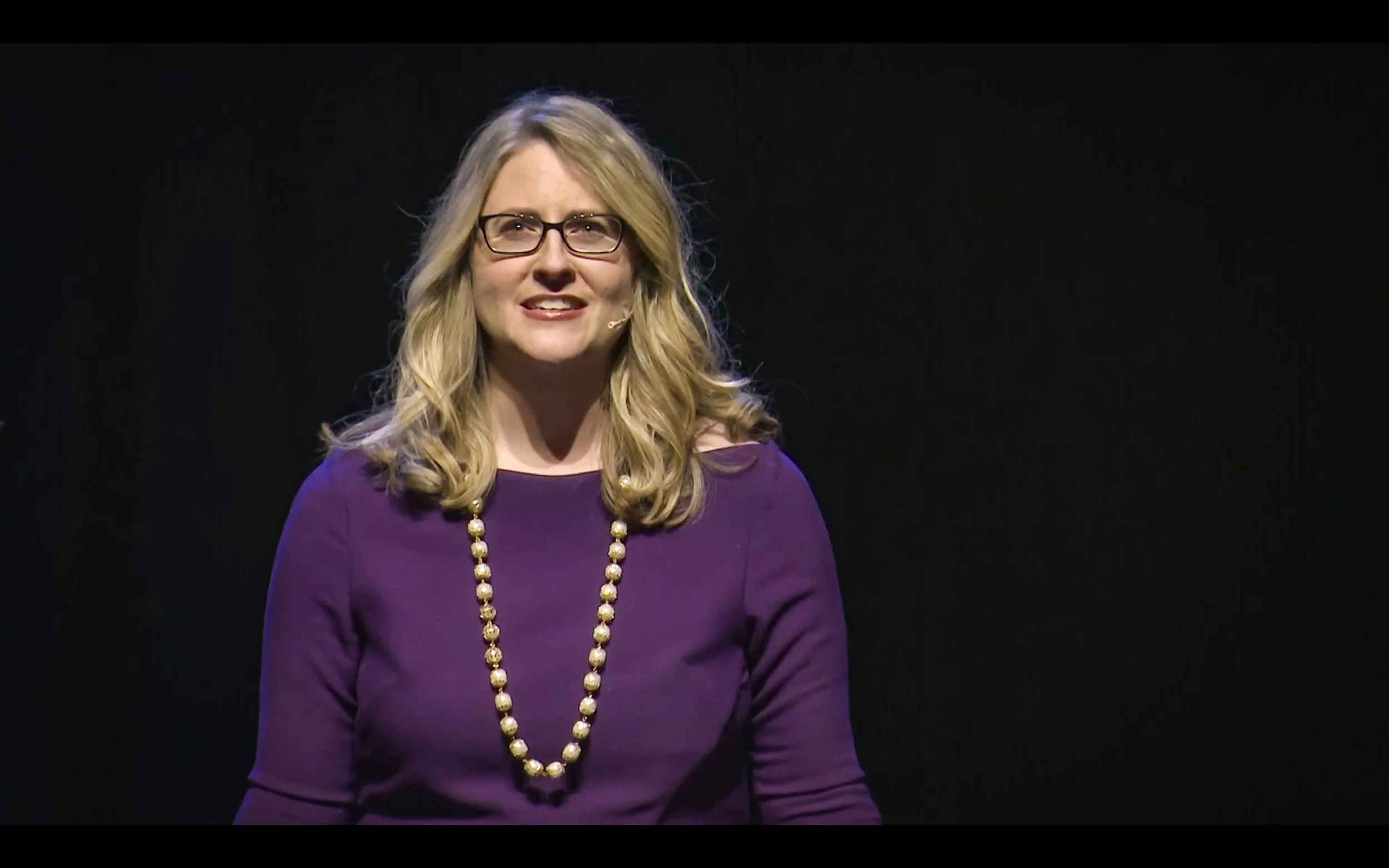
TED Talk
How Your Brain Responds to Stories, and Why They're Crucial for Leaders. 2.25M+ views.