

Section Styles button-center-mobile text-center-mobile
Leadership Communication: The Complete Guide




Written by Karen Eber, TED speaker (2.25M+ views), bestselling author of The Perfect Story, creator of the Five Factory Settings of the Brain, former Head of Culture and Chief Learning Officer at General Electric, and former Head of Leadership Development at Deloitte.
Leaders often assume that people want to hear from them and will listen to everything they communicate. That’s mostly true. Teams do want the strategy, the vision, the honest feedback, the clarity on what's expected.
But wanting to hear from a leader and actually listening to what they say are two different things. A title only guarantees the first one.
Attention from a team isn't a right that comes with the role. It's earned, message by message, by proving the leader actually knows who they're talking to and what that person cares about.
When a message doesn't feel relevant, when it feels delivered rather than directed at the specific people in the room, people stop listening even while nodding along. The leaders who keep earning that attention are the ones who ask questions and listen as much as they speak, and who understand how their audience actually processes what they hear, not just what they intend to say.
This guide explores what leadership communication really is, why it matters more than ever, why it’s challenging, common misconceptions, and why it has become an essential leadership capability.
Related Reading
Five related articles from Karen’s blog. The full guide continues below.
-
The Most read Part of Your Presentation? The Page Number
Read more →
-
Why Authentic Messaging Matters More Than Ever For Leaders
-
Netflix Thinks You May Not Be Paying Attention. You May Be Right.
Read more →
-
Don't Avoid Your Audience's Protests. Lean Into Them
-
How to Overcome a Fear of Public Speaking
Read more →

Why Leadership Communication Matters More Than Ever
The competition for attention is fierce.
Leaders struggle to get heard. The people they're talking to aren't ignoring them out of indifference. They're pulled in a dozen directions at once, juggling competing priorities, back-to-back meetings, full workloads, and a phone or laptop pinging with something else that also feels urgent.
The average person's sustained attention on a single screen dropped from 2.5 minutes in 2004 to 47 seconds by 2020 because everything in their environment is now built to interrupt them. Even in a meeting room, that pressure shows: roughly 91% of people are still tracking a meeting at the fifteen-minute mark, but it falls off sharply after that. A typical hour-long meeting loses about 27 minutes of genuinely focused attention across the room, multiplied by everyone sitting in it. That is huge meeting waste.
That's what a leader is actually up against every time they open their mouth: a genuinely overloaded audience, competing for attention against everything else pulling at them in that moment. Which means the burden sits with the message, not the listener. If it isn't clear, relevant, and easy to grasp quickly, it loses to whatever else is competing for that attention, and it loses fast.

The Problem You Might Not Be Naming
It’s not “an engagement problem, a “culture problem,” or “people just don’t read their email” problem.
Leaders love to think the communication breakdown happens elsewhere, but they are often the culprit.
The actual pattern: a leader delivers a message they believe is clear, strategy, feedback, an update, and the room nods. Three weeks later, the message shows up downstream in three different versions, none of them wrong exactly, all of them slightly off from what was intended. Nobody in the room flagged confusion, because nobody felt confused. They each felt confident in their own slightly different read.
People also inherit how they communicate from whoever ran the last meeting they sat in. Doing it differently, actually checking whether a message landed, feels riskier than defaulting to what everyone else does: technically correct, safe, and forgettable. Most leaders never notice they're teaching their own teams to communicate exactly the same way.
The deeper issue sits earlier than delivery. A leader who assumes people will listen because of the title skips the step that would have told them whether the message was actually relevant to this specific audience, walking in with their specific concerns, before it ever went out.

What is Leadership Communication
Leadership communication builds messages around the people receiving it, not the point the leader wants to make.
Those are two different starting places, and most leaders default to the wrong one without realizing it: they open with what they've decided, what they need people to know, what they're ready to say, and only think about the audience once the message isn't landing.
Starting with the audience changes the actual work. It means finding out what a specific team already believes and cares about before deciding how to frame anything. It means structuring a message so the point comes first. It means giving and receiving feedback in a way that changes behavior instead of just producing discomfort.
It means running a meeting that produces an actual decision, rather than another meeting scheduled to make the same one later, once nobody in the room actually understood what was being asked of them the first time.
None of this is about sounding more polished. It's about whether the person on the other end walks away with what the leader actually meant.

Why This Is Hard
Building a message around an audience's needs instead of your own means setting aside what you already know. It involves constructing the idea in a way that resonates with the listener’s perspective. This takes real effort compared to simply sharing what you already understand.
There's a second reason this stays hidden: the role itself creates a false sense of security.
A title suggests the room is already listening, so checking whether a message is landing, asking a question, watching for confusion, feels unnecessary rather than uncomfortable. Most leaders don't skip this step because it's hard. They skip it because they don't realize they need to do it at all.
Feedback compounds both problems. Giving and receiving it activates real psychological threat on both sides, so leaders soften a message into vagueness to manage that threat, which then fails to change the behavior it was meant to address.
Who this hits hardest: everyone below the leader, left interpreting instead of understanding, and the leader themselves, who ends up re-explaining the same decision three different ways without ever learning why the first version didn't land.
Why Leadership Communication Breaks Down
Leaders hand their team a message carrying five equally-weighted points instead of one clear idea, hoping the audience catches something. It rarely works that way.
A message built around a single point is far more likely to land intact than several thrown at once, and overload doesn't just lose attention, it buries whichever point most needed to be heard.
The problem compounds when leaders assign the format instead of the outcome: "give me a ten-slide update by Thursday" signals that the container matters more than what's inside it, so people fill the template instead of solving the actual communication problem, and a request for what decision needs to get made turns into a deck nobody asked for.
Even well-built messages get undercut by timing. The first five to eight minutes of any message carry the most focus a listener will ever give it, and leaders routinely spend that window on background and thank-yous before the actual point arrives, burning the part of the message that had the best chance of being heard.
What This Looks Like When Done Well
A leader builds a message around one idea instead of several, and the room catches it the way a single thrown ball gets caught instead of five thrown at once.
The message survives being repeated by a manager three levels down without drifting into something else, because it was built around what that audience specifically needed to understand rather than everything the leader wanted to say.
A long update holds attention because it's structured in short segments, each one re-earning focus with a question, a story, or something worth noticing, instead of assuming attention is owed for the full run time.
When a leader asks a team for an outcome instead of a format, "help me understand where this stands and what decision we need to make" instead of "give me ten slides," the response comes back as a conversation that actually moves something forward, not a deck built to fill a template.
The Cost of Doing Nothing
Unclear messages still get acted on but they often fall short of the desired outcomes. People don’t pause the work to double-check, because the gap between what was meant and what was heard is invisible in the moment.
We love to think that because we said it, it’s automatically understood as intended. Three different things happen underneath that surface, and they all look the same from the outside: a meeting ends, everyone nods, work continues.
Sometimes people genuinely don't understand, and don't say so, because asking feels riskier than guessing. Sometimes there's no message at all, a decision, a shift in priority, a piece of context the leader assumed was obvious, and it never gets communicated, so people are left filling the silence with their own assumptions. And sometimes the hardest case: someone believes they understood correctly, with no way to check that belief against reality, and builds on a wrong foundation for days or weeks before anyone notices.
All three surface the same way, later, and disconnected enough from the original moment that nobody traces it back: a missed deadline, a wrong deliverable, a decision built on an assumption nobody actually agreed to.
That confusion has a real time and money cost. Attention lost across one hour-long meeting, roughly 27 minutes per person once focus starts dropping, adds up fast across a team's entire week of meetings, and multiplies again across a whole organization.
But the cost that compounds faster is harder to put a number on. When someone doesn't fully receive a message, or wasn't given one at all, or believes they understood something they got wrong, they're left a little less certain of their own footing: what did that actually mean, am I supposed to act now, do I ask and risk looking like I missed something, or move forward on a guess. One instance is manageable. A pattern of it wears people down; it shows up as frustration with no obvious cause, as people who stop asking questions because asking has never gotten them a straight answer, as a team that's still functioning but has stopped trusting that the next message will make sense either. That's not a productivity cost. It's a resilience cost, and it doesn't show up on a dashboard until real damage is already done.
When feedback isn't actually received, performance problems keep circulating instead of resolving, eventually turning into a harder conversation, a formal process, or an exit that could have been prevented months earlier. And repeated miscommunication is one of the quieter, more common causes of manager burnout, since much of a manager's day becomes damage control on decisions made from confusion nobody surfaced in time.
Left unaddressed, this doesn't stay a communication issue. Every message someone misunderstands, never receives, or gets wrong while feeling certain they got it right is a small fracture, and enough of them add up to a team that's stopped being resilient, whether or not anyone can point to the exact moment it happened.
Why This Matters More in the Age of AI
AI can’t decide what a room needs to hear and understand
AI can produce a technically clear message in seconds. What it can't do is know what a specific audience already believes, what they're skeptical of, or what they need to feel before they'll act, and that read is what actually determines whether a message lands, not how well it's worded.
That gap is becoming more visible, not less. People are now actively scanning communication for signs that no real person is behind it, and generic, formulaic messaging gets tuned out faster than ever once it's recognized as assembled rather than authored. A leader who lets a tool draft the message without doing that audience read first isn't saving time. They're skipping the one part of the job a tool can't do for them.
The risk isn't using AI to help organize a message. It's defaulting to it instead of thinking the message through first: what am I actually trying to accomplish, what's my own read on this, and what am I still unsure about. Skip those questions and the draft comes back polished, but with nothing in it that could only have come from someone who actually knows this audience.
That's the case for the Human Advantage keynote in one line: information is no longer the scarce resource. Judgment about a specific audience is.
Karen Eber’s Perspective
The hardest part isn’t getting the words out.
Most advice on leadership communication focuses on the speaker: confidence, structure, executive presence, how to sound authoritative. All of it assumes the hard part is getting the words out clearly.
The harder part happens earlier. Karen Eber has found that most communication breakdowns trace back to a leader building a message around what they wanted to convey rather than what the audience in the room needed to hear.
The brain isn't a passive receiver waiting for information, it's constantly running a calculation: is this worth my attention, or can I drift off and conserve the energy.
A leader who doesn't design for that calculation is asking to be tuned out, regardless of how clear or well-structured the message is.
That's also why AI hasn't closed this gap, and can't. It can produce a technically clear message instantly.
It has no way to know what a specific audience already believes, what they're skeptical of, or what they need to feel before they'll act, the read that determines whether a message actually lands. That read has always been a human skill. It's becoming the scarcer one.
Learn more about Karen’s leadership communication keynote.

Why Our Brains Respond This Way
Karen Eber's Five Factory Settings framework explains why certain messages capture attention, create meaning, and are remembered while others are ignored.
The framework gives leaders a science-based way to understand how people process information and how to communicate in alignment with the brain's natural tendencies.
How Communication Shapes Culture and Carries People through Change
Communications, culture, change and storytelling are all intertwined.
Leadership communication doesn't stay contained to the moment a message is delivered. It's the mechanism by which culture forms and the mechanism that determines whether a change gets adopted or silently resisted.
Culture isn't set by a values statement, it's carried by the stories that circulate informally inside an organization, repeated because they were relevant enough to someone that they retold them. A leader who never learns to build a message around what their audience actually cares about isn't just losing a meeting, they're losing the chance to shape what gets repeated, and therefore what the culture becomes.
Change runs into the same wall. People can accurately repeat back what's changing and still act like it isn't happening, because being told the facts of a change isn't the same as being given a reason the change is relevant to them specifically, what they're gaining, what they're losing, and where they fit in what comes next. The leaders who communicate change well aren't the ones with the clearest slide. They're the ones who understood their audience well enough to know what that audience needed to hear before they'll actually move.
Storytelling is what makes both of these work. A story is what makes an audience-first message land, and land in a way people remember and retell, rather than a technically accurate one they nod at and forget by the next meeting.
Common Misconceptions About Storytelling
Myth: Good communicators are naturally confident, charismatic speakers.
Reality: Clarity and audience relevance matter more than charisma. A confident delivery of the wrong message for the room still fails to land.
Myth: People will listen because you're the leader.
Reality: A title guarantees people want to hear from you. It doesn't guarantee they're actually listening, that's earned message by message.
Myth: Communicating more often solves a clarity problem.
Reality: More messages compete for the same shrinking attention, and can make the problem worse. What changes whether a message lands is relevance, not frequency.
Myth: A better-drafted message solves the communication problem.
Reality: AI can draft language faster than any leader could. It can't tell you what this specific audience already believes or needs to hear, which is the part that actually determines whether a message lands.
Myth: If people don't ask questions, they understood.
Reality: Silence is one of the least reliable signals available. People stay quiet out of politeness, uncertainty about how to ask, or confidence they understood something they got wrong.
Myth: A leader's job is to communicate their decision clearly.
Reality: That's half the job. The other half is understanding the audience well enough beforehand to know what they need to hear in order to actually act on it.
Who Benefits Most
Executives and Senior Leaders
Executives use audience-first communication to turn strategy and organizational change into messages people actually act on, not just nod through.
Change & Transformation Leaders
Change leaders use it to communicate what's happening in a way that accounts for what people are losing and where they fit, not just what's changing and when.
Managers and Team Leaders
Managers use it to give feedback that changes behavior instead of just producing discomfort, and to keep their teams aligned without re-explaining the same decision three different ways.
Culture and People Leaders
Culture leaders use it to understand that what gets repeated informally across a team, and therefore what the culture becomes, starts with whether leadership's own messages felt relevant enough to retell.
HR & Internal Communications
HR and internal comms teams use it to design messages that survive being repeated by a manager three levels down without drifting into something else.
New and First-time Managers
First-time managers use it to build credibility with a team that isn't yet giving them the benefit of the doubt a title alone doesn't earn.
Frequently Asked Questions
-
It's the practice of building a message around what a specific audience already believes and needs to hear, rather than around what a leader wants to say. The skill isn't speaking clearly. It's knowing enough about the room to make clarity land.
-
Because clarity isn't the same as relevance. A clearly delivered message that isn't built around what a specific audience already cares about still gets tuned out
-
Most communication training focuses on the speaker: confidence, structure, delivery. This starts earlier, with what the audience already believes and needs before a word gets said. A polished delivery of the wrong message for the room still fails.
-
AI can draft technically clear language faster than any leader could. It can't tell you what a specific audience already believes, is skeptical of, or needs to feel before they'll act, which is the part that actually determines whether a message lands.
-
Attention has gotten harder to earn, not easier, and audiences are increasingly able to sense when a message wasn't built with them specifically in mind. A leader competing for a shrinking amount of focus can't afford to send something generic and expect it to land.
-
The keynote makes the case directly: information is no longer the scarce resource, judgment about a specific audience is, and that judgment is the one part of communication a leader can't hand off to a tool.
-
Stop opening with background, a thank-you, or context. The first five to eight minutes of any message carry the most attention it will ever get, and leading with the least important material spends that window before the actual point arrives.
-
By whether the message survives being repeated. If it holds up after passing through a manager three levels down without drifting into something else, it was built around the audience it needed to reach. If it doesn't, it wasn't.
Related Leadership Topics
-
Storytelling for Business & Leadership
The foundational skill of turning information into shared understanding, so people remember ideas and act on them.
-
Storytelling with Data
How leaders turn analysis into shared understanding, so a dataset drives a decision instead of just getting reported.
-
Leading Through Change
How leaders communicate through disruption so people don't just hear about a change, they adopt it.
-
Organizational Culture
How the stories leaders tell, and the behavior they tolerate, shape what an organization actually believes and does day to day.
Bring This Expertise To Your Organization
-

Keynote
Karen's signature keynote shows leaders how storytelling helps people understand, remember, and act.
-

Workshops
Hands-on, interactive sessions that give teams the tools to craft and tell stories that inform, influence, and inspire.
-

The Perfect Story
The Perfect Story: How to Tell Stories that Inform, Influence, and Inspire, the foundational text behind this framework.
-
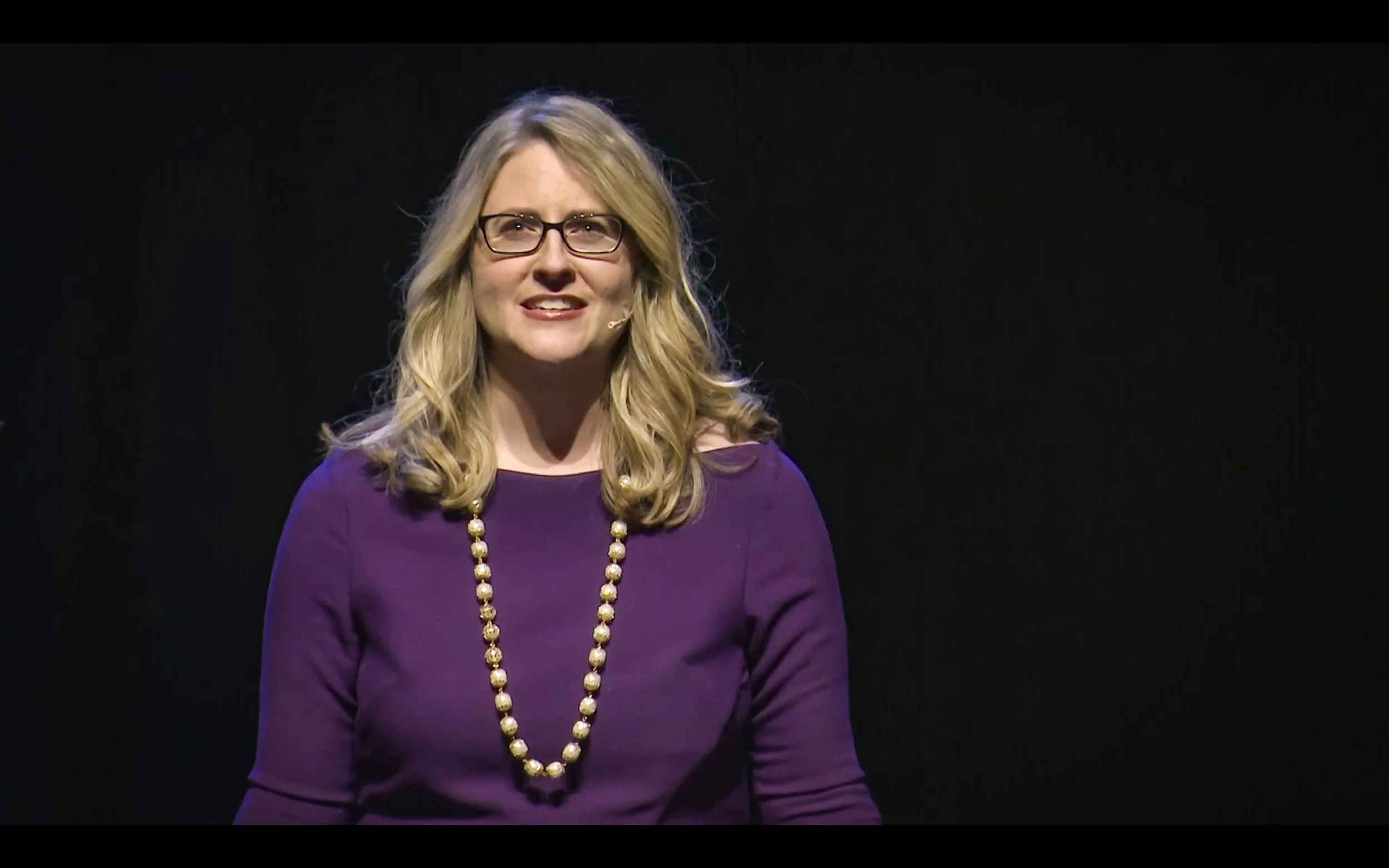
TED Talk
How Your Brain Responds to Stories, and Why They're Crucial for Leaders. 2.25M+ views.