Karen Eber
Storytelling Keynote Speaker
Telling Stories that Inform, Influence, and Inspire
A science-backed system for telling stories that build trust, drive decisions, and inspire action





Keynote Overview
Telling Stories that Inform, Influence, and Inspire
Storytelling isn't reserved for charismatic speakers or polished presentations. It's one of the most practical leadership skills you can develop. Stories help people make sense of complex information, build shared understanding, remember what matters, and know what to do next.
Whether you're introducing a strategy, leading change, presenting data, or pitching an idea, storytelling helps people see what you're saying and why it matters.
Storytelling isn't an innate talent. It's a skill that can be strengthened. Once you understand how the brain processes stories, you can communicate in ways that build trust, deepen understanding, and move people to action.
This keynote makes storytelling accessible by breaking it into a simple, science-backed system. Based on her award-winning book, The Perfect Story, Karen shows audiences how to apply her Five Factory Settings to craft stories that inform, influence, and inspire.
Audiences leave able to:
Apply the Five Factory Settings to any leadership communication
Understand why some stories work while others fall flat
Build a toolkit of stories for leadership, sales, culture, change, and executive communication
Tailor stories for each audience.
Structure stories that create clarity instead of confusion
Communicate with greater trust, influence, and confidence
Whether you're leading a team, pitching an idea, selling a product, communicating data, or navigating a difficult conversation, this keynote gives you the tools to tell stories that truly connect and drive results.
Format: 45–60 minutes | Any audience size | In-person or virtual
stylus Who is This Keynote For?
Karen speaks to any organization where success depends on people understanding an idea well enough to act on it including:
Executive leadership & people leaders
Sales, marketing & customer success
Finance, operations & engineering/technology
Scientists, researchers & professional services
Healthcare, government, nonprofits & education
show_chart Why Organizations Hire This Keynote:
Organizations hire Karen to speak when they’re wanting to equip their leaders and teams to elevate their communications including: Communicate strategy and transformation so it actually sticks
Lead change with greater clarity, trust, and alignment
Improve leadership communication and executive presence
Help technical experts explain complex ideas simply
Build trust with employees, customers, and stakeholders
Strengthen culture through everyday communication
Increase influence across teams and functions
Create more memorable presentations, meetings, and customer stories
Navigate difficult conversations with greater confidence

What Makes Karen Eber’s Storytelling Keynotes Different?
Many keynote speakers teach storytelling as a communication technique.
Karen teaches it as a leadership capability.
Her work is built on a simple belief: it's not enough to tell a story. The way you tell it determines whether people pay attention, trust what they're hearing, remember it, and ultimately act on it.
That perspective grew out of years helping leaders communicate strategy, navigate change, shape culture, and build alignment inside complex organizations. Again and again, Karen saw that the challenge wasn't a lack of information. It was a lack of shared understanding.
That insight led her to develop the Five Factory Settings, a practical framework grounded in neuroscience that helps leaders communicate in ways that align with how the brain naturally processes information.
The result is more than better storytelling. It's stronger leadership communication that helps people understand ideas, make better decisions, and take meaningful action.
-
Grounded in Neuroscience
This approach is built on Karen's award-winning book, The Perfect Story, which introduced her Five Factory Settings framework, and her TED Talk on the neuroscience of storytelling viewed 2.25M+ times.
Audiences leave with tools they can use in their next meeting, presentation, or difficult conversation.
-
Built for Leaders
Karen spent years helping leaders communicate during change, growth, and uncertainty.
As a former Head of Culture and Chief Learning Officer at General Electric and Head of Leadership Development at Deloitte, she saw firsthand which messages inspired action, which created confusion, and why some leaders earned trust while others struggled to connect.
That's the perspective behind this keynote: storytelling as a practical leadership capability grounded in real organizational experience and behavioral science.
-
A Structure That Works For Any Story
Most story frameworks fail leaders in one of two ways: they're built for one narrow type of story, so a leader trying to land an idea in a meeting tries to force it into a shape that was never meant to hold it, or they're complicated enough that the leader gives up before they get to the point.
Karen teaches a four-part structure, context, conflict, outcome, and takeaway, that describes what every story needs rather than prescribing what shape it has to take. Read the full framework in the Complete Guide to Storytelling for Leadership & Business.
Want more on Karen's background and how she works with organizations? Visit the About page or the Speaking FAQ.
Section Styles video-corners
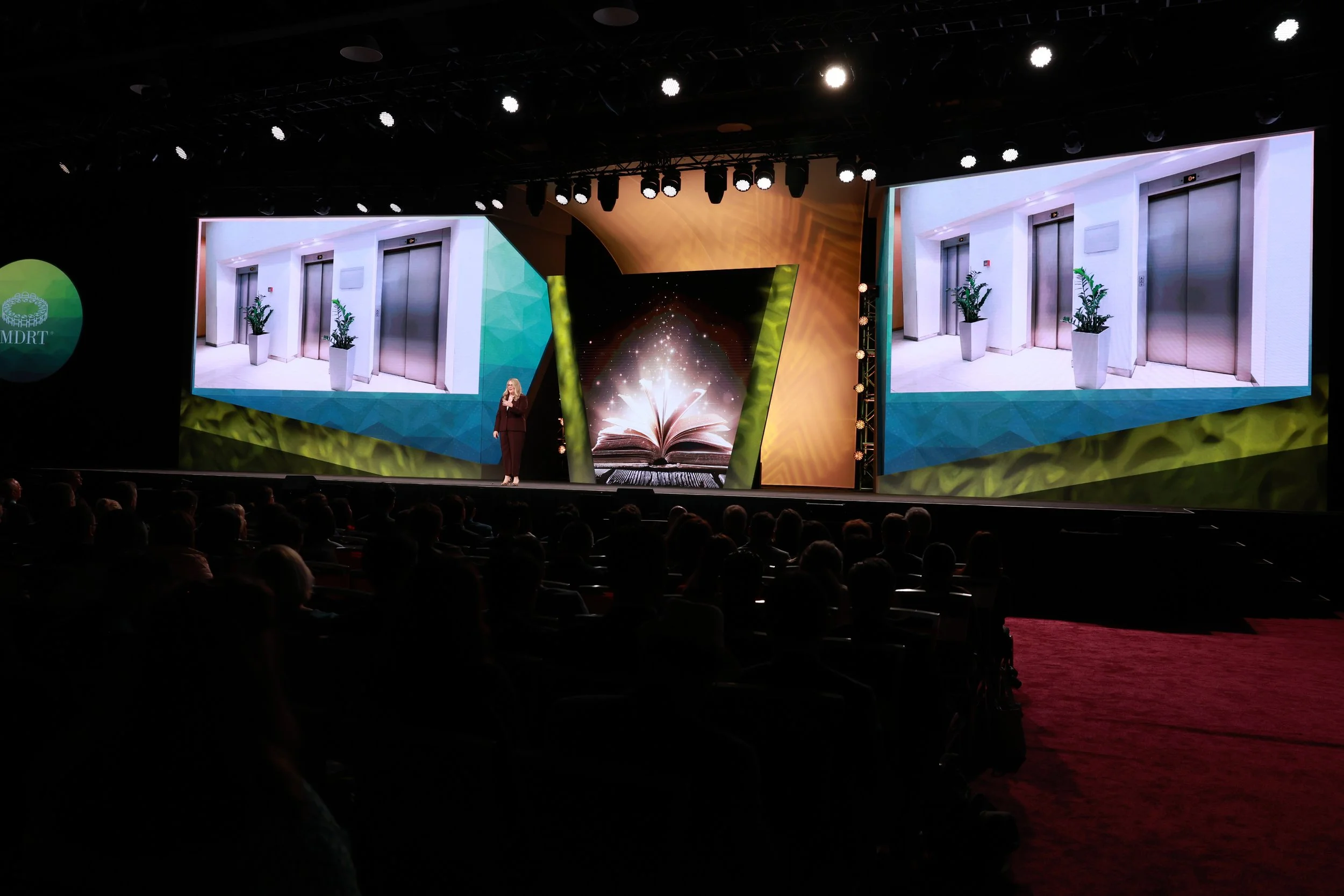
See Karen Speak


The Thinking Behind this Keynote
The leaders who create understanding are the ones people trust, remember, and follow.
That's why Karen helps leaders embrace storytelling as a leadership capability rather than a presentation technique. Whether they're communicating strategy, leading change, strengthening culture, explaining data, or navigating difficult conversations, the challenge is the same: helping people understand, remember, and act.
That perspective comes from Karen's Five Factory Settings of the Brain framework and years leading culture and leadership development at organizations like General Electric and Deloitte. It's the foundation of this keynote and the thread that connects all of her work.
Want to explore the research, neuroscience, and practical applications behind this approach?
Read the Complete Guide to Storytelling for Business & Leadership
Keynote or Workshop: Which is Right for Your Event?
-
Storytelling Keynote
Format: Single session, 45 - 60 minutes
Best For: Conferences, all-hands, kickoffs, leadership offsites
Outcome: A shared framework and immediate shift in how people communicate
Audience: Any size, including large conference audiences
Some groups choose a keynote with a hands-on component, giving audiences the chance to begin to apply concepts while still in the plenary ballroom.
-
Storytelling Workshop
Format: Half-day or full-day with hands-on exercises
Best for: Intact teams, analytics groups, smaller cohorts (ideal size ~25)
Outcome: Participants build and practice their own stories, with coaching
Audience Size: Best with smaller, interactive groups
Many organizations begin with the keynote for a conference or company meeting, then follow with the workshop for teams that regularly communicate data and recommendations.
Frequently Asked Questions About the Storytelling Keynote
-
A great storytelling keynote does more than entertain. It changes how the audience communicates afterward. Karen's keynote pairs a repeatable framework, the Five Factory Settings with real examples, so people leave with a way to build shared understanding, not just a good feeling.
-
Business storytelling is the deliberate use of narrative to help people build shared understanding around strategy, change, or ideas. It's not about becoming a more polished or charismatic presenter; it's about communicating in a way people actually trust, remember, and act on.
-
Public speaking training focuses on delivery: voice, stage presence, slides. This keynote focuses on why people do or don't understand and trust a message in the first place, which is what determines whether good delivery actually works.
-
Technical professionals frequently have the right information but struggle to get every audience to interpret it the same way. Storytelling gives them a way to create that shared understanding.
-
Presentation skills training typically covers structure, slides, and delivery mechanics. This keynote goes further upstream, into how the brain decides what to pay attention to, trust, and remember, which is what determines whether the delivery lands.
-
Karen's Five Factory Settings framework is grounded in research into how the brain processes attention, trust, emotion, memory, and decision-making, and is detailed in her book, The Perfect Story.
-
Confidence and charisma matter far less than people assume. Karen teaches storytelling as a repeatable system grounded in how people naturally process information, not a personality trait some people have and others don't.
-
Karen tailors examples, language, and business context to the audience, whether that's a healthcare system, a sales kickoff, a technology company, or a government agency.
-
Change efforts fail more often from a lack of shared understanding than a lack of information. This keynote gives leaders a way to communicate the "why" behind a change so people align instead of just comply.
-
This keynote applies to any leadership communication: strategy, change, culture, vision. Storytelling with Data focuses specifically on communicating numbers, forecasts, and analysis. Many organizations book this keynote first, then bring in Storytelling with Data for teams that communicate data day to day.
-
The Perfect Story is Karen's award-winning book, and it's where the Five Factory Settings™ framework is laid out in full. This keynote brings that same framework to life on stage: the science of why some stories work and others don't, and a practical system for building stories that create trust, memory, and action. Think of the book as the deep dive and the keynote as the framework in action, tailored to your event and audience.
Many organizations bring Karen in to speak and give attendees a copy of the book to take the framework further on their own.
-
Executive leadership, people leaders, HR, sales, marketing, customer success, finance, operations, engineering and technology teams, healthcare organizations, professional services, government, entrepreneurs, nonprofits, and education — anyone whose success depends on people understanding an idea well enough to act on it.
Have additional questions? Planning a keynote often comes with questions about topics, customization, workshops, travel, audience size, fees, and what to expect. Visit the Frequently Asked Questions page for answers to many of the questions organizers ask before booking Karen.

Book Karen Today
-

"Karen infuses you with confidence while making storytelling approachable and relatable."
Cyber Security Solution Architect
-

"This clicked more than other storytelling experiences: excellent information, tools, and techniques."
Head of Digital Learning
-

"Exceptional speaker with storytelling techniques that resonated across all levels."
CHRO, Power Business
-

"The presentation on storytelling was truly captivating and resonated deeply with our audience."
Enterprise Executive Leadership Development
-

"So many a-has on what makes a great story and how they influence purchasing decisions."
Marketing Strategy Leader
-

"This was the best storytelling experience: clear structure, tools, and insights!"
Head of Alumni Events
-

A delight to work with from start to finish!
Program Planner
-

"Phenomenal interactive session that felt intimate despite a large group."
VP Digital Transformation
-

"Hugely impactful presentation that understood our messaging and business."
VP Sales
-

"Keynote was the "talk of the town" with people discussing incorporating the strategies."
Program Planner
-

"Karen's presentation was a highlight of our conference."
Executive Director
-

"One of the highest-rated sessions ever!"
CEO