

Section Styles button-center-mobile text-center-mobile
Organizational Culture:
The Complete Guide




Written by Karen Eber, TED speaker (2.25M+ views), bestselling author of The Perfect Story, creator of the Five Factory Settings of the Brain, former Head of Culture and Chief Learning Officer at General Electric, and former Head of Leadership Development at Deloitte.
Culture is the worst behavior your leaders and teams are willing to tolerate.
Companies spend millions forming mission and values statements and plastering them all over the company. While they may signify intent, the true culture is what people experience each day.
The behavior that gets a pass, the person that receives recognition, or the team that avoids conflict. These day-to-day experiences demonstrate what is valued and rewarded in the organization and make up the culture.
It’s not something that is owned by HR or driven by what the CEO says onstage. It’s the cumulative rewarding or discouraging of behaviors every day at the team level.
This guide explores what organizational culture really is, why it matters more than ever, common misconceptions, and why it’s an essential leadership capability and priority.
Related Reading
Five related articles from Karen’s blog. The full guide continues below.
-
The Meeting Designed by Spies
Read more →
-
The Disco Ball: What Are the Indictors of Your Culture?
-
If You See It, You Can Be It: Creating Healthy Cultures
-
Can Storytelling Repair a Toxic Culture?
-
Ask These Questions in Interviews to Learn About the Cutlure

Why Culture Matters More Than Ever
Culture is the operating system of your organization.
Culture is the operating system of your organization. It’s not an initiative or a series of posters. Initiatives have an end. Culture in infused throughout all aspects of work at all levels.
It's transmitted person to person, through the stories employees tell each other about what actually happens here. It’s demonstrated daily through what gets rewarded, ignored, and promoted.
Those stories, repeated enough times, become the unwritten rules a new hire learns faster than anything in an onboarding deck.
Culture doesn't exist within walls. It exists in interactions. Because of that, everyone plays a role in shaping culture within an organization.

The Problem You Might Not Be Naming
Culture isn’t the responsibility of the CEO or HR.
Leaders don't recognize they're shaping culture through their own actions every day. Every check-in they run, every behavior they let slide, every conflict they step into or avoid is a line of code in the operating system.
Those who are intentional about it with regular check-ins, updates, and reflection are able to keep the system running smoothly. Leaders who don't recognize their role in shaping culture accumulate glitches: small inconsistencies between what's said and what's rewarded that nobody bothers to trace back to a cause.
One glitch doesn't break anything. Enough of them, compounding across teams and years, create a gap in the code wide enough that the organization needs a full culture transformation to close it; the expensive, disruptive fix for a problem that could have been patched daily.
The best leaders don't wait for that. They treat culture as something needing regular maintenance and shaping.

What Organizational Culture Really Means
Culture is the invisible system that shapes how people work together, make decisions, and respond to challenges.
Organizational Culture has three main parts:
Creating a shared understanding about how the organization works, shaping how people think what they pay attention to, how they make decisions, and what they believe is expected of them. When people share the same understanding, they can act independently while still moving in the same direction.
Building that shared understanding through stories, beliefs and assumptions. Each of these reinforce “how things work around here.” Some of these stories are intentional, shared by leaders to communicate purpose and direction. Others emerge organically through everyday experiences, becoming the unwritten rules that teach people what is rewarded, tolerated, and expected.
Living the experience daily. The day-to-day behaviors, stories, beliefs, and values make up the culture people experience. It's reflected in how meetings are run, how feedback is given, how conflict is handled, how decisions are made, and how leaders respond under pressure. These daily experiences either reinforce or reshape the shared understanding people have about the organization.
These three parts constantly influence one another.
Stories, beliefs, and assumptions create a shared understanding of how the organization works. That shared understanding shapes the decisions and behaviors people bring to work each day. Those behaviors become the everyday experiences that either strengthen or change the stories people tell.
This is why culture can't be changed by rewriting values or launching a new initiative alone.
Culture changes when leaders intentionally shape the stories people hear, the experiences they have, and the shared understanding they build together.

Why This Is Hard
Confronting a culture problem usually means confronting what leadership tolerates.
That's uncomfortable, because it's often a specific person's behavior. Sometimes it’s the behavior of a high performer and addressing it costs real political capital.
It's also genuinely hard to see your own culture from inside it.
Behaviors that would look obviously wrong to an outsider look normal to people who've been there long enough to stop noticing them, just like how it’s hard to smell your own kitchen.
Research on leadership specifically names unpredictability as one of the most corrosive forms this takes: a leader whose mood or reaction shifts day to day forces everyone around them to spend energy anticipating which version will show up, planning for multiple scenarios before a single meeting even starts.
That constant vigilance is exhausting on its own, and it's frequently the quiet root of burnout that gets blamed on workload instead.
There's a time-horizon problem too: culture slowly erodes. There’s rarely a single moment that forces a leader to act, until a survey, an exit interview, or a resignation makes the cost visible all at once, usually well after the damage was done.
Who this hits hardest: newer and less powerful employees, who absorb the actual culture fastest and have the least ability to change it, or escape it, if it's bad.
Why Culture Initiatives Fail
If you want culture to succeed, infuse it throughout all aspects of leadership.
Treating values as a communication exercise. A values rollout changes what's printed on the wall. It doesn't change what gets rewarded in a performance review.
Leaving culture entirely to HR. Culture is shaped most by what people see leaders and peers actually do, not by a department mandate.
Believing culture can be "fixed" once. This treats culture like an initiative with an endpoint, when it's continually reinforced or discouraged through daily actions. Healthy culture needs the same ongoing tuning a band needs during a live performance, not a single correction made once and left alone.
Solving it with one story. A genuinely toxic culture, especially one rooted in a specific leader's behavior, can't be repaired by a single well-told story. It takes defining the root of what's being reinforced, real interest from that leader in changing, and new habits built over time, not one moving moment in a workshop.
The Cost of Doing Nothing
Organizational waste accumulates, frustration rises, and inefficiencies seep throughout the organization.
A values-behavior gap doesn't stay stable. It costs turnover of the people the organization can least afford to lose, since strong performers usually have other options and are the first to leave a culture that doesn't match its stated values.
Everything gets slower: decisions, onboarding, change adoption, because a low-trust culture makes every process more expensive to run. The culture keeps forming anyway, by default, through whatever behavior actually gets rewarded, so the cost of inaction isn't a stable status quo, it's an actively worsening one.
There's also a specific, avoidable version of this cost: over-rotation.
When leaders respond to disruption, remote work, an economic downturn, one bad headline about a competitor, by swinging hard toward rigid mandates ("everyone back in the office, full stop") instead of gathering input, they often trigger exactly the turnover and disengagement they were trying to prevent.
The lesson from the shift to hybrid work was instructive here: organizations that struggled weren't struggling because of where people worked. They were struggling with pre-existing gaps in how they developed culture and leaders that had simply never been tested before.
Why This Matters More in the Age of AI
AI can automate tasks, summarize information, and increase inefficiency. But it can’t create trust or psychological safety.
AI can't determine whether employees feel heard, valued, or connected to a shared purpose.
As technology transforms how work gets done, organizational culture becomes an even greater competitive advantage. The organizations that thrive won't simply adopt AI faster, they'll be the ones with cultures where people can adapt, collaborate, and innovate together while everything around them keeps changing. They build an intentional alignment between their business, talent and culture strategies.
Many workplace habits like fixed office hours, a manager who has to see you to trust you, or a once-a-year review cycle were built for a workforce and workplace that no longer exists.
Culture work today increasingly means auditing which inherited habits still earn their place and which ones are running on autopilot. Auditing which inherited habits still earn their place and which ones are running on autopilot isn't a separate topic from culture. It's what culture work looks like when the assumptions underneath it have stopped matching how people actually work.
That makes leaders more responsible for the stories they tell and the behaviors they reinforce.
What It Looks Like In Practice
Problems don’t disappear. They are addressed through ongoing check-ins instead of letting things fester.
New hires can describe how things really work here within their first month, and it matches what leadership says it wants. People raise hard truths because they've watched it go well for someone else who did it first, not because a policy told them to.
Sometimes that shift starts with one person who doesn't wait for permission: an employee who notices a known problem, quantifies it, and brings data to a meeting can turn a vague, long-standing frustration into a standing agenda item the whole organization tracks.
Problems still surface. What's different is that someone felt safe enough to name one and was met with curiosity instead of defensiveness. The gap between the values statement and what employees would tell a friend about the culture narrows.
Karen Eber’s Perspective
Culture is not an initiative.
Most culture work starts with defining or refreshing values, then rolling them out as a program with a launch date. Naming it is the mistake.
Calling culture something you can "fix" makes it sound like an initiative with an endpoint, but culture continually shifts and is reinforced or discouraged through the actions of every employee.
You are never done shaping it. A named rollout implies an ending. Employees start to view these as “flavor of the month” initiatives. They know if they wait long enough, it will be replace by the next one. While initiatives end, culture is infused throughout all aspects of work.
Defining values and hanging them on the wall is a thoughtful exercise. But stopping there doesn’t set you up for success. Without recognition of what those look like in action, it’s hard to know whether the right behaviors are being reinforced.
Employees learn what an organization values from what leaders and peers actually do under pressure, and from the stories that circulate about it afterward, not from a poster.
Bureaucracy, excessive caution, meetings that reopen last week's decision: these read as diligence, but they're often just stories about "how work should look" that nobody chose on purpose, reinforced daily until they calcify into culture.
Culture works less like a destination than an instrument that never stays in tune on its own. Staying in tune is constant small adjustment in real time, not a state reached once and held. Healthy culture works the same way: leaders and teams making those corrections continuously rather than declaring the work finished.
Learn more about Karen’s culture keynotes: What Story Does Your Culture Tell? and What if Dolly Parton Wrote “9 to 5” Today?

Why Our Brains Respond to Culture This Way
Karen Eber's Five Factory Settings framework explains why certain messages capture attention, create meaning, and are remembered while others are ignored.
The framework gives leaders a science-based way to understand how people process information and how to communicate in alignment with the brain's natural tendencies.
What Culture Requires
Effective culture work starts with understanding what people currently believe is true, not with writing new values. In practice, that looks like a few concrete moves:
Assess before designing. Interviews, surveys, and focus groups on the actual, current story the culture tells, not the intended one, before any redesign work starts.
Ask better questions than "what's the culture like here." That question only produces recycled values-language. Better questions get specific: tell me about a time someone changed your mind, tell me about a recent disagreement on the team, how did you start your last team meeting. The answers reveal the real day-to-day experience in a way a values statement never will.
Don't skip the rehearsal. Culture, like a band staying in tune, needs regular, structured moments to reflect and tweak, not just react when something breaks. Dedicate real time, individual check-ins and team reflection sessions, to ask what's working, what's not, and what to change, before a bigger transformation becomes necessary.
Use circles of influence, not just top-down messaging. Momentum for a culture shift rarely comes from what a leader announces. It comes from the first, second, and third people who try something new and tell their peers it was worth it. Identify natural groupings, new-hire cohorts, resource groups, teams promoted together, listen to them first, then equip them to carry the message credibly to others.
Build the habit of telling stories on purpose. Share stories about mistakes and lessons learned to normalize honesty. Share professional journeys to build empathy across a team. Share what "great" looks like to reinforce what's actually valued, not just what's stated.
Common Misconceptions About Culture
Myth: Culture is defined by the values statement. Reality: Culture is defined by what actually gets rewarded, tolerated, and repeated.
Myth: Culture can be "fixed" like a project with an end date.
Reality: Culture shifts continuously, sometimes dramatically, and requires the same ongoing tuning a live performance does, not a single correction.
Myth: There's a perfect organizational design that will solve culture problems.
Reality: Companies spend millions redesigning structure only to reverse it years later. The lasting fix is building agility into how leaders and teams operate, not finding the one right blueprint.
Myth: Culture change is HR's responsibility.
Reality: Culture is shaped most visibly by what leaders and peers do day to day.
Myth: Remote or hybrid work erodes culture.
Reality: Remote work doesn't kill culture. If culture isn't working in a hybrid setting, that's a symptom of gaps that existed before anyone left the office, they just weren't visible yet.
Myth: Leaders have to see their people to know they're working.
Reality: Requiring physical presence to trust someone's work is usually a sign leaders haven't equipped their teams with clear expectations and ways to stay connected, not evidence that oversight is required.
Who Benefits Most
Organizations Post-Merger
Combining two employee populations means combining two different sets of stories that need active integration, not assumption.
Organizations Navigating Hybrid or Return-to-Office Decisions
Avoiding the over-rotation that turns a workplace-format decision into an unnecessary trust and retention crisis.
Companies With A Values - Experience Gap
Where engagement surveys or exit interviews keep surfacing feedback that contradicts leadership's picture of the culture
Managers and Team Leaders
The people actually setting culture at the team level every day, often with no training on the fact that's now their job.
Fast Growing Companies
Scaling culture intentionally past the founding team, before "how we do things" gets rewritten by default.
Job Seekers and Candidates
Understanding how to ask better interview questions than "what's the culture like here" to actually learn what they're walking into.
Frequently Asked Questions
-
The shared, often unwritten beliefs about how things actually work in an organization.
-
Because employees learn what's actually valued from what gets rewarded and from the stories that circulate.
-
Because AI can increase efficiency, but it can't build the trust or psychological safety that determine whether people actually collaborate well, that's still entirely on the culture leaders build.
-
The culture keeps forming by default, and the organization loses the people it can least afford to, since strong performers have the most options to leave first.
Related Leadership Topics
-
Storytelling for Business and Leadership
The foundational skill of turning information into shared understanding, so people remember ideas and act on them.
-
Storytelling With Data
How leaders turn analysis into shared understanding, so a dataset drives a decision instead of just getting reported.
-
Leadership Communication
Building the clarity and trust that make people understand, believe, and act, and why that human judgment can’t be replaced by AI.
-
Leading Through Change
How leaders communicate through disruption so people don't just hear about a change, they adopt it.
Bring This Expertise To Your Organization
-

Keynote
Karen's signature keynote shows leaders how storytelling helps people understand, remember, and act.
-
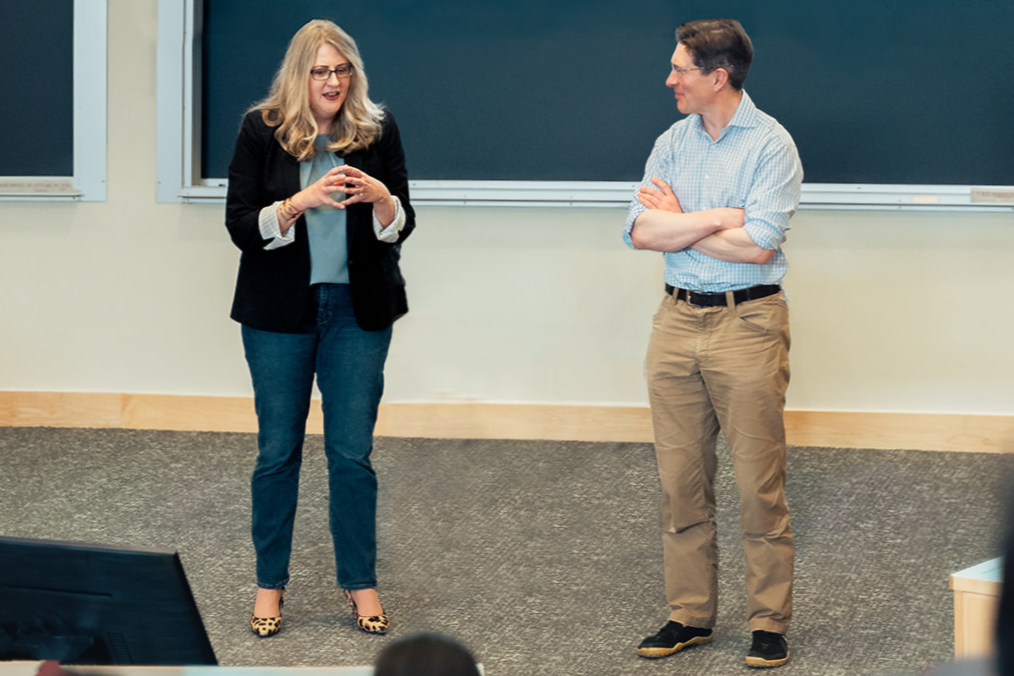
Workshops
Hands-on, interactive sessions that give teams the tools to craft and tell stories that inform, influence, and inspire.
-

The Perfect Story
The Perfect Story: How to Tell Stories that Inform, Influence, and Inspire, the foundational text behind this framework.
-
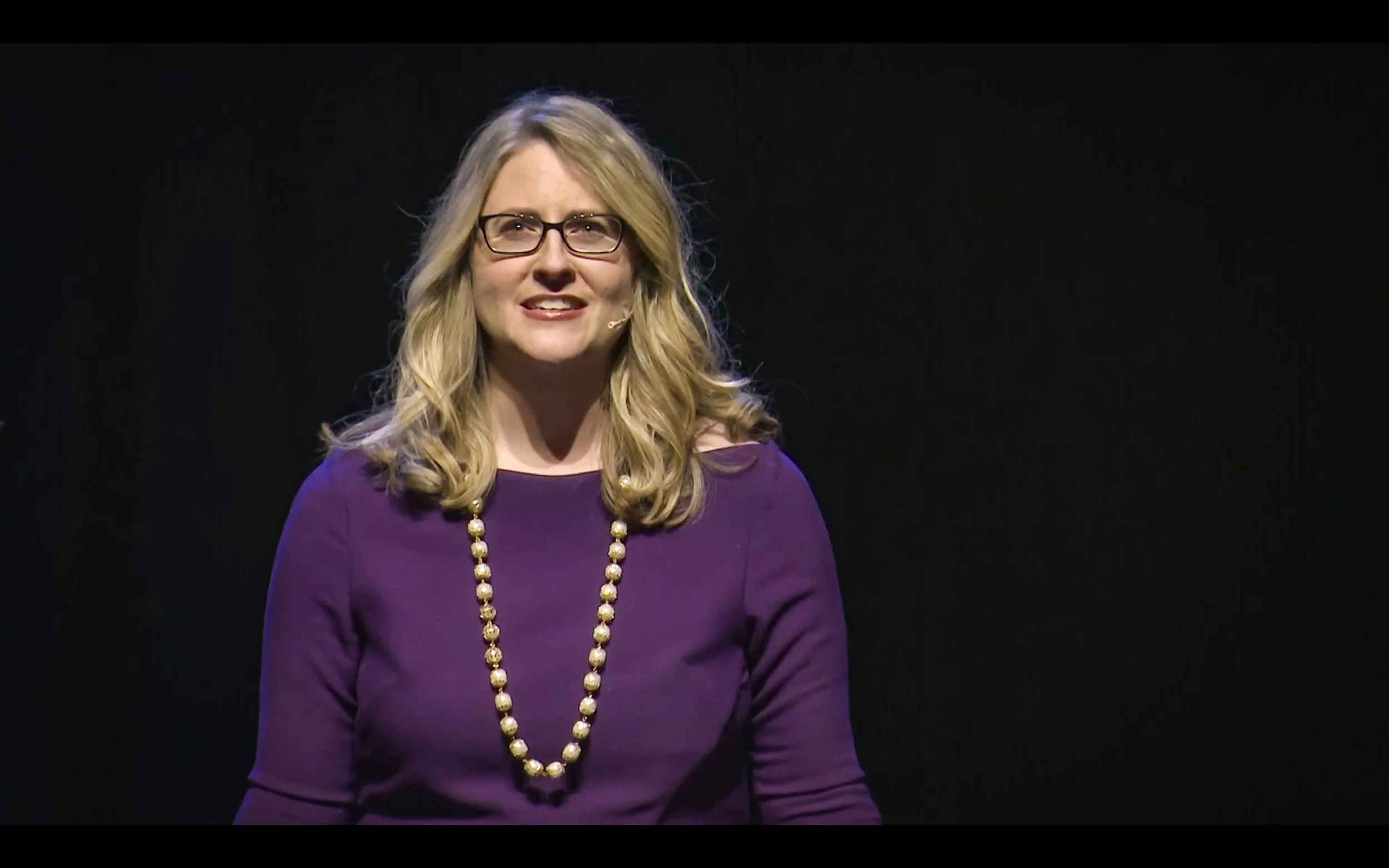
TED Talk
How Your Brain Responds to Stories, and Why They're Crucial for Leaders. 2.25M+ views.