

Section Styles button-center-mobile text-center-mobile
Storytelling for Business & Leadership:
The Complete Guide




Written by Karen Eber, TED speaker (2.25M+ views), bestselling author of The Perfect Story, creator of the Five Factory Settings of the Brain, former Head of Culture and Chief Learning Officer at General Electric, and former Head of Leadership Development at Deloitte.
Every leader communicates.
The best leaders create understanding.
Business storytelling is the leadership skill of turning information into understanding, helping people remember ideas, make decisions, and take action.
Two people can hear the exact same sentence and walk away with two different understandings of what it meant. This is because the brain stores meaning and that is something each person constructs for themselves through the Five Factory Settings of the Brain.
That's why information alone so often fails to land. A story succeeds where a list of facts doesn't. It gives the brain something to build meaning around: a person, a stake, a reason to care. It shapes what someone understands, remembers, and does next.
This is true in a boardroom and in a living room. Anywhere one person is trying to help another person understand something that matters.
This guide explores what business storytelling really is, why it matters more than ever, why it’s hard, how it differs from public speaking or presentation skills, common misconceptions, and why it has become an essential leadership capability.
Related Reading
Five related articles from Karen’s blog. The full guide continues below.
-
How to Add Tension to Your Stories
Read more →
-
Why You Should Include a Chicken in Your Stories
-
The Four-Part Approach to Structuring Stories
-
Storytelling for Sales
-
Five Tips for Business Storytelling
Learn more →

Why Storytelling Matters More Than Ever
The human ability to create understanding is critical.
Organizations have never had more information. Dashboards update in real time. AI summarizes reports in seconds. Employees can search almost any answer instantly.
Yet many organizations still struggle with alignment, decision making, and execution. Access to information has stopped being the constraint. Creating shared understanding of what that information means has become the real work. The challenge isn’t to get leaders and employees more information. It’s to help them make better sense of information they have so they can make informed decisions.
As AI makes information easier to generate, the human ability to create understanding matters more than ever.

The Problem You Might Not Be Naming
Many leadership problems are communication problems wearing a disguise.
Communication is often the root cause behind many challenges at work. It lurks in the team that isn't executing, the strategy that is ignored, the culture that feels misaligned and the audience that isn’t paying attention. Each gets treated as its own problem, with individual symptoms and unique fixes. But the larger underlying issue is unrecognized. This is a pattern Karen Eber has seen repeatedly across the Fortune 500 organizations she's worked with as a keynote speaker and consultant to leadership teams.
The behaviors become a familiar template. The same decision gets re-discussed in three different meetings. A strategy gets announced once, and three months later people have forgotten about it. A great idea gets pitched well and excitement is generated in the room. But the whole thing loses steam when the meeting is over.
What's actually missing is usually understanding, not information. Once you see it this way, the pattern shows up everywhere: a leader speaks clearly, and the room still walks away with different versions of what was said.

What Business Storytelling Really Means
Creating understanding through storytelling.
Business storytelling is the deliberate use of narrative that helps people understand an idea, remember it, and act on it. In organizations, business storytelling helps leaders communicate strategy, explain complexity, build trust, influence decisions, and create alignment.
A well-chosen customer example can explain a strategy more clearly than twenty slides. The story gives people something to hold onto, so understanding actually forms.
The goal in storytelling is always to create understanding. To do that, you have to make the it relatable and help the audience form a connection to the message. Storytelling is one of the most effective tools a leader has for creating that understanding.

Why This Is Hard
People follow-the-leader when communicating.
Most leaders inherit how they communicate from the rooms they’re in. They adopt the meeting styles, presentation habits, and communication patterns they see around them. Doing something different can feel risky; going along feels safer. Leaders skip storytelling because the alternative feels safer, faster, and more professional, and because nothing in their day signals that the shortcut isn't working.
Leaders are trained and promoted for being accurate, thorough, and right. Storytelling can feel like it trades precision for something softer, a real risk in technical, financial, or highly regulated environments where being wrong is costly. The default becomes reciting the facts and trusting the room to connect them.
There's a real cognitive cost too. Once you know something well, it's genuinely difficult to reconstruct what it's like not to know it, a well-documented pattern sometimes called the curse of knowledge. Building a story means deliberately stepping back from your own expertise to rebuild the idea from a listener's blank-slate view, which takes more effort than simply stating what you know.
There's also rarely a clear signal that the shortcut failed. Nodding heads and "sounds good" in a meeting often mean politeness, or a reluctance to admit confusion, more than actual understanding. A leader can walk out of a meeting believing they were clear and be wrong about it for months.
This hits everyone downstream of the leader, left interpreting instead of understanding. It also hits the leader, who ends up re-explaining the same thing three different ways to three different audiences without ever knowing why the first version didn't land.
Why Leaders Struggle With Storytelling
Get past the objections.
Every leader who's skipped storytelling has a reason ready. Three come up constantly.
"I don't have stories." Most people imagine storytelling requires dramatic life experiences. The most effective business stories are usually ordinary moments that reveal something worth learning.
"Storytelling isn't professional." Professional communication is about whether people actually understand what you said. Not if you communicated something formally.
"I don't have time." Stories often shorten communication rather than lengthen it. One well-chosen example can replace several minutes of over-explaining.
Karen Eber has heard these same three objections from executives and technical leaders across nearly every industry she's worked with. Underneath all three objections is the same bet: that facts, delivered plainly, will do the job on their own. They're essential, but rarely sufficient. Without context, people have to interpret facts for themselves, filling the gaps with their existing beliefs, prior experience, and assumptions. That's the job storytelling actually does: not replacing the evidence, but giving people something to understand it with.
When that gap gets closed, the difference shows up in ordinary moments. Meetings end with a decision instead of a follow-up meeting to decide the same thing again. A strategy gets repeated back accurately by someone three levels down, without a slide deck in front of them to reference. A new hire can explain "why we do it this way" within their first few weeks, not their first few years. A leader delivers hard news and is still trusted afterward, because how it was communicated signaled honesty rather than spin.
None of this requires charisma. It requires the message being built to be understood, not just delivered.
The Cost of Doing Nothing
Unclear communication compounds.
Teams re-litigate decisions that were technically already made, because the first version never fully landed. Trust erodes when people feel talked at rather than understood, and eroded trust makes every future message, every future change, more expensive to land, since it now has to rebuild belief before it can deliver information.
Karen Eber has watched this compounding cost play out inside organizations ranging from Fortune 500 companies to federal agencies, long before a communication gap gets named as the actual problem
Institutional memory gets thinner. Ideas that aren't told as stories don't get retold accurately, so lessons that should transfer from one team or one leader to the next have to be relearned from scratch instead.
And the least visible cost is time: leaders who could be spending their attention on judgment calls instead spend it re-explaining the same thing multiple ways to multiple audiences, because the first explanation didn't create understanding the first time. Conversations are held before meetings to try to influence outcomes. But they end up creating more work and less impact.
Effective business stories make ideas understandable. They show rather than simply tell. They create relevance by helping people see why an idea matters. They connect information to decisions and action, and keep people engaged.
Why This Matters More in the Age of AI
AI can draft a presentation, summarize a meeting, and generate a serviceable story in seconds. It's changing how information is created and shared.
But leadership communication has never been about producing information alone. It's about helping people understand what the information means, why it matters, and what they should do next. Karen Eber, creator of the Five Factory Settings of the Brain framework, has spent her career studying how the brain processes information, which is why she sees AI's rise as a shift in what leadership communication is for, not a threat to it
AI can’t know what a particular audience already believes, what concerns they're carrying into the room, or why a similar message failed to land last quarter. It doesn't have the relationships, context, or judgment that leaders develop over time.
That shifts what leadership communication is for. Producing information is increasingly commoditized, but creating meaning isn’t. It’s the thing that can only be done with specificity by a person with context and a point of view.
As AI makes information easier to produce, creating shared understanding becomes an even more valuable leadership skill.
Explore how leadership communication changes in the age of AI → The Human Advantage.
The Human Advantage of Storytelling
We're becoming remarkably good at sensing when something was generated by AI.
People are keen detectors of communications that feel overly polished, formulaic, or detached from lived experience. The moment people suspect a message wasn't shaped by a person with genuine experience or perspective, trust begins to erode. They disengage. They feel manipulated by the message that no longer feels human.
In her work advising leaders on storytelling and communication, Karen Eber sees this surface constantly: leaders default to the safer, more familiar communication style rather than risk something that feels less conventional.
Trust is an inflating cost within our workplaces. Ironically, the more AI handles the mechanics of communication by drafting, summarizing, and editing, the more a leader's own voice becomes the thing that actually earns attention.
Stories work differently. A well-told story carries judgment, context, and lived experience. It reveals how someone thought through a problem, what they learned, and why it mattered. Those qualities are difficult to automate because they come from a person's perspective, not simply from information.
As AI becomes better at generating content, authenticity becomes more valuable. The leaders who stand out won't be the ones who produce the most information. They'll be the ones whose communication reflects their own thinking, experience, and humanity.
Continue exploring how leadership communication is changing in the age of AI.
Karen Eber’s Perspective
We inherit how we communicate.
Most people inherit their communication habits from whoever ran the last meeting, wrote the last status update, or trained them when they started. Nobody consciously decides to bury the point under four paragraphs of context or reopen decisions that were already made. Those behaviors spread because they feel normal, until an entire organization communicates the same way without remembering why.
Unfortunately that means some of these copied without question aren’t effective or questioned. The endless caveats, reading data row-by-row, the meetings that reopen last week's decision, the instinct to loop in five more people before anything moves slow things down. Historically, versions of these same behaviors were literally designed to sabotage organizations from the inside. Today we call it being thorough.
Many people have never been shown what it looks like to be worth someone's attention, so they default to what feels safe: sounding like everyone else. Conformity is comfortable. Nobody gets blamed for a forgettable meeting. But nobody remembers it either, and neither do they remember you.
Karen's answer to communicating with clarity starts with structure. Every story, whether it's a two-minute answer in a meeting or a keynote, works through the same four parts: context, conflict, outcome, and takeaway. Skip the context and the audience doesn't know why to care. Skip the conflict and there's no reason to keep listening. Skip the takeaway and people remember that something happened without remembering what it means for them.
Many storytelling frameworks fail leaders in a few ways. They're built for one narrow type of story, so a leader trying to land an idea in a meeting tries to force it into a structure that was never meant to hold it. They are also complicated enough that the leader gives up before they get to the point.
This structure works for any story or update because it describes what every story needs rather than prescribing what shape it has to take. Karen laid it out for Quartz, excerpted from The Perfect Story, and it's become one of the frameworks leaders reach for most once they've learned it.
The story structure is intentionally paired with Karen Eber’s Five Factory Settings of the Brain framework. The four parts give a story its structure, while the factory settings shape the details and the flow inside that structure, together building communication the brain can't resist.
The brain isn't a blank slate waiting for information, it has default settings that decide, often in seconds, whether something gets attention, gets remembered, or gets ignored. Each of these factory settings becomes a consideration when communicating and telling a story, the difference between sharing information and communicating in a way helps people understand, remember, and act. Understanding these defaults isn't about tricking the brain. It's about working with how people actually process information instead of working against it.
Learn more about Karen’s Storytelling Keynotes.

The Five Factory Settings of the Brain
Karen Eber's Five Factory Settings framework explains why certain messages capture attention, create meaning, and are remembered while others are ignored.
The framework gives leaders a science-based way to understand how people process information and how to communicate in alignment with the brain's natural tendencies.
Storytelling Is The Thread That Connects Leadership
Storytelling is the communication capability that makes the rest of leadership work possible.
Leaders don't tell stories simply to be engaging. They tell stories to help people understand a strategy, make sense of change, interpret data, reinforce culture, and build trust. A story only matters because of the shared understanding it creates.
That's why the same principles show up across so many leadership challenges. A culture exists because people continually tell themselves stories about "how things work around here." Change succeeds when people understand not only what is happening, but why it matters and where they fit. Data influences decisions only after people understand what the numbers mean.
Leadership communication earns trust when information is connected to context, judgment, and purpose. Storytelling, leadership communication, organizational culture, leading through change, and storytelling with data are different expressions of the same underlying challenge: helping people create meaning together.
That question has run through Karen Eber's career since she led culture at General Electric and developed leaders at Deloitte, and it's shaped her work advising organizations on storytelling and communication ever since. People rarely struggle because they lack information. They struggle because they haven't built shared understanding of what that information means.
That's why her work spans all five disciplines, asking the same question from different angles: how do we communicate in a way that helps people understand, remember, and act?
Common Misconceptions About Storytelling
Myth: I can't find ideas for stories.
Reality: Most people are waiting for something dramatic enough to qualify. It's the customer who called confused about a change nobody explained well. It's the meeting where one blunt sentence cut through twenty minutes of hedging. Everyone has these moments. Most people just don't recognize them as material because they're not cinematic enough to seem worth telling.
Myth: I'm not a good storyteller.
Reality: Many people think they aren’t good storytellers, yet they’ve never learned how. They are missing a repeatable way to find and shape a story, not missing some innate gift. Once you learn a structure, you find ways to make your stories compelling.
Myth: Storytelling feels manipulative.
Reality: This concern is usually a good instinct pointed at the wrong target. Manipulation happens when a story distorts the facts to produce a reaction the facts don't support. A well-told story does the opposite: it makes the real facts land the way they should have all along. The goal was never persuasion at the expense of truth, it's clarity in service of it.
Myth: I can't tell a story, I have to share data.
Reality: Data and story aren't competing formats. A number tells people what happened. A story tells them what it means and why it matters. The strongest data presentations use both: the chart to show the evidence, a short story to make the audience feel the stakes behind it.
Myth: I don't have time to tell a story.
Reality: A story is often the shortcut, not the detour. One well-chosen example can replace several minutes of over-explaining, because the audience does less work interpreting it. The version without a story frequently takes longer, since people ask more follow-up questions to fill in the meaning that was never supplied.
Myth: Storytelling is for extroverted people.
Reality: Charisma might make someone more comfortable in front of a room, but that isn’t what makes a story land. Clarity comes form knowing what to include, what to cut, and what the audience needs to understand before the point will make sense. That's learnable by anyone. Some of the most effective storytellers in a business setting are quiet, precise, and would never call themselves "a natural."
Who Benefits Most
Executives and Senior Leaders
Leaders use storytelling to align organizations around strategy, translating a multi-year plan into something teams can understand, repeat, and act on.
Technical Experts and Data Professionals
Experts use storytelling to make complex analysis understandable for audiences who don't share the same technical background.
Founders and Entrepreneurs
Founders use storytelling to help investors, customers, and employees understand why a problem matters and why a solution is worth pursuing.
Sales Teams
Sales professionals use storytelling to help customers understand the value of a solution before price becomes the focus.
Managers and Team Leaders
Managers use storytelling to translate organizational priorities into decisions and actions their teams can understand.
Conference Organizers
Conference Organizers use storytelling programming because it delivers a communication skill that applies to nearly every role and industry in the room.
HR and Learning Leaders
HR and learning professionals use storytelling to communicate initiatives, strengthen culture, and support leadership development.
Marketing and Communication Teams
Communication professionals use storytelling to make ideas more memorable and meaningful.
Individuals
Individuals use storytelling to communicate their experience, expertise, and ideas during career moments and high-stakes conversations.
Frequently Asked Questions
-
Business storytelling is the use of narrative to help people understand, remember, and act on information.
-
Leadership depends on helping people interpret information, align around decisions, and take action.
-
Most effective business stories come from everyday leadership experiences, customer interactions, project decisions, and observations.
-
Presentation skills focus on delivery. Storytelling focuses on how audiences build understanding.
-
Communication problems don't stay stable, they compound into re-litigated decisions, eroding trust, and leaders spending more time re-explaining than deciding.
-
Karen combines leadership experience, neuroscience, behavioral science, and organizational psychology through her Five Factory Settings of the Brain framework.
Related Leadership Topics
-
Storytelling With Data
How leaders turn analysis into shared understanding, so a dataset drives a decision instead of just getting reported.
-
Leadership Communication
Building the clarity and trust that make people understand, believe, and act, and why that human judgment can’t be replaced by AI.
-
Leading Through Change
How leaders communicate through disruption so people don't just hear about a change, they adopt it.
-
Organizational Culture
How the stories leaders tell, and the behavior they tolerate, shape what an organization actually believes and does day to day.
Bring This Expertise To Your Organization
-

Keynote
Karen's signature keynote shows leaders how storytelling helps people understand, remember, and act.
-

Workshops
Hands-on, interactive sessions that give teams the tools to craft and tell stories that inform, influence, and inspire.
-

The Perfect Story
The Perfect Story: How to Tell Stories that Inform, Influence, and Inspire, the foundational text behind this framework.
-
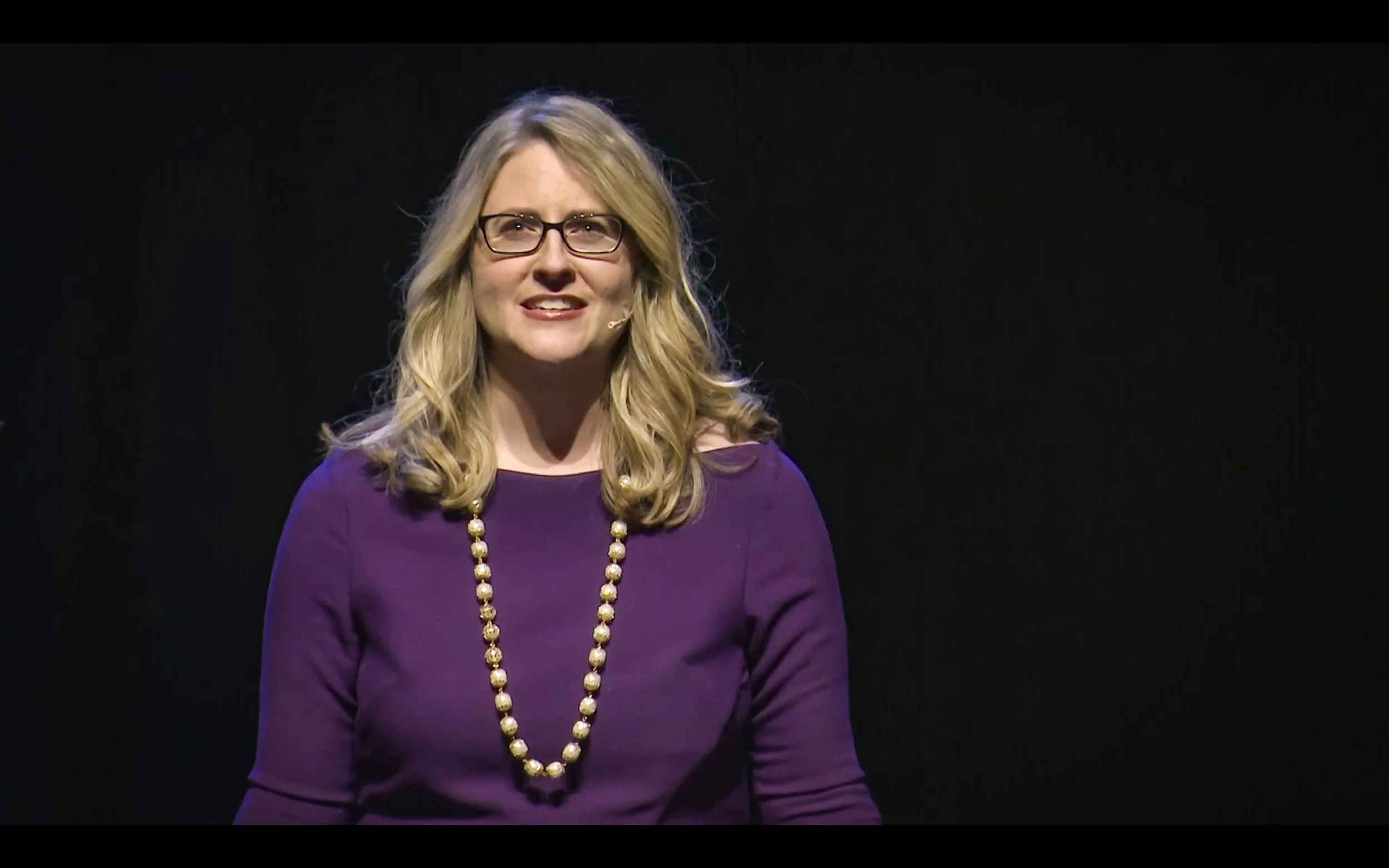
TED Talk
How Your Brain Responds to Stories, and Why They're Crucial for Leaders. 2.25M+ views.