I’m With The Band
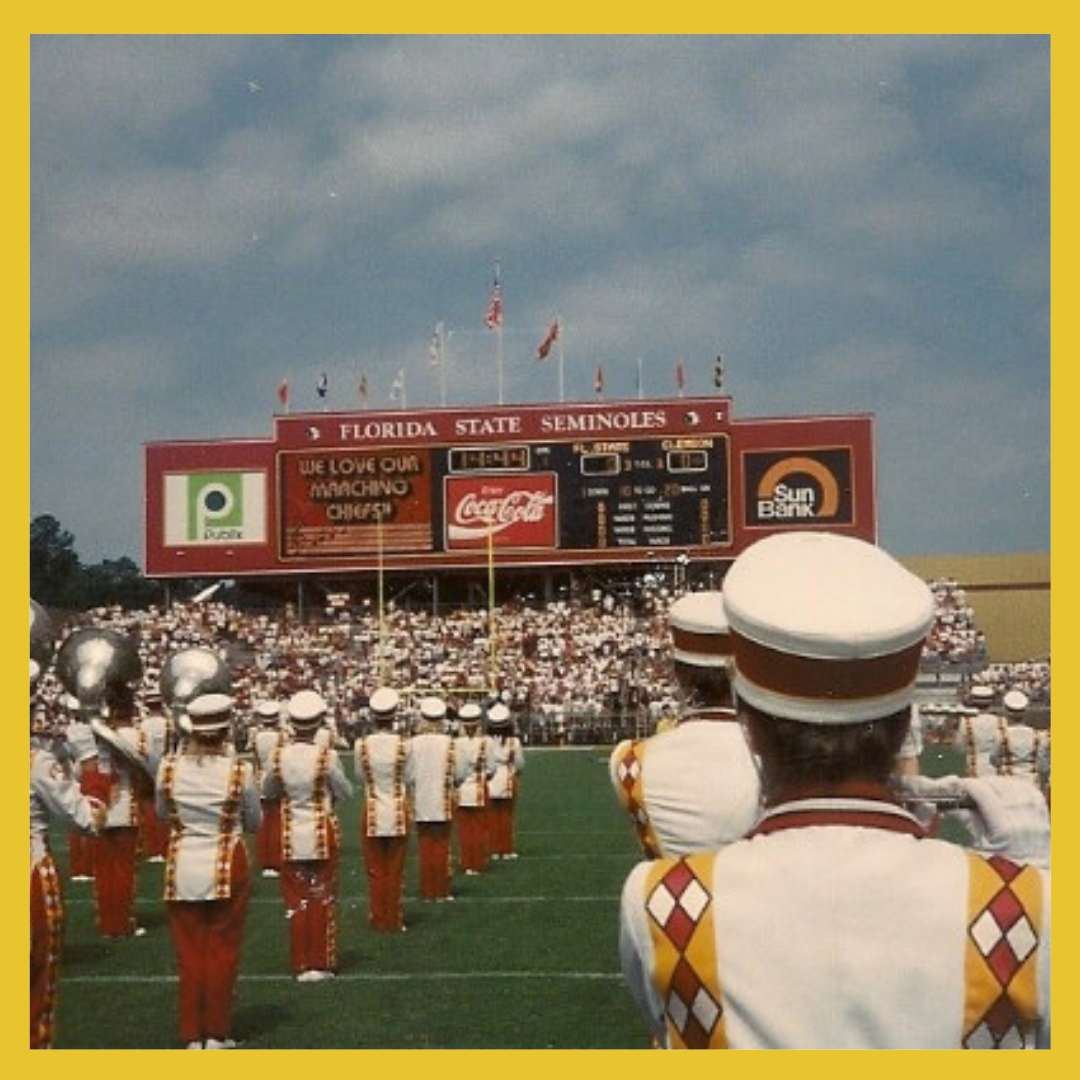
When I was in college, I was cool enough to be in the Marching Band. You don’t typically hear “cool” and “marching band” in the same sentence, but that is exactly what it was. This band was elite (and still is). Each year, hundreds of people auditioned for one of the five hundred spots with The Marching Chiefs. Dozens were turned away.
The Marching Chiefs had traveled internationally to play for world leaders. They'd been featured in different media, including Sports Illustrated which noted that the football team may lose some games, but the band “never lost a halftime show."
The only payment we received to be in the Marching Chiefs was applause. In a way, we paid to be a member. We had to buy parts of our uniform and pay for dry cleaning and instrument upkeep. Rehearsal was 4 – 6 p.m. each weekday, and sometimes later if there was sectional practice. Your day started around 7 a.m. on Saturdays and often went till ten at night. If there was an away game, you were on a bus for an average of ten hours in either direction. Studying happened crammed in the seats. If you wanted to sleep, you either leaned against your bus buddy or laid on the floor, breathing in the signature bus cologne combination of rubber and diesel.
We loved music and the chance to perform with each other. The Marching Chiefs were an incredible community and support network. We felt like the twelfth player on the football team. Maybe we weren’t on the field running scrimmages, but we were cheering them on, often losing our voices from yelling.
The football team was in the hunt for a National Championship— the first one for the Head Coach. One of our first away games was particularly tough. It was a close game. The opponents’ fans yelled at the band and threw things at us. We huddled in our block unfettered, playing, and cheering for the team. Our team scored in the final seconds of the game, and we won the game.
Players and coaches pushed their way to center field for the ceremonial handshake. Security guards flanked the coaches, anxious to get them off the field safely. After shaking hands, the Head Coach began heading directly for the band. Guards pulled at his sleeves, and he brushed them off. When he got in front of us, he took his hat off, reached back, and flung it as hard as he could into the stands. Fifteen band members jumped for the hat; one hand emerging with this meaningful souvenir.
We had a long drive home. Conversations across the ten buses talked about this literal and figurative tipping of his hat. That one gesture cost him nothing. He could have kept the hat for himself as a memento of the year. But instead, he chose to do what great leaders do: recognize people on their team. That one gesture said “I see you. You matter. You were a part of this win. I tip my hat to you. Thank you.”
He did all that without saying a word. What felt like a small gesture to him ended up having a ripple effect back on campus. Fans would come up and want photos with band members. Football players would stop and talk with us. It felt like every collegiate organization stopped by practice. We were “cool” because the Head Coach showed the university that we were important to him. In turn, we would do anything for him. Including driving twenty-four hours one-way on buses to cheer them on at away games.
The Head Coach started a tradition with that game. Each away game was hard-fought. As we emerged the victor, he struggled his way over to us to throw his hat. Including the National Championship game (spoiler alert - we won!).
These moments were leadership lessons. He demonstrated that a small gesture and moment of your time can mean the difference between someone feeling integral instead of invisible. That teams often include more than just the obvious players. Acknowledging the contributions of people not only helps them feel validated, but also leads to stronger performance.
While this gesture may seem minimal, the impact and ripple effect has been vast. The people that caught the treasured hats have amazing stories to tell their grandchildren about what this famous football coach did and how they benefited. The others of us who never caught a hat had a wonderful story to tell. More importantly, we felt like we mattered, were integral to the game and part of his overall team.
Now that I have made a career out of working with and helping coach leaders, I think back to this gesture.
I share this story with leaders to show how a little awareness and gesture on this coach's part has had direct and indirect impact on 1000s of people.
A small moment of your time can mean the difference from someone feeling invisible and feeling integral to the game.
Putting your team before yourself shows that you are all working towards the greater good – and it’s not just about serving your own interests.
Sometimes you also need to take note that your team may include more than just the obvious players. Help everyone involved know you are aware of their contributions, which will result in each person feeling validated and ultimately stronger performance. Additionally, in doing so - others will notice.
If only the band could have received a National Championship Ring as well...
***
Want to receive more articles like this one? Sign up for Brain Food here.
Karen Eber is an author, TED and keynote speaker, and communication strategist who works with frontline leaders, senior executives, and C-suite teams at Fortune 500 companies. She partners with teams across sales, marketing, communications, HR, finance, operations, legal, and IT. She works across industries including healthcare, technology, financial services, manufacturing, energy, consumer goods, retail, professional services, education, and nonprofits — helping leaders turn complex information into clear, compelling stories that drive decisions and action. She is the author of The Perfect Story. Learn more about her keynotes and workshops at kareneber.com/speaking.