Netflix Thinks You’re Not Paying Attention. They Might Be Right.
Here's something that stopped me mid-scroll recently.
Matt Damon and Ben Affleck were on a podcast promoting their new Netflix film The Rip. Matt Damon shared something that broke my storyteller’s heart.
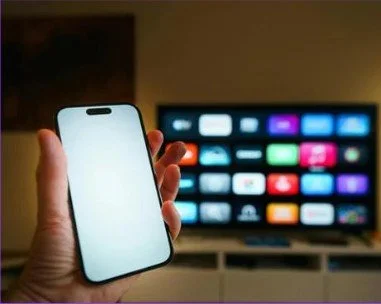
Netflix’s policy, he explained, asks filmmakers to reiterate the plot three or four times throughout a movie. Viewers watch from the couch with their phones and tablets, only half paying attention, and the repetition helps remind them what’s happening.
The same people who won an Oscar for Good Will Hunting, a thoughtful, gripping film, are asked to dumb down their storytelling because we can't put our phones down for two hours.
Damon added another note Netflix gives filmmakers: put the big action in the first five minutes. Hook them fast or lose them forever.
He summed it up simply: "It's really going to start to infringe on how we're telling these stories."
He's right. And it's not just movies.
This Is Happening Everywhere, Not Just on Your Couch
What Netflix is reacting to isn't a quirk of streaming. It reflects a broader shift in how people consume information, and it affects every communication you deliver.
Meetings. Presentations. That email you spent an hour refining that someone else skimmed on their phone in eleven seconds.
Our attention shortens as the noise around information increases. In 2004, researcher Dr. Gloria Mark at UC Irvine found that the average person stayed focused on one screen for about 2.5 minutes before switching tasks. By 2020, that number had dropped to 47 seconds.
Forty-seven seconds.
That's not a focus problem. That's a reality check.
It doesn’t mean people can only pay attention for 47 seconds. It means our environments are designed for constant interruption. And yet most of us still structure communications as though people will hang on our every word.
Your Brain is Lazy
The audience’s brain isn’t patiently waiting to receive your information and process it thoughtfully. At it’s core, it’s a calorie-conservation machine. Your brain is always running a quiet internal calculation: Is this worth my attention, or can I pull back and conserve some energy by drifting off?
I write about the Five Factory Settings of the Brain in The Perfect Story because it interacts with information in specific, predictable ways. The first setting is that the brain is lazy. It’s your body’s broker of calories, and it’s stingy—always looking to conserve energy. If a message doesn’t feel relevant or meaningful, or doesn’t give it something to latch onto, it shifts attention elsewhere.
The second setting is that your brain constantly makes predictions and assumptions, guessing what comes next to stay ahead and conserve more calories. If your story, your meeting, or presentation is entirely predictable or irrelevant, the brain checks out.
We are not passive receivers of information. We are distracted, assumption-making, calorie-conserving creatures who need a reason to keep paying attention.
The Attention Span Reality Check
So what are we actually working with? Let's get specific.
Passive Listening
Most people can listen passively for about 8 to 10 minutes before focus drops significantly. Without visuals, interaction, or a story, passive listening is one of the hardest things to sustain. This is one reason TED Talks cap presentation at 18 minutes. Attention doesn’t disappear at minute 19, but engagement drops significantly, especially without any change in format.
The First Minutes Matter Most
Attention is highest at the beginning. Research on meeting engagement and presentations shows that the first five to eight minutes carry the highest focus. During that window, people decide whether something deserves their attention or whether they mentally start their grocery list.
Which means if you open you presentation with lines like:
"Before we begin, let me give you some background…"
“Hi, thank you for having me. I’m so honored to be here….”
…you are spending your most valuable minutes on the least compelling material.
Meetings
Research shows that roughly 91% of people are paying attention in the first 15 minutes of a meeting. That drops to 84% around the 30-minute mark, and it falls off a cliff after that.
On average, you lose 27 minutes of focused attention in every single 60 minute meeting. Total the hourly cost of everyone in the meeting and that’s significant organizational waste.
Video Calls
Video conferences shorten the runway even further. Most studies show sustained attention lasting 20 to 30 minutes before fatigue and distraction rise. The longer the meeting goes, the more people are physically present but mentally elsewhere.
The Slide Problem
And then we make it worse with our slides.
Slides are packed with paragraphs. Charts contain every possible data point. With each new slide, the audience stops listening and starts reading, and they miss what the presenter is saying. Which means that meeting really could have been an email.
Research consistently shows that text-heavy slides reduce engagement and create cognitive fatigue, especially when presenters simply read what’s on the screen.
Slides are supposed to help the brain process information—not compete with it.
A useful rule: one idea per slide.
Previous guidance focused on using as few slides possible, but given how attention works, more slides can actually be better—provided each one is well constructed. Photos, images, and simple text keep an audience engaged. The key is using slides as a visual aid, not to drive the conversation.
A slide every 30 to 60 seconds keeps the brain engaged because each visual change introduces novelty…one of the brain’s favorite attention triggers. Keep the slides simple so the audience can glance at them, process them, and return their attention to the speaker. Slides should show the idea, not repeat what the speaker is saying.
Earn Attention. Don't Assume It.
Here's what I know from 20+ years of helping leaders, teams, and organizations communicate better:
The problem is almost never the information. It's the structure and delivery.
Important ideas get lost because they aren’t delivered in a way the brain can receive. The antidote isn't repetition. It's relevance. Attention hasn’t disappeared. It’s selective and easily interrupted. Which means the responsibility falls on communicators to earn it.
Design for Attention Resets
The most effective communicators design for how attention actually works.
Think in 10-minute chapters.
When I work with people on keynotes and presentations, we structure the message in segments, roughly ten minutes each—a series of chapters that chunk the information. Each segment includes something to capture attention: A question. Visual, story, or surprising piece of data.
Every shift is intentional, creating an attention reset and giving the brain a reason to stay. Without those, even the best content eventually fades into background noise.
The Opportunity
Here’s the part that excites me. Shrinking attention spans don't mean people stopped wanting great stories.
Books still keep people up past midnight. Movies still pull audiences in. Keynotes still make people forget how uncomfortable the conference chair is. Conversations still make people lose track of time.
People aren't less capable of attention. They're more selective with it. That raises the bar and creates real opportunity.
When most communication is lazy, overloaded, or poorly structured, anyone who understands how the brain works and designs their message accordingly stands out immediately.
Netflix is adapting by lowering the standard. We should adapt by raising our craft.
Your audience may start distracted. But the right message, structured the right way, can bring them back.
***
p.s. Want to be a memorable communicator that holds attention? Start with understanding how your brain and your audience's brain actually works. That's the foundation of The Perfect Story and every workshop and keynote I deliver. Because it's not storytelling for storytelling's sake. It's building an understanding in the audience’s mind.
Karen Eber is an author, TED and keynote speaker, and communication strategist who works with frontline leaders, senior executives, and C-suite teams at Fortune 500 companies. She partners with teams across sales, marketing, communications, HR, finance, operations, legal, and IT. She works across industries including healthcare, technology, financial services, manufacturing, energy, consumer goods, retail, professional services, education, and nonprofits — helping leaders turn complex information into clear, compelling stories that drive decisions and action. She is the author of The Perfect Story. Learn more about her keynotes and workshops at kareneber.com/speaking.