Behind The Scenes At A TED Conference
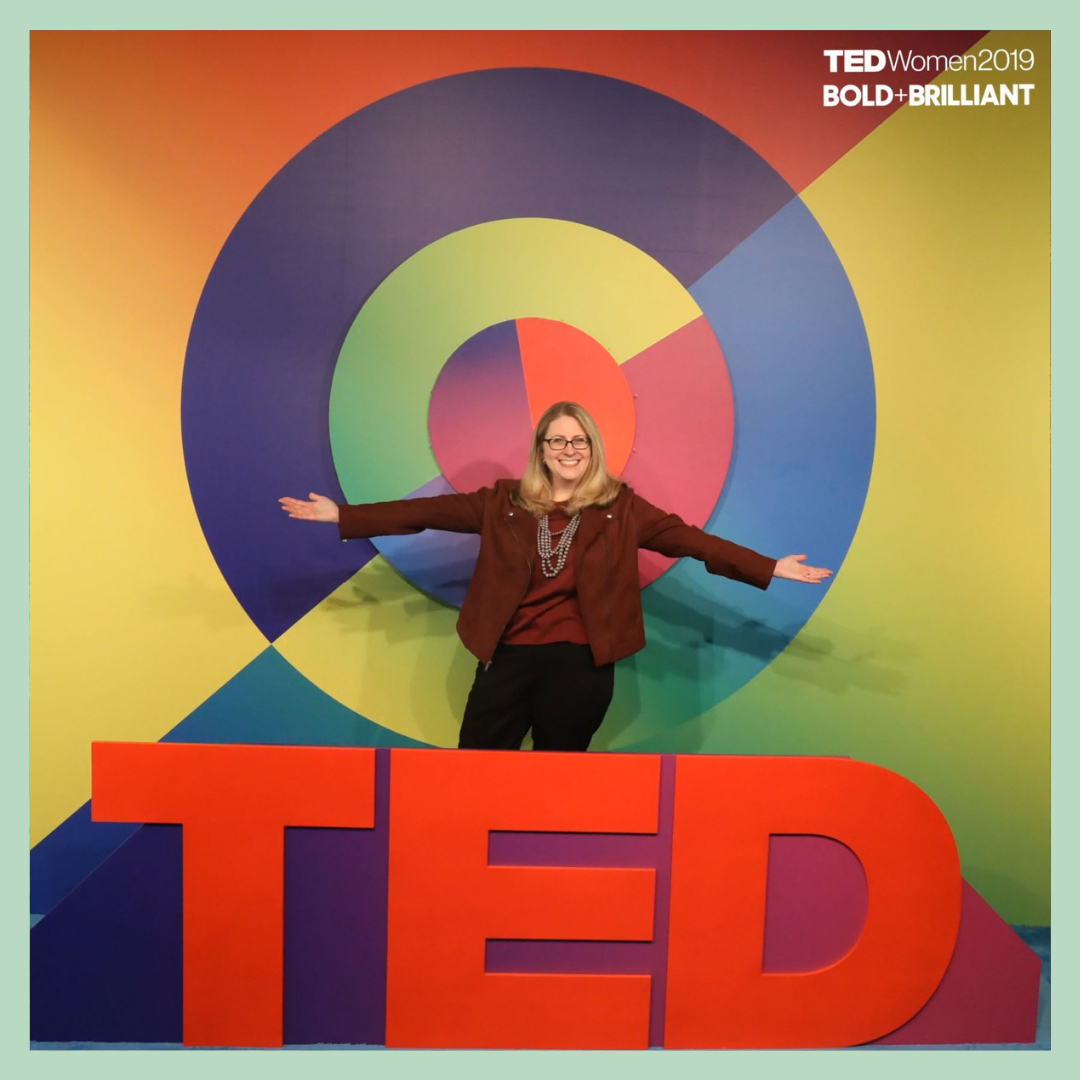
Do you have a favorite TED Talk? Two of mine are Mr. Splashy Pants by Alexis Ohanian (aka Mr. Serena Williams) or Lollipop Moments with Drew Dudley. Google them…or better yet, DuckDuckGo them, as I learned from TED Women speaker Jennifer Zhu Scott last week. I had the bucket-list opportunity to attend the TED Women conference in Palm Springs. TED stands for Technology, Entertainment and Design. Talks are under 18 minutes and focus on building an idea worth spreading. Speakers stand onstage in a red circle and deliver well prepared, authentic and vulnerable talks in front of a live audience. Being a TED speaker is an incredible honor, as was being able to attend live.
TED was conceived by Richard Saul Wurman in 1984 and has been held annually since 1994. Chris Anderson took over the TED conferences in 2002 and has been curating them ever since. There are four TED conferences a year: The TED conference in Vancouver, TED Global Summit, TED Women and the newly added Countdown Summit, focused on creating positive impact and action towards climate change. TED conferences are application/invite only, ensuring every person wants to be there and contributes to the experience.
You have two options to watch the TED speakers: in theater or the simulcast lounge. The simulcast lounge has several screens and couches where the talks are broadcast simultaneously for those who want to be on laptops, phones or move around. The theater stages the live talks and no electronic screens are permitted. It is a production set with seven cameras and lighting. The screen-free environment provides undivided attention and connection with the speaker, creating an emotion in the room that can’t be replicated to the simulcast or recordings.
The talks are a mix of ideas, music, comedy and dance, chunked into different sessions. Each session has a theme and is made up of about five talks. Throughout the three days, there were six different sessions with 41 different talks. Each of the sessions have an emotional arc to them, ranging from humorous to heavy talks. The mixture of talks helps give you a mental break and keep you focused and attentive.
It can get intense listening to the talks! There were many sniffles as Sister Norma Pimentel described her work with children detained at the Texas border in the U.S. Waves of laughter moved across the audience as Dr. Jen Gunter gave a talk about women’s health that was equally informative and entertaining. Mouths hung open as Dr. Lucy King described how elephants and humans were competing for resources in Africa, leading to deaths on both sides. Until they discovered how the elephants feared bees (they sting their eyes, up their trunk and behind their ears). The solution was to build a fence that hung actual and fake hives. Elephants stopped breaking into villages, bees pollinated the land, and villagers harvested and sold the honey to protect the elephants. Alice Shephard and Laurel Lawson had the audience leaning forward during the paired dance in wheelchairs, that defied your understanding of limitations. They got airtime during their dance! Each talk built an idea in the listeners mind, leaving them just a bit changed.
While the recorded talks you see on TED.com are polished and smooth, the live talks often hit some turbulence. Microphones don’t work, slides don’t advance, people lose their place and sometimes are overtaken by emotion. This is where the magic of months of coaching and the seven cameras come in. Speakers are told that if they make a mistake or forget something: start again and editing magic will be applied. Speakers calmly restarted from where they were and continued. TED editing doesn’t strive for perfection. They focus on authenticity and helping the audience get the takeaway.
I sat in the theater for every talk. I wanted to feel the connection with the speakers and the emotion in the room. I was equally energized and drained. The TED audience is perhaps the most supportive audience for speaking. Standing ovations were given to speakers, and encouragement applause offered to those who lost their place or became emotional. You could hear each audience member cheering speakers on in their head. After each session, you were able to mingle with the speakers, learning more about their talk and celebrating their accomplishment.
Talks are just one part of the TED experience. There are workshops, food sampling, chair massages, virtual reality and photo booths. “Typing Troubadours” would write/type you a custom poem on demand and at night, you could look through telescopes with astronomers. Each thing at the TED conference has earned it's place. From books in the bookstore, to food offered to the badge scanner making the same water drop sound that begins each TED talk. There is intention and attention to each detail. For example, oat milk was offered as a default option for the coffee because it reduces your "footprint," requiring less land and water use and producing less greenhouse gas emissions. There were also several opportunities to connect with attendees. It was completely comfortable to walk up to any stranger, start a conversation and feel accepted. I met fascinating people from all over the world and had so many interesting conversations standing in line, getting coffee or over meals. As an attendee, you may not stand in the red circle, but you feel just as special as those that do.
On a personal note, the timing of TED Women was perfect. I am confirmed as a TEDx speaker for February 2020. I’m excited to take my spot on the red circle and build an idea for the audience.
There is a saying that after a TED conference, you have a TED-ache with your head buzzing in the best possible way. Join me in my TED-ache by checking out some of these talks (to be released over the next several weeks):
Ellen Johnson Sirleaf: The first women president of an African Nation and Nobel Peace Prize winner on women working for change in the world
Heather McGhee: How racism leads to bad policy making and how it created the financial crisis (this is a must see!)
Jennifer Zhu Scott: Preventing companies from making money off your data and make money off your own data
Dr. Lucy King: That elephant talk!
Eva Galperin: Cyber security specialist that informs (and slightly terrifies you) on the dangers and prevalence of stalkerware
Dr. Jen Gunter: Women’s health and how we shouldn’t be embarrassed to talk about it (required viewing for men and women!)
Dr. Lisa Mosconi: The neuroscience of menopause (also required viewing!)
While you may not be able to get to one of the TED conferences, there are incredible TEDx events in major cities all over the world. I highly encourage you to attend one near you and partake in the brain spa.
***
Want to receive more articles like this one? Sign up for Brain Food here.