I Can Learn German In A Month...Right?
I clicked the Google translate button in the upper right of the screen, changing the text from German to English. I scrolled down the page, scanning the conference description when something caught my eye and made me stop. “This conference will be delivered in German, with the exception of a few sessions delivered in English.”
“Welp. It looks like I am going to be the opening keynote for a German conference in Austria…as one of the few English speakers,” I thought.
This could be problematic. I work hard to connect with every audience…whether in Indiana, Spain or Austria. I want them to see I have done my homework by telling stories with local examples and speaking a few sentences in the local language. I studied Spanish and can fumble my way through French and Italian. But German…I know about eight words. I figured rock stars and politicians manage to speak a few sentences in other languages. Surely, I could learn some to greet the audience next month.
I reached out to a friend in Austria, telling her what I wanted to say. She translated three German sentences and recorded them so I could hear the correct pronunciation. I began practicing daily, first sounding out the words phonetically, then recording myself. I’d text the recordings to my friend, who would send back recordings correcting my pronunciation. I practiced many times a day for over a month, confident I was improving each time and was going to delight the audience with my German greeting.
The day before the conference, I was in a business meeting with a colleague in Vienna. I asked if I could practice my three sentences. He sat back while I proudly read my three sentences with gusto. I finished and looked at the blank look on his face. There was an awkward pause and then he said, “I have no idea what you said. I’m not even sure you are speaking German.”
“Uh oh, this isn’t good? You didn’t understand anything,” I asked?
He took the paper from my hands, scanned it and said. “These are complicated sentences. This isn’t what I heard you say. The problem is you have no ‘Ich.’”
“Ich?”
“Yes, Ich.”
Eeek?
“No, Ich…more kk sound.”
“Ichkkkkkkk?”
This went on for several more rounds until I gave up, sounding like a cat with a hairball.
“Maybe I should just stick to ‘Guten Morgen,’” I said, defeated. I thought I had nailed it. I was disappointed it wouldn’t work after spending so much time practicing, but I didn’t want the audience wondering what language I was speaking.
The next morning, I mentioned to one of the conference sponsors that I had practiced three sentences in German, but I decided I should scrap them. She said, “Practice them on me.” I took out my paper and proudly read the three sentences, secretly hoping my colleague was wrong the day before. Before I could even finish the last sentence, the woman spit out her coffee and began laughing so hard that her shoulders shook. I folded my paper, smiled tightly and walked away while she continued laughing. “Alrighty then – ‘Guten Morgen’ it is,” I thought.
An hour later, I was introduced on the mainstage. As I climbed the stairs, I was thinking about my opening sentence and where I would stand. I said “Guten Morgen” and took a deep breath to start my first sentence in English when the audience launched into thunderous applause. I stopped, stunned by their warm, supportive greeting from my mere two words. I forgot my first sentence and stood still for a moment. All I could think was “I tried to learn three sentences in German each day for over a month, and all I ever needed to say was ‘Guten Morgen’!?!”
In hindsight, I made some pretty common development mistakes trying to learn German. While my intent and mindset were good, I overestimated what I could achieve in a month. My false confidence grew without real-time feedback. Later, my Austrian friend asked why I didn’t call her to practice. I knew she was busy and didn’t want to take her time. But, I needed the real time coaching and feedback for pronunciation. I could have learned five weeks earlier that I had no “ich” and fixed it.
I should have started with the fundamentals, spending a few weeks learning the German alphabet and pronunciations. I naively assumed my experience with other languages would give me a foundation to learn three sentences. The German alphabet is different. Focusing on the different sounds and pronunciations would have given me the foundation for speaking a few sentences. Without realizing it, I was speaking German using the Spanish alphabet. No wonder the conference sponsor laughed at my pronunciation!
I should have simplified my approach. Instead of telling my friend what I wanted to say, I should have asked her advice on what to say and how to learn it in five weeks. I took on three complicated sentences, when I could have planned one simple one and saved a lot of time.
Interested in what I was planning to say before learning I have no “Ich?”:
Stellen Sie sich vor, Sie sind Amerikaner und sind für die Opening Keynote auf einer österreichischen Konferenz verantwortlich und sprechen kein Wort Deutsch.
Ich hoffe, das ist OK, weil ich mir sehr angestrengt habe, Sie original österreichisch willkommen zu können.
In diesem Sinne, ein herzliches Servus und ich bin sehr dankbar heute in Wien sein zu können.
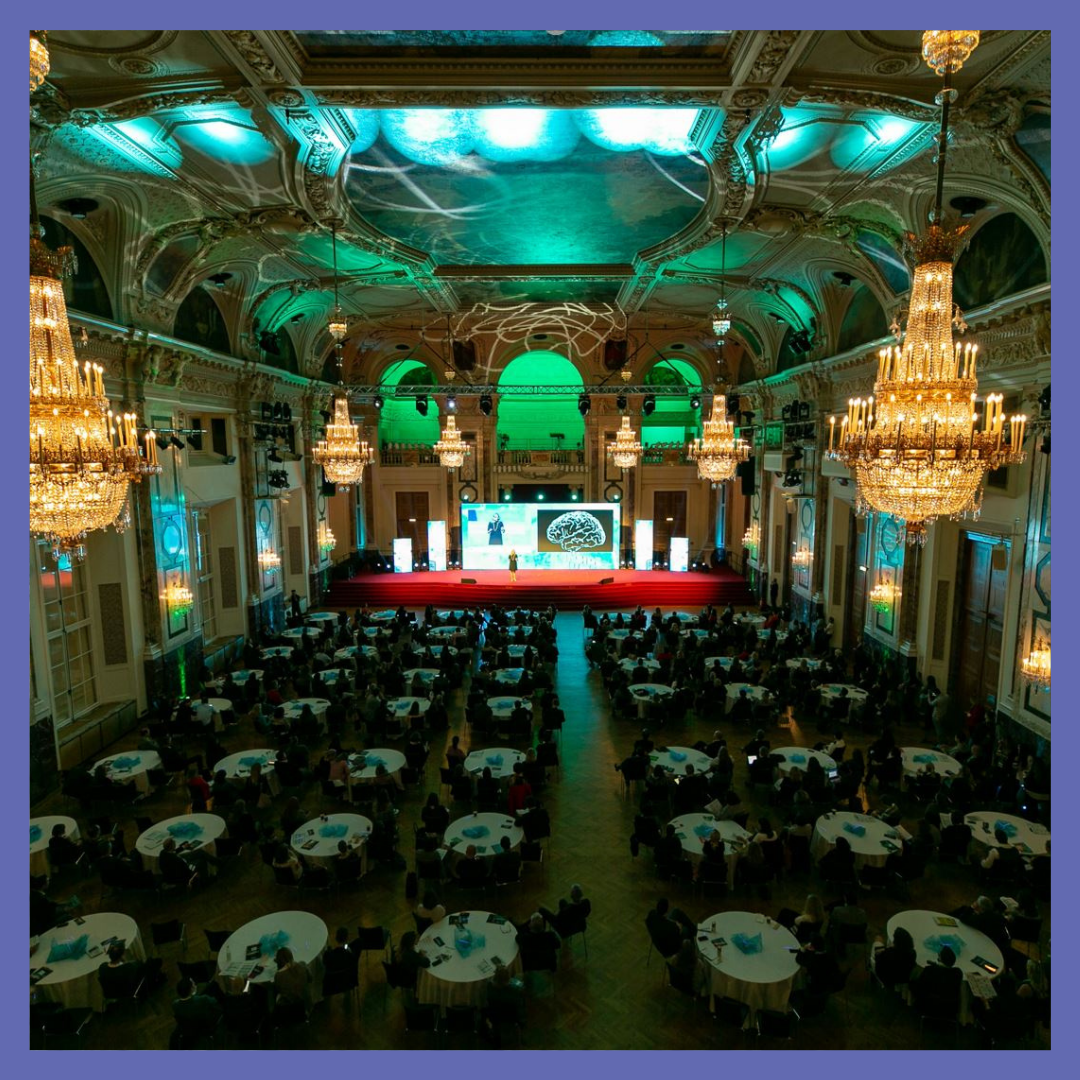
The Hofburg Palace was the most beautiful setting I have ever spoke. The audience was warm and it was fun to provide the opening keynote on storytelling. Ironically, I came away from the experience with lessons learned, a great story, and one perfected sentence in German: Ich spreche kein deutsch.
Click here to see an image of me onstage speaking, photo credit to Daniel Bointner Fotografie.
***
Want to receive more articles like this one? Sign up for Brain Food here.