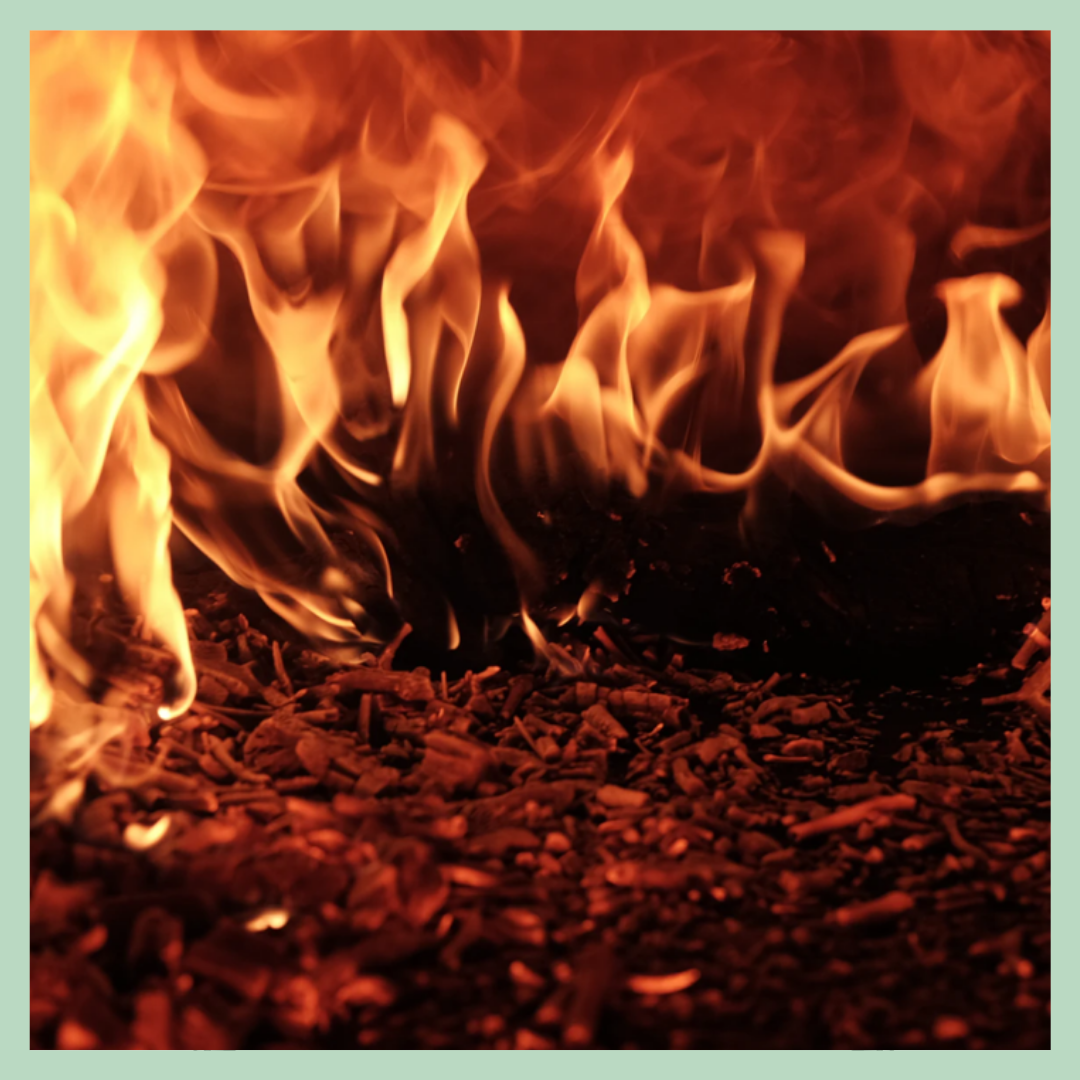
Would you lay down in a fire, or would you fight to escape? The answer seems obvious: fight to escape. But what happens when you lose your ability to make sense of what is happening or see the path forward?
15 men parachuted into the Montana Wilderness on a blazing hot August day, just shy of 100°F/37°C. Waves of hot air washed over them as they descended over the barren area of hay-colored dry grass and dead trees. As they bent their knees to land, they could see a fire off a half-mile in a distance. These smoke jumpers parachuted into this hard-to-reach area to help fight a fire started from a lightning strike. Their goal was not to extinguish the fire, but to use axes, shovels, and hoes to clear out anything that could burn.
The men’s gear was dropped from a separate plane at a higher altitude due to turbulence. Tools scattered well beyond the drop zone and the crew radio shattered. The fireman collected their gear, joined up with the ranger on the ground, and planned how to contain the fire. Their goal was to create a perimeter around the fire to get it under control. The fire wasn’t moving quickly, and the men had time to plan and prepare for the fight.
Dodge was the foreman of the group. While most of the men were in their early 20s, Dodge was 33 and had more experience. They were hand selected to be smoke jumpers with demonstrated experience and extensive training. They had never worked together as a team or run drills for different scenarios.
The men were divided on either side of a gulch, trying to guide the fire down to where there was less brush to burn. Progress was slow as the men dug at the earth. Suddenly, Dodge noticed the winds start to shift and temperatures quickly rise. The ground snapped and crackled as the fire jumped the gulch and moved across dry grass that provided endless fuel. He knew they weren't safe, and it was time to retreat.
The heat became almost unbearable as the men tried to escape. The ridge was covered with tall, waist-high dry grass that made moving slow. Flames gained speed towards them, traveling half the distance of a football/futbol field every minute. Dodge yelled to the other men to drop their packs and heavy tools and run. Some had already done so. Some gripped them tighter, convinced they were the only key for survival.
Dodge realized there wasn’t time to get up the ridge or out run the fire. He estimated he had 30 seconds before the fire got to him. He stopped running, bent down and lit a fire of his own, shouting and motioning for the other men to join him, He then laid face down in the blackened area created by the fire he set. None of the men joined him, they kept scrambling for safety. Some of the men never heard him. The others kept running, thinking he was crazy and laying down to his death.
As the fire reached Dodge, it parted and went around either side of the burnt area where he laid. The intense heat waves shook his body as the fire moved past him. Ten minutes after Dodge created his own escape fire, he stood up unharmed. Thirteen of the men died. Eleven were unable to outrun flames and two later died from extensive burns.
As terrible as the Mann Gulch tragedy was 71 years ago, it has positively impacted firefighting approaches today. Line of duty deaths reports are studied to understand what was done, why it was done and what can be done differently. Wildland firefighters are now taught to “step into the black.” Firefighters have radios to help with communications. Training is done on an ongoing basis to help firefighters drill different scenarios and keep calm to process information in changing conditions. The Mann Gulch tragedy also gives us lessons that apply to the current confusing and changing situations in business.
People behave logically (to themselves)
The team thought they understood the fire. They missed how quickly conditions shifted and that their plan would no longer work. Confusion set in quickly. Dodge thought by lighting an escape fire, he would create a hole in the fire and possibly survive. The firefighters that made a run for the ridge thought they could outrun the flames. Neither could understand why the other wouldn’t join them.
Have you ever seen someone behave in a way at work that didn’t make sense to you? The more confusing the situation, the harder it can become to understand other’s behaviors. We hold tighter to our perceptions and understanding of what is happening. There is logic and intention behind each person’s actions. When able, don’t just assume positive intent. Take the time to understand. It will build empathy and show alternate thinking that may help you understand how to motivate the person.
You don’t rise to the occasion, you sink to your level of training
The smoke jumpers encountered a situation they hadn’t seen before. The shifting winds, steep terrain and escape fire were too much for them to process. They hadn’t run drills for changing conditions and had no muscle memory to draw upon.
They were exhausted and had lacked cognitive capacity for anything but “run!” Chris Stone, a Seattle Firefighter, said: “You do not rise to the occasion, you sink to your level of training.”
When under extreme stress, our brains are flooded with cortisol, triggering our body to get away from danger. Our ability to process information and think clearly dramatically narrows, and our capacity for making good decisions decreases. While you may not be staring down an approaching fire, many have been experiencing increased cortisol for these past few months of social distancing. Uncertainty, helping children with school, losing income, having ill loved ones all have created a prolonged period of stress. This impacts our ability to process information, perform and make decisions. The more we practice how to keep calm and respond, vs. react, the better we are able to process information.
Cognitive dissonance
By lighting a fire and laying down, Dodge did something never tried before. When interviewed, he said he thought he had a 50/50 chance it would work. The fire fighters watching him couldn’t reconcile the contradicting thought that fire fighters put out fires, not start them.
The more confusing a situation, the more someone may not be able to rationalize what they see with what they understand. We dig into what we believe and become more resistant to other ways. At work, we most often experience cognitive dissonance with values. The leader that claims “trust” as a value, yet sends an email, text, instant message and phone call all within five minutes of each other to make sure you saw something not urgent. The company that proclaims “empowerment” as a value yet funnels all project and financial approvals through one person. When we experience cognitive dissonance, our performance and our engagement is impacted.
Loss of meaning
Karl Weick, an organizational psychologist, wrote a book on the Mann Gulch disaster titled “The Collapse of Sensemaking in Organizations.” He describes groups becoming vulnerable to a “loss of meaning” when unable to make sense of what is happening.”
Stressful and different situations are confusing. People behave in ways that are rational to themselves and may not recognize when they are unable to make sense of what is happening. When we experience cognitive dissonance or a lack of direction, we proactively stop doing things and can end up in a state of learned helplessness. Clarity and communications are key in helping people find the path forward to help them recognize what to pay attention to and ignore
What will you leave behind and change?
***
Want to receive more articles like this one? Sign up for Brain Food here.
Special thanks to Chris Stone with the Seattle Fire Department (and all around righteous dude) for providing additional context on lessons learned from Mann Gulch, and firefighting training and precautions taken today.
Additional resources leveraged for the research of the Mann Gulch tragedy:
The story that tore through trees