Copy, Moon joy. What NASA's Artemis II Teaches Us About Leadership Communication
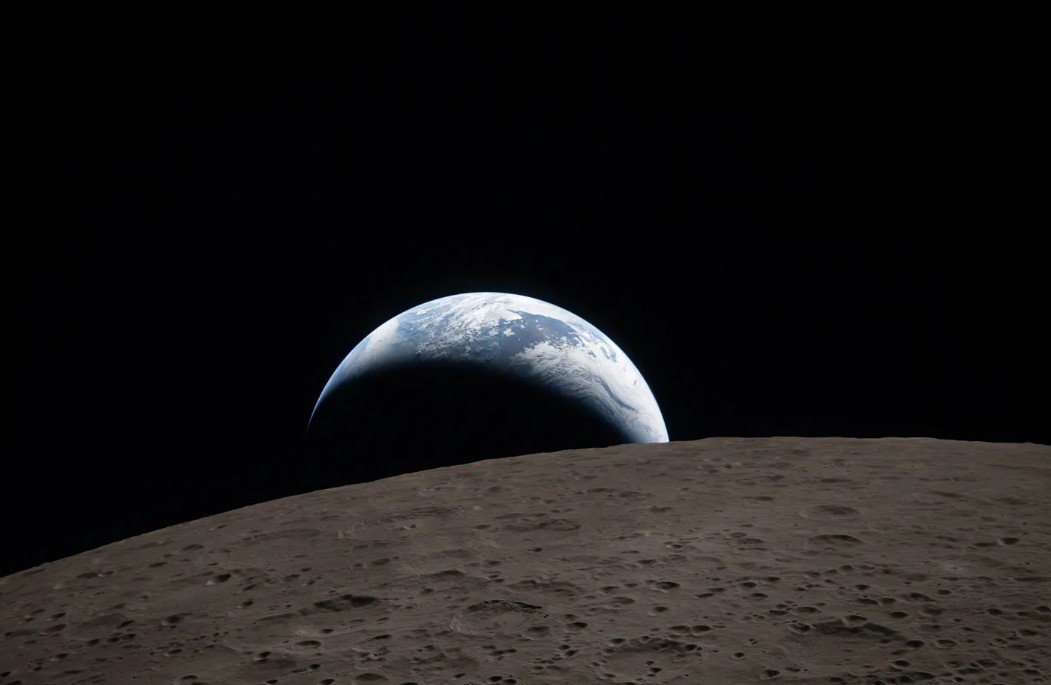
Photo Credit: Earth Set, NASA, April 2026
“No--no words--no words to describe it. Poetry! They should have sent a poet. So beautiful. So beautiful...I had no idea. I had no idea”
―Jodie Foster as Ellie Arroway in the movie Contact
In Contact, Jodie Foster’s character travels through space and returns unable to describe what she saw. Struggling to find the words, she repeated, “so beautiful….so beautiful.”
NASA apparently watched that film and took notes.
The other week, I watched a livestream of the Artemis II crew. I’ve studied NASA from an organizational culture perspective for years, so, I wanted to see how they handled this historic mission. I was struck by two things: the crew’s intentionality and their descriptive language.
This mission was years in the making. The crew trained on simulations and studied lunar geography. They created flashcards of the Moon’s geology so they would know what they were seeing. They traveled to Iceland experience similar terrain and handle samples. They even studied photography. You only get one chance to capture the perfect photo of Earth and the Moon in space, so they learned how to shoot in all lighting conditions.
But what surprised me most was that they practiced something most of us never think to: describing what they were seeing in real time.
While the spacecraft had cameras and telemetry, much of that data needed to be downloaded. NASA relied on the astronauts’ observations to share what they were witnessing as it happened. During the seven-hour flyby of the far side of the Moon, the astronauts worked in rotating pairs. Two were stationed at the window observing, photographing, and narrating. Every observation, image, and word was being recorded.
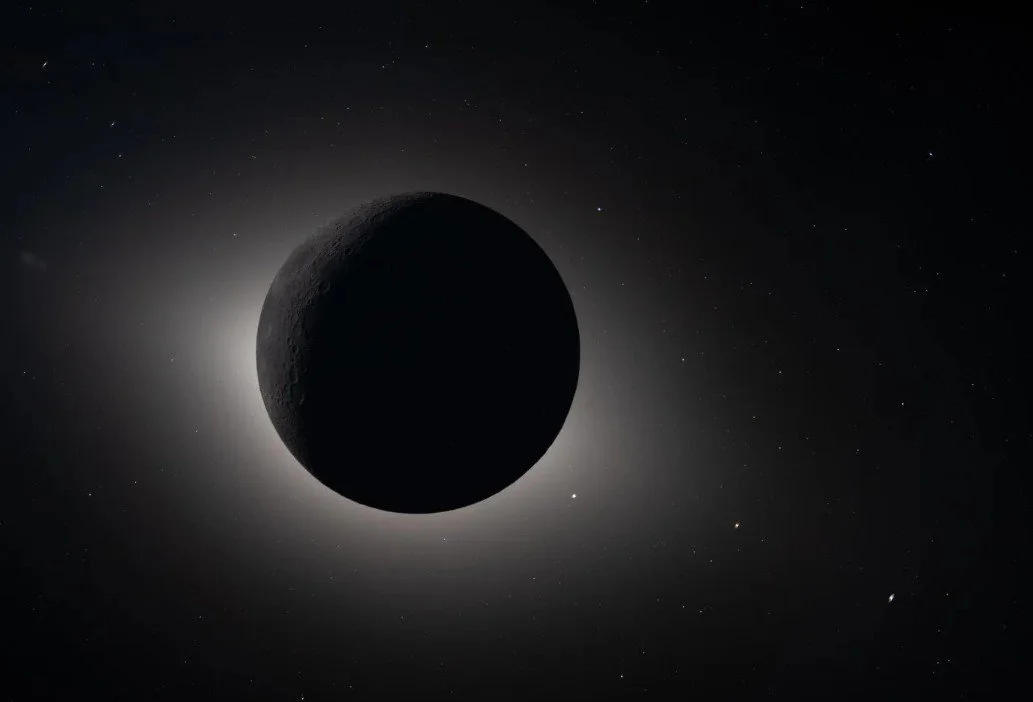
Photo Credit: NASA, April 2026
The crew knew Mission Control was listening. They knew the world was listening. And they knew their words mattered.
Without that training, we might have heard, “There are a lot of craters. It looks rocky and dusty.”
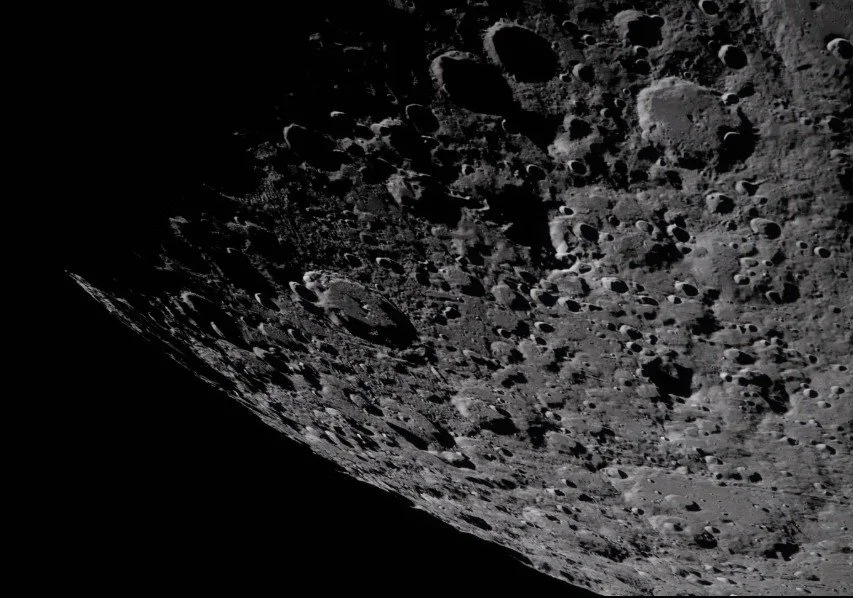
Photo Credit: NASA, April 2026
Instead, we got this.
Victor Glover describing the terminator, the dividing line between light and dark:
There are islands of terrain out there that are completely surrounded by darkness, which indicates some real variation in terrain … Up to the north, there is a very nice double crater. It looks like a snowman sitting there.
And then:
Boy, I am loving the terminator … There's just so much magic in the terminator — the islands of light, the valleys that look like black holes. You'd fall straight to the center of the moon if you stepped in some of those. It's just so visually captivating."
Christina Koch describing craters:
“What it really looks like is, like, a lamp shade with tiny pinprick holes and the light shining through. They are so bright compared to the rest of the moon.”
These scientists were trained to translate visuals into meaning and help us see the Moon. And it wasn’t just what they said. It was how those words were received.
Anyone who has ever presented on a web meeting knows how hard it is to speak into silence. You share something meaningful and hope it lands. You can’t see reactions and wonder if people are engaged.
The crew didn’t have to wonder. Dr. Kelsey Young, the Artemis II science lead, acknowledged each response. She coached, celebrated, and actively shaped the moment.
When the astronauts described what they saw, she responded:
“Oh my gosh, that was an amazing picture you just painted.”
She connected their words to their impact:
“Those types of observations are things that humans are uniquely able to contribute.”
And she made sure they could feel the energy on the ground:
“I glanced over at the SER (the science group)… and I literally saw fist pumps in the air.”
That kind of encouragement creates momentum and gives you extra oomph. Dr. Young praised their descriptions, created meaning, and amplified the energy both in the room and the capsule. At one point, she even quoted Project Hail Mary:
“Amaze, amaze, amaze.”
Her enthusiasm was unmistakable. You can see it in the still image taken when the astronauts reported five impact flashes — brief, bright bursts of light as space rocks slam into the lunar surface and carve new craters.
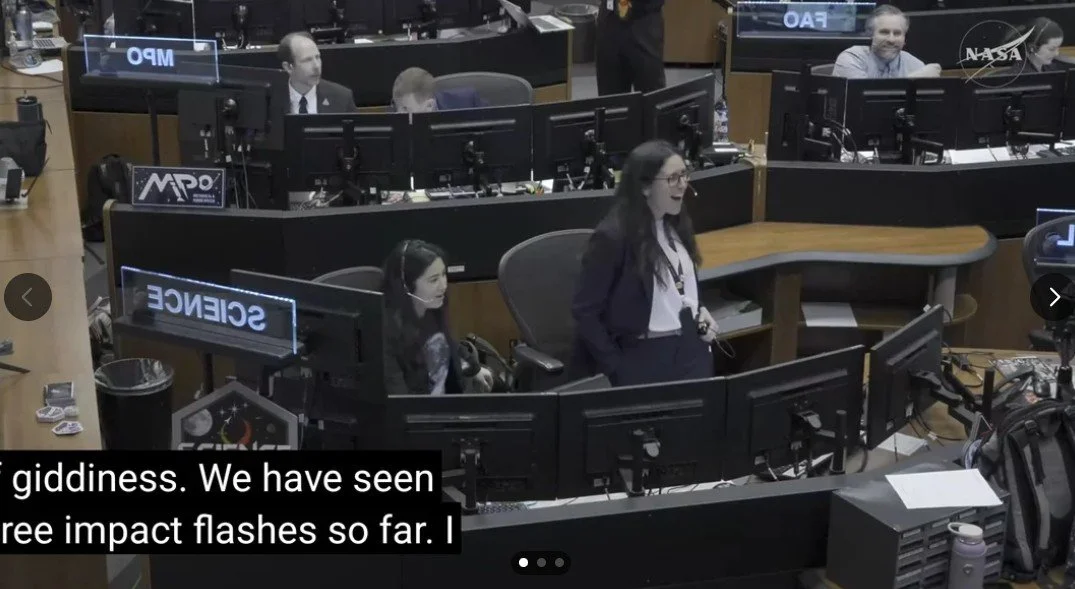
Photo Credit: NASA, April 2026
We could all use a Dr. Young to encourage our work. This is what great communication looks like under pressure. It helps people notice more, say what matters, and know they’re being heard.
This crew understood the importance of the mission. They were intentional about their words at every milestone. They took care in the messages they wanted to send to Mission Control and humanity. They were equally intentional in their actions.
Four people spent ten days in something the size of a camper, with a broken toilet for most of the trip. In college, I took 20+ hour bus rides to football games. By the end of the weekend, it didn’t matter how close you were with someone. You were ready for space.
But this crew moved through the mission with care and generosity. They had decided ahead of time how they wanted to show up for themselves, for NASA, and for all of us. They knew obstacles were coming. They set their intention before they ever left the ground. We got to observe a high-performing team in action in the capsule and in Mission Control.
And then they turned back toward Earth.
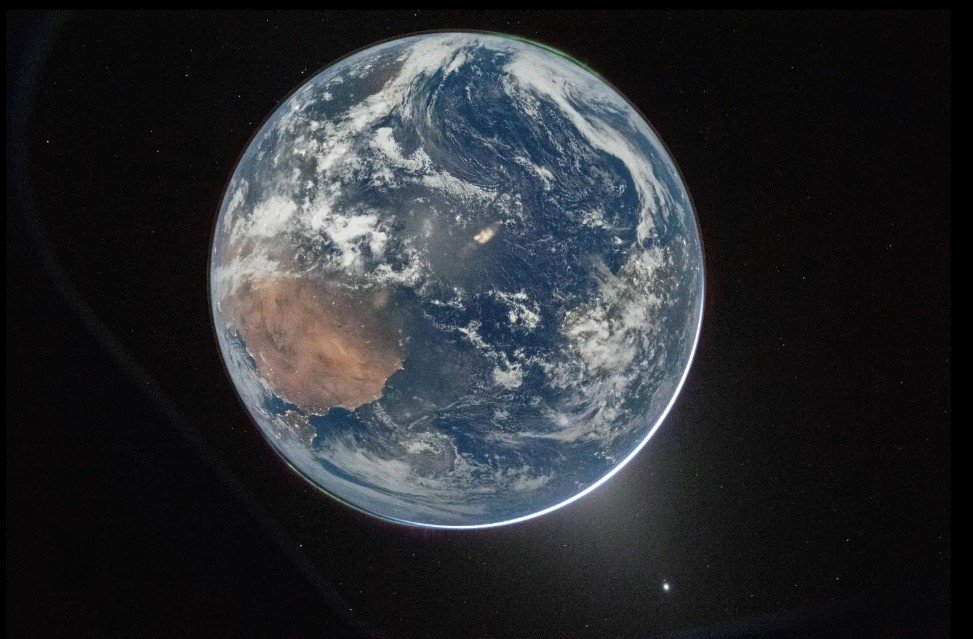
Photo Credit: NASA, April 2026
Christina Koch described what she saw:
“Earth was just this lifeboat hanging undisturbingly in the universe.”
“What struck me wasn’t necessarily just Earth, it was all the blackness around it.”
“The thing that changed for me looking back at Earth was that I found myself noticing not only the beauty of the Earth, but how much blackness there was around it, and how it just made it even more special.”
“It truly emphasized how alike we are… how the same thing keeps every single person on planet Earth alive.”
There’s a tendency to think that in moments like this, words will just come. That awe will translate itself.
NASA didn’t leave that to chance. They trained for it, supported it, and designed for it. When the moment came, the astronauts didn’t fall back on “so beautiful.”
They gave us something better. Something we could see and feel.
And somewhere between observation and understanding, between space and home, a voice on the ground received it all and sent back two words:
“Copy, Moon joy.”
***
Karen Eber is an author, TED and keynote speaker, and communication strategist who works with frontline leaders, senior executives, and C-suite teams at Fortune 500 companies. She partners with teams across sales, marketing, communications, HR, finance, operations, legal, and IT. She works across industries including healthcare, technology, financial services, manufacturing, energy, consumer goods, retail, professional services, education, and nonprofits — helping leaders turn complex information into clear, compelling stories that drive decisions and action. She is the author of The Perfect Story. Learn more about her keynotes and workshops at kareneber.com/speaking.