Sylvester and Tweety
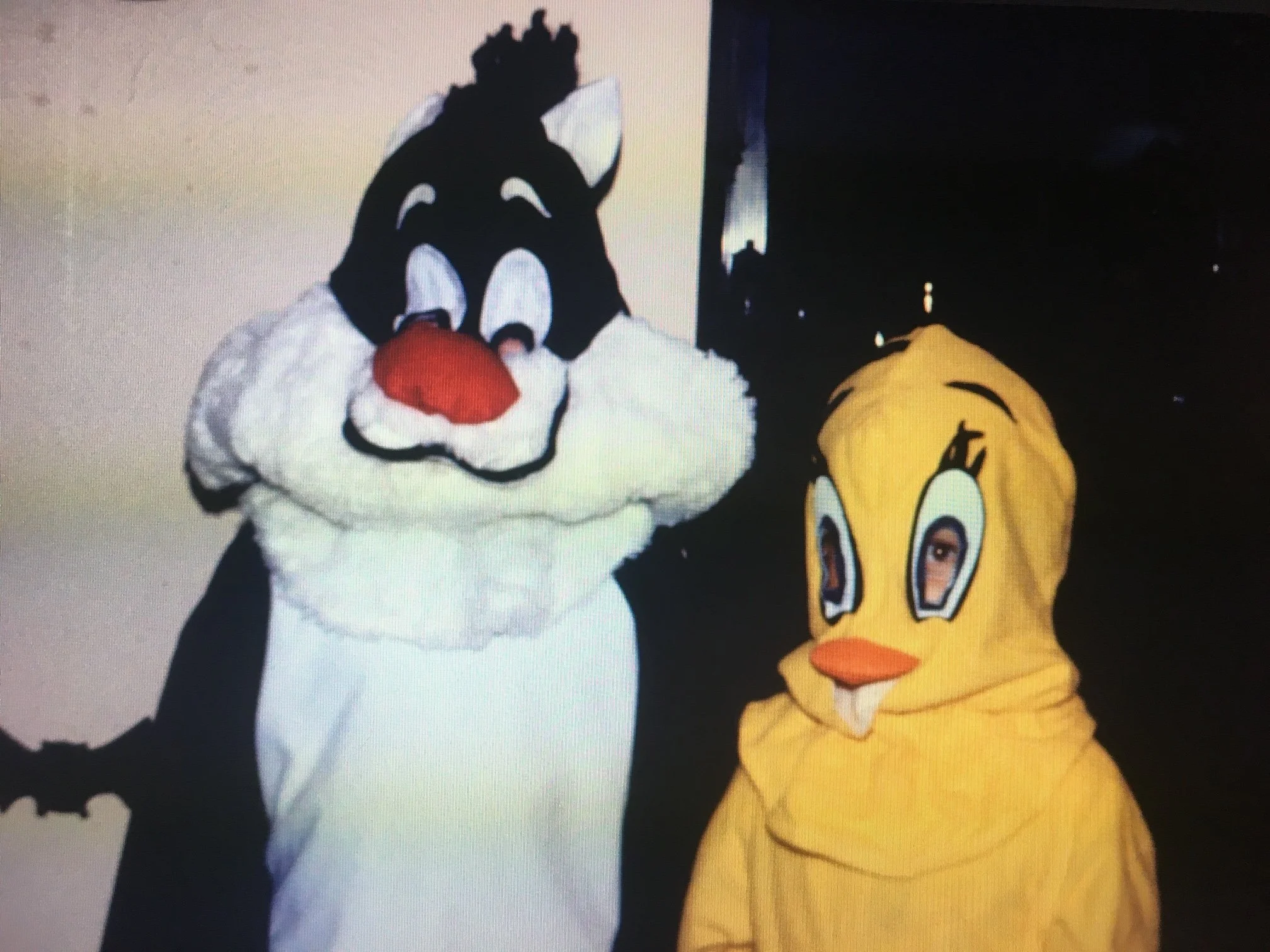
Aren’t these costumes amazing? I am Tweety.
When I was a child, I eagerly anticipated an event each September: our annual trip to the fabric store. My mom would set my sister and me up at the long table in front of McCall’s pattern books.
We’d slowly turn the pages, wide-eyed and daydreaming about all the possibilities. We were making the most important decision of the year: What will I be for Halloween?
This was back when store-bought costume options were limited—three creepy clown masks, a Michael Myers mask, or a witch. Today, kids can have any costumes they imagine with one click. But when I was growing up, my “dress up” clothes were my grandmother’s old dresses and purses. Having a costume made just for me was a big deal, especially as the younger sibling whose wardrobe mostly came from hand-me-downs.
I was at that age when being handed a balloon or getting to play with bubbles automatically made it a great day. A satin unicorn hung from my bedroom ceiling. I had a fierce sticker album collection. There were three TV channels, and they all went off the air each night, well after my bedtime. We played outside all day, drank water from the garden hose, and came running when my dad’s whistle signaled that dinner was ready.
My mom stood behind us as we quietly studied our Halloween costume options. I’m sure she curled her toes when we debated the more complicated patterns, but she never said no. She gently redirected my sister the year when she wanted to be an Ewok, pointing out how hard it would be to find fabric that looked like fur. But she was always encouraging, excited by our excitement.
My mom sewed many things for our family: dresses, decorations, tablecloths. There are photos of my mom, my sister, and me wearing matching homemade outfits. She wouldn’t call herself a seamstress, but she knew how to follow a pattern. And because of that, she created magic for us every fall.
Once we picked our patterns, we’d pick the fabric. When we got home, she’d pull out the measuring tape, wrap it around our arms, legs, and waist, and then lay the crinkly brown pattern paper across the fabric. She’d pin, measure, and cut until everything was just right. When it was time for the final fitting, I didn’t understand why I couldn’t immediately go outside in it or wear it every day. Halloween night always felt three years away.
My favorite costumes were Sylvester and Tweety. My sister was Sylvester, and I was Tweety. I look at those costumes in awe today, knowing how complicated they must have been to make. The heads alone had so many pieces and shapes! I dare say we won Halloween that year. Our neighbors laughed with delight as they dropped candy into our trick-or-treat buckets.
Those costumes were packed with creativity. The patterns served as guide rails, something to get close to what you wanted. My mom built from there, adding her own touches to make the idea come alive.
The Creativity Thread
I think about creativity a lot, especially after building a career that depends on it. It informs reflection and problem-solving. It shapes culture, helping you see what’s working, look around corners, and adapt. In storytelling, creativity is what makes people see themselves in the message.
But I also think about what happens when creativity fades.
Creativity is a muscle. It fuels growth, allows for risk-taking and tinkering, builds psychological safety, and sparks curiosity. It’s what helps you look out the window and think. It’s why your best ideas come when you’re not staring at your laptop.
When it’s neglected, other problems begin to surface. For me, it’s the first sign of burnout. I notice myself slipping into “just get it done” mode, focused only on finishing and not thinking. I skip over why I’m doing something or who it’s for. Instead, I start negotiating with myself: “This will get better when…” or “After this project I’ll have time for…” But that finish line keeps moving. Speed replaces curiosity, efficiency replaces exploration and templates replace tinkering.
Creativity doesn’t disappear in one dramatic sweep. It fades slowly, like a newspaper left in the sun. We rarely notice it happening because everything still feels “good enough.” Most workplace cultures reward quick answers and fast action. But creativity can’t compete with the dopamine rush of instant solutions. Busyness tricks us into thinking we’re creating when we’re merely repeating.
Creativity isn’t about reinventing everything or starting from scratch. But it also means not going through the motions. It may look like:
Asking unexpected questions to spark reflection.
Redesigning a process that feels stale.
Giving someone else a chance to lead and bring their own ideas forward.
Allowing yourself time to simply think.
When employees can anticipate, prepare, and contribute, they feel ownership in the outcome. That’s where creativity thrives. No one wants to be told what to do. They want to help create something that matters. Creativity makes that possible.
Creativity keeps possibilities alive. It allows people to take risks, learn from mistakes, be vulnerable, create connections, and find new possibilities for growth. When it wanes, everything gets smaller. Differentiation disappears. Curiosity shrinks. Creativity is the antidote to sameness.
How to Cultivate Creativity
Implement Rituals
You already have rituals that structure your work: goal setting, performance reviews, project kickoffs. You need similar rituals that intentionally nurture creativity. Consider:
Starting new projects with a conversation about what success looks like, how might go wrong, and what lessons you can apply from the past.
Incorporating creative ice breakers into your meetings to stimulate thinking like: “Who is the better business person, Justin Timberlake or Justin Bieber?”.
Opening meetings or coaching sessions with reflection questions such as, “What is one thing that surprised you think week?”
Hosting regular “mistakes and lesson learned” sessions where teams share experiences and insights.
Encouraging divergent thinking: build friction into meetings. Don’t rush to consensus. Make space for different perspectives. Let ideas breathe.
Scheduling “noticing time”: Not brainstorming, just paying attention. What feels stale? What excites? Creativity begins with awareness.
Audit the sameness: Look for stale slides, phrases, approaches. It’s the biggest tell that creativity has leaked out of the culture.
Make the Experience Matter
Every time I’ve led a team through an offsite or workshop, one piece of feedback always surfaces: We need more days like this. People crave time to connect, reflect, and think differently. The daily grind narrows our perspective. Experiences that pull us out of routine reignite creativity. They remind us of what it feels like to think.
Creativity doesn’t start from nothing; it starts from something.
A pattern. A prompt. A spark.
Whether leading teams, telling stories, or shaping culture, we all have a pattern in front of us.
The question is how we’ll make it our own, and what we’ll create from it.
***
I work closely with some of the best communicators and storytellers: keynote speakers, authors, senior executives, C-suite leaders, even comedians.
Each of them is already exceptional at what they do. But they want to take their message to the next level... to make it shine, resonate, and deepen its impact. That’s where I come in.
It’s a bit like having a friend come over and create stylish new outfits from the clothes you already own, discovering fresh combinations that make you feel confident and polished.
If you're looking to elevate your communications, develop a keynote or TEDx, or get moving on that book you've been dreaming about, let's start a conversation.