Behind Closed Doors
What Lyndon Baines Johnson said to his cabinet the day after JFK’s Assassination
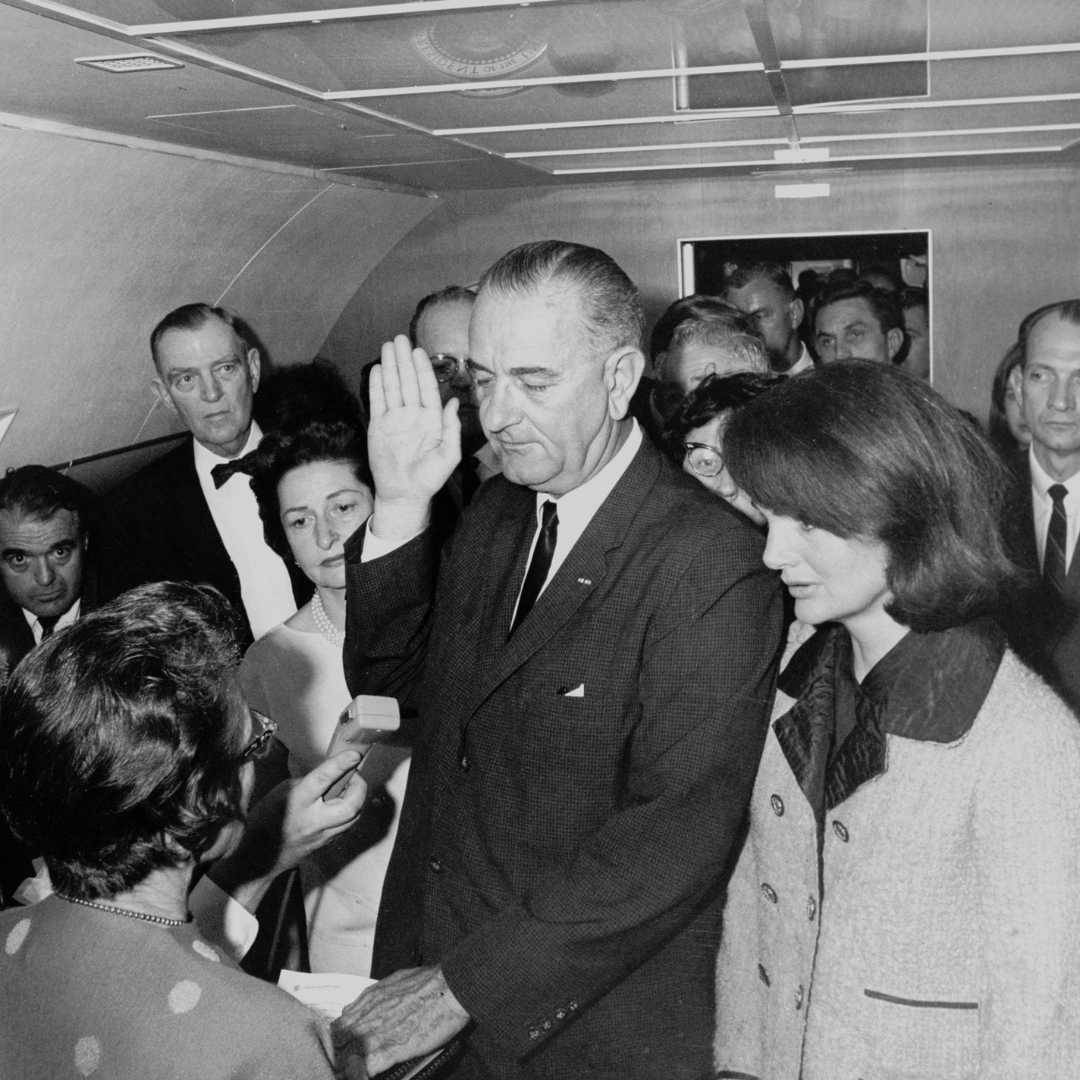
November 22, 2023, marked the 60th anniversary of the JFK assassination. While I raised a skeptical eyebrow at the conspiracy theories emerging 60 years later, one document caught my eye.
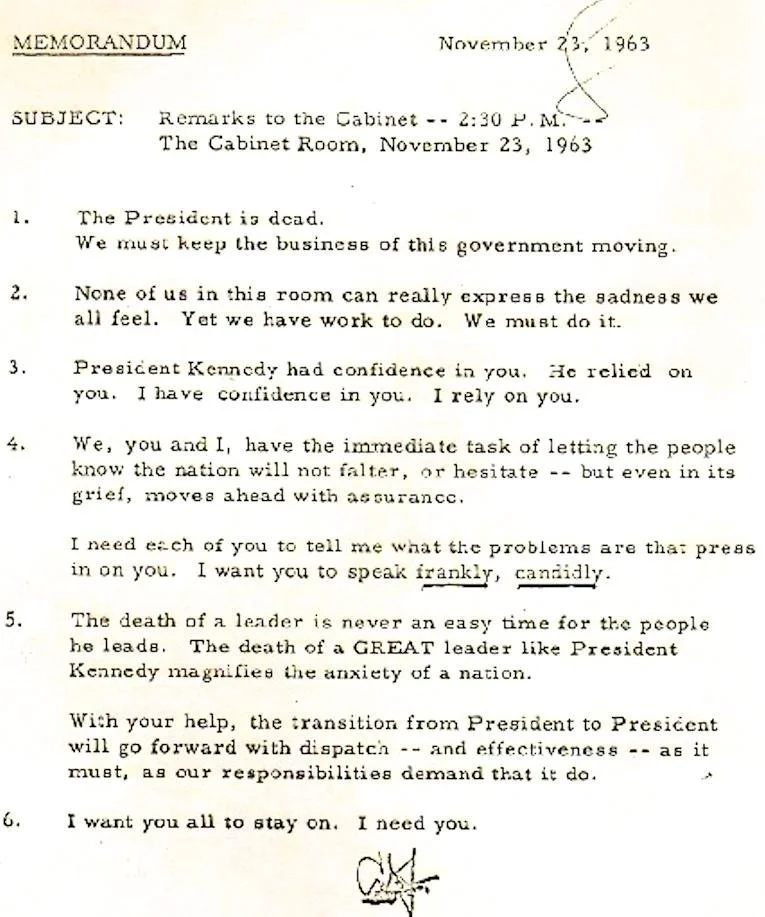
It was a photo of a memo for what Lyndon Bird Johnson (LBJ) said to the Presidential Cabinet the day after the assassination. I was taken by the presence of mind he had to communicate such a clear and reassuring message at a critical time.
I wanted to break down why this is a great example of how to communicate in a difficult situation.
Communicate Immediately
LBJ didn’t wait to bring the cabinet together. He knew they not only had questions, but they also needed reassurance. Within 24 hours he convened them to share what he knew and what he didn’t know. Sometimes leaders hesitate, thinking that if they wait a day, they will have more information. Gather people quickly. Share what you know, what you don’t, and when they can expect to hear from you. People will appreciate your candor and recognize you can’t answer everything.
Reassure Their Role
LBJ assured the cabinet many times that he wanted them to continue and needed their help. It was natural for the cabinet to wonder if LBJ would want to change the cabinet. This quick assurance helped them shift their focus to what needed to be done.
People listen to messages through a “What does this mean for me?” perspective. Any time there is an organization merger, acquisition, restructuring, or even a new leader announced, someone is wondering if their role will continue and if they should stay. Hearing about layoffs by other companies in the same sector can prompt this. Uncertainty is expensive to our attention. It steals from our focus and engagement and results in worries and rumination. Employees often question the stability of their roles. Remove noise by reassuring roles and recognizing the value they create.
Provide Focus
LBJ reminded the cabinet their focus needed to be keeping the business of the government moving. He expanded on that by saying they all had to reassure people that they wouldn’t falter or hesitate. They would move forward, even in grief, to make sure everything continued. He gave them a purpose to draw upon, even when the grief felt insurmountable.
Giving a focus helps reduce the swirl and guides people to pay attention to what is in front of them. Make waffles and not spaghetti for your people to reduce noise and provide focus.
Create Psychological Safety
LBJ recognized he didn’t know what he didn’t know. He asked for cabinet members to share problems with candor. He invited their directness, no matter how hard it was to hear. This message reinforced they were there to solve things together. Starting with this message right away helped him form a relationship with the cabinet and lay the foundation of trust.
When a leader says things like “This is important, let me know what I don’t know” it creates an environment where people are more likely to share without fear of blame or consequences. Ask questions like, “How might this go wrong?” or “Changes may be needed, where should we pause and consider them?” Invite people to challenge with a different perspective or idea. It’s the fastest way to learn the things you don’t know.
Demonstrate Vulnerability
LBJ acknowledged that everyone was numb and didn’t know how to process or express what had happened. It would have been easy to show up stoic and only talk about the work. Displaying empathy helped the cabinet members feel seen and understood. They were grappling with their shock and trying to figure out how to move forward. Having their new leader demonstrate understanding and acceptance embraced their humanity.
We are people first and don’t turn off our emotions and thoughts the moment the work day begins. We each have challenges in and outside of work that can weigh heavily. Leaders who demonstrate self-awareness in these human-first moments often establish more trust and have open conversations on how to navigate the challenges that impact work.
The next time you face a challenge at work and need to communicate, ask yourself:
How quickly can you bring people together to communicate and discuss the challenge?
What do you know about the challenge?
What don’t you know yet?
What concerns might people have about themselves, the team, the project, or the organization?
What is one thing you can do to remove noise and help create focus?
What questions can you ask to learn what you don’t know?
How can you be vulnerable and acknowledge what people are feeling?
When can people expect to hear from you again?
Want to receive more articles like this one? Sign up for Brain Food here.
Want to get started with storytelling?
Order The Perfect Story
Take the free assessment to determine your storytelling approach.
Check out the Jumpstart Your Storytelling course.
Listen to any of my guest appearances on podcasts through my Spotify Playlist