How to Ground Yourself When Speaking: The Body Language of Confident Presenters
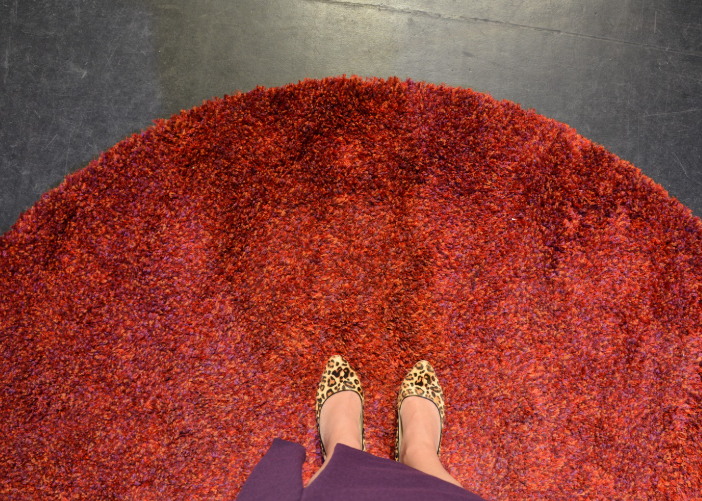
My feet before my TEDx talk.
I stood to the side of the video camera focused on the CEO. He was recording a message for employees about business shifts. He looked uncomfortable, rocking back and forth on his feet. It was distracting and nearly impossible to keep him in frame.
I asked the director to pause and stepped in front of the CEO. I suspected that while he knew the overall message, he hadn’t figured out the specific sentences he wanted to say. We spent a few minutes planning his lines, then the director cued another take. Within moments, the rocking started again.
Pausing a second time, I asked, “Are you uncomfortable?”
“A bit,” he said. “I know this is important. I want to get it right and strengthen their trust in me and the company.”
“This may sound weird, but where are your feet?”
“My feet? Clearly at the bottom of my legs,” he scoffed.
“Do you feel them? Right now, you are too in your head and not connected with your body. Focus on your feet. If you want to look and feel trustworthy, you need to be grounded.”
“OK, I’ll give it a shot,” the CEO said.
He started again, but the rocking returned. This time I was ready. I picked up a big dictionary and laid it across his feet, just out of frame. He laughed, but it worked. The rocking stopped, and he was able to ground himself to deliver the message.
***
Get Out of Your Head and Into Your Feet
Last year, I waited in the wings to speak to 9000 finance professionals at Million Dollar Roundtable. Beside me stood the incoming president, who would introduce me.
The wings of a big stage are an intimidating place. You’re standing next to what looks like a NASA console, with screens, wires and speakers. Glow-in-the-dark tape marks out where to walk. There’s barely enough space to pace two steps and take some final sips of water. There’s nothing normal about the setting and your body knows it’s odd, sending you signals to flee. Some stage managers know this and offer encouragement. Others, like the one at MDRT, say “Welp...good luck!” as if bets were placed on whether you’ll flop.
The incoming president was growing noticeably uncomfortable. She turned toward me and asked, “You do this all the time. You don’t get nervous, do you?”
“Of course I do. I’ve just learned how to manage it. There’s nothing wrong with feeling nervous. Just because you’re uncomfortable doesn’t mean you can’t perform well. Nervous aren’t the problem, it’s what you do with them.”
It’s natural to feel nervous for a high-stakes setting. Your mouth feels dry, your pulse quickens, and your breath can become shallow. Your hands might even be sweaty and slightly tremble. Just about the only thing you don’t feel is your feet. Somehow everything below the waist just disappears.
When I’m coaching someone, I’ll often ask, “Where are your feet?” I’m not trying to correct posture as though we’re in ballet class. I get people to connect with the floor and find the present moment through their body. Nerves live in your head. Presence lives in your feet.
Why It Works
Grounding is both psychological and physiological. When stress activates the nervous system, the brain seeks control with spirals of worry. When adrenaline kicks in, you need an anchor. Directing attention to the feet pulls you into the present and calms your system.
You can’t appear confident and trustworthy if you’re disconnected from your body. Nervous speakers who are disconnected from their body often move like pinballs ricocheting without purpose.
Grounded speakers move with intention and send the signal: I’m in control of my space and message. This isn’t about perfection, it’s about clarity. Scattered movement detracts from your message and makes you appear less sure of yourself. The goal is to strip away the unintentional signals that interfere with your message.
Golfers take practice swings. Chefs line up ingredients before starting cooking. Musicians tune instruments before a performance. Painters lay out brushes in a specific order. These rituals prepare the body and mind to work together.
The best speakers leverage habits to get into their bodies before sharing their message. Grounding slows you down and keeps you present whether onstage, in a tense conversation or even sitting at a table. It helps to steady your voice and body to grow your presence.
What To Do Before Speaking:*
Lift your shoulders to your ears as you inhale and drop them fully as you exhale.
Shake out your arms, loosen your neck, twist at your torso and shake out each foot.
Step forward and plant your feet hip-width under your shoulders.
Picture roots growing from your feet into the floor.
Inhale slowly, picturing breath traveling into your legs and down to your feet.
Feel your feet pressing into the ground.
*Many people recommend power posing. If you like it, do it. Just make sure you aren’t just focusing on your emotions, connected with your feet and body
What To Do When Speaking:
Create a home base.
Define a starting position. Begin with your feet shoulder-width apart, weight evenly distributed, and arms relaxed down at your sides. Come back to this each time you pause to make a point and as you transition between sections.
Keep space between your elbows and torso.
When we’re nervous, we get smaller, often crossing our arms or hands. Gesture so there is space between your body and arms. This creates intentional movement and more inflection in your voice.
The floor is not lava.
Step with purpose and feel the floor beneath you. You’re grounding both your body and your story.
Your mind will race, and your heart will pound, but your feet always tell you where you are.
Start there, and everything else falls into place
Confidence doesn’t start in your head.
It starts in your feet.
***
When you're ready, there are three ways we can work together:
1. Speaking and Workshops
From building awareness to applying new skills, I work directly with your group to build the storytelling and leadership insights and tools they need to become memorable, influential communicators and leaders.
2. Consulting, Advising and Facilitation
Need support identifying the story of your culture and transforming it? Want to align your business, talent, and culture strategies? Have a new team or one that needs an offsite to tackle key challenges? Looking to evolve your performance management or leadership development? I partner with you to design custom experiences that drive the outcomes you're aiming for.
3. Strategic Coaching:
Whether you have a leader preparing for a high-stakes presentation (e.g., TEDx, Board presentation, All-hands meeting) or a team developing a toolkit of stories to support your culture, brand, or sales efforts, I work hands-on with individuals or small groups to craft content that informs, influences, and inspires.
Start a conversation.