The Final Edit
How to prepare to deliver your stories and presentations
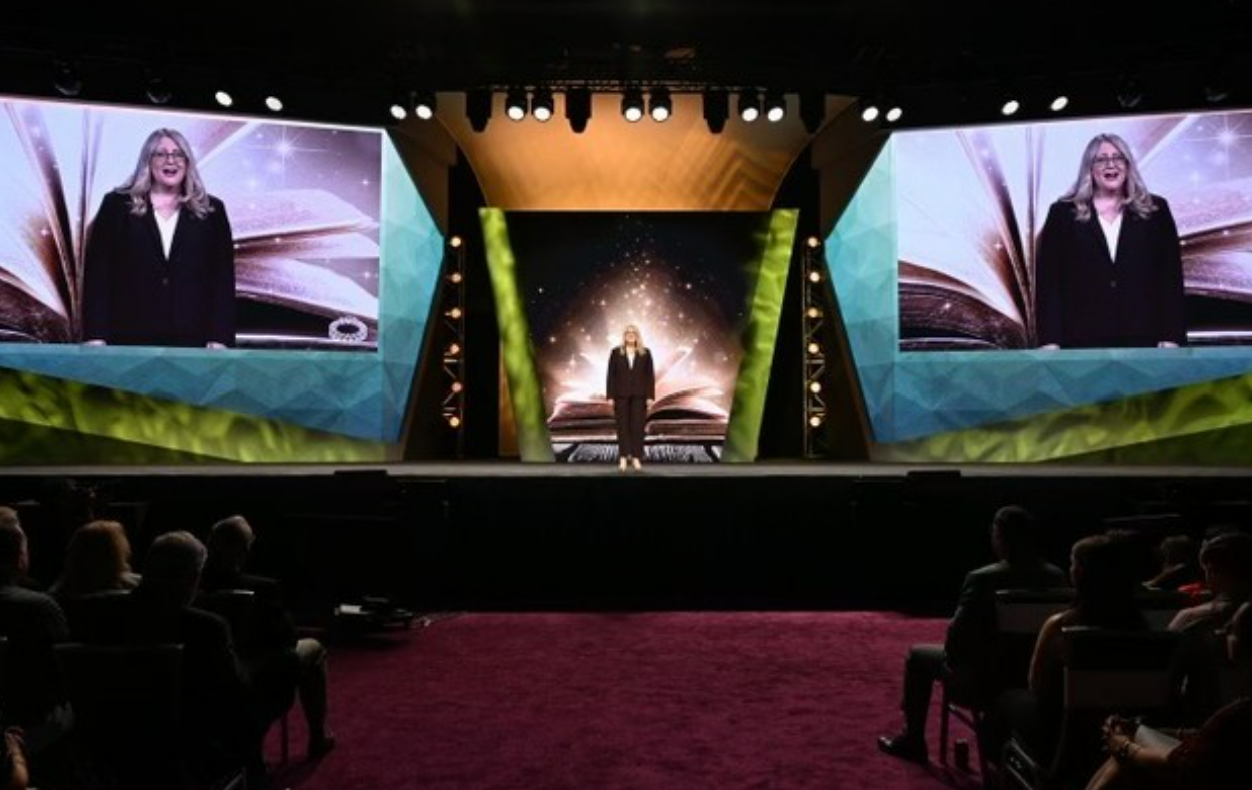
Photo credit: MDRT
A few weeks ago, I was standing on a stage the size of a competitive swimming pool. It was in the Vancouver Convention Center for Million Dollar Roundtable (MDRT), an invite-only organization for exceptional life insurance and financial services professionals. Speaking on their mainstage has been compared to the Olympics of the speaking world. Their process was like training for an Olympic event with rehearsals and preparations in the preceding months. Their mainstage talks are simultaneously translated into nine different languages. Great care is taken to create impact and meaning.
The convention center was set for the 9000 people attending the next morning. I was there for my tech check. This helps the conference team adjust your voice levels, make sure visuals work, and provide instructions on entrances and exits. Tech checks are also for the speakers. No matter how much you practice, adjustments are made onstage. You decide how to use the space, learn which camera to look at when landing a point, and experience how you sound.
I took my mark and started my talk. Because this was rehearsal, people were walking and talking right in front of the stage. It was like being at the movies with the person in front of you talking the whole time. I tried to ignore them, but then I got hit in the stomach with a wall of sound.
Unlike other keynote halls, the Vancouver Convention Center is all concrete. There is no carpeting to absorb sound. As soon as I started talking, my body vibrated with the reverb. Anything I said echoed a second later. My first thought was, “This is what rock stars experience!” My second thought was, “Ugh…. this is super annoying and distracting.”
No one likes the sound of their voice, especially when echoed back. I figured it would dampen some with people filling the seats. Once the team had what they needed, I left. It was time for the final edit: what I would ignore.
Editing isn’t about cutting
In the months leading up to the talk, I’d refined each sentence for maximum impact. Every word had to count in this twenty-minute talk. Editing isn’t about cutting. It’s about simplifying, smoothing, and mining for clarity and impact. Through editing, the real story emerges. But it doesn’t stop with the written words. Editing includes how you tell the story, and what you ignore.
Audiences are full of distractions
We often picture this idyllic image of people leaning forward and hanging on our every word in presentations and stories. But that audience is an anomaly. People talk, cough, and sneeze. They fiddle with their phones, type notes and take photos. Some walk in late or leave early. Candy wrappers crinkle and plastic water bottles crackle with movement. Audiences think they are invisible, not realizing we see their every movement.
It's not just in person. When I worked at GE, I was asked to give a virtual presentation my first week. Each time someone joined the web meeting, a beep announced their arrival. So many joined late that the first fifteen minutes sounded like I was being bleeped for profanity. Yet I was expected to ignore the beeps and keep presenting.
People walk in late to meetings. They join web conferences and still don’t know how to work mute. Leaders interrupt and ask to jump forward in the presentation. In a keynote, the conference team may drop a note to you in the confidence monitor at the foot of the stage. I once had police sirens going off outside a talk I was giving. Becoming flustered makes you lose the audience. You need to process distractions and keep going.
Plan how to tell your story
The final stage of editing is learning how to take your story off the page and tell it live.
What gestures can you incorporate to reinforce what you are saying?
When will you vary your cadence as you lead up to an idea?
How can you vary your inflection as you vary the cadence?
Who can you look at in different sections of the audience to engage them?
And most importantly, how do you ignore the distractions?
The talk you’re giving and the other one
In every keynote, I have two thought streams running simultaneously. One is about the talk I am giving, focusing on the ideas I’m building. The other is Color Commentary, who notices the person in the person in the second row commenting on something I said. He notices when people take pictures, and he giggles when the audience gasps or laughs as I hoped. He tracks people coming in late and encourages me to speed up or slow down based on the countdown clock. Like it or not, Color Commentary is always there, and I work to quiet him.
In the Vancouver tech check, Color Commentary heard the first reverb and went “ohhhhhhhh fuuuudddddgggggggeeeee,” just like Ralphy does in A Christmas Story. I left the tech check and looked for a chaotic place to practice. I found a window overlooking a big shopping area with a steady stream of people walking past. Then I turned on music and started practicing. After a few reps, I was able to shut out the distractions and focus on my talk.
Stand on the stage
The final step in any story or communication is to experience the setting for the talk. You need to test the sound and see where it echoes or dampens. Plan out where you can move and if there are any cords or furniture to avoid. If online, what will the interface look like? What will participants see? How can you engage with them?
During the keynote, the distractions continued. Each talk was loaded in a teleprompter, but I wasn’t using it. As I looked forward at the cameras, I could see the teleprompters on either side scrolling frantically up and down, trying to figure out where I was because I had flipped the order of something. People came in late, took photos, gasped and applauded at different points. But none of that hindered me because I had planned for the distractions.
I also gave reverb a role in my closing story. It was a new one I’ve never told before. I slowed my cadence and put in pauses to build the tension. Then I revealed a sad moment and let reverb have center stage. That was the moment that many people later told me made them teary.
The final edit of every story is how you’ll take it off the page and communicate it live. Editing isn’t complete until you understand where and how you’ll deliver the talk. Visualize the experience you’ll give participants. Build that into your editing process. A five-minute check can help you know what to expect and what adjustments to make so you can create the experience you envision.
***
Want to receive more articles like this one? Sign up for Brain Food here.
Want to get started with storytelling?
Order The Perfect Story
Take our free assessment to determine your storytelling approach.
Check out the Jumpstart Your Storytelling course.
Listen to any of my guest appearances on podcasts through my Spotify Playlist