You've heard about the Isabella Stewart Gardner Museum even if you've never visited it. Around 1:20 a.m. on March 18, 1990, two men in police uniforms arrived at the museum in Boston to investigate a disturbance. Rick Abath, the guard at the front desk buzzed them in. This was the start of an 81-minute theft that many consider to be the most expensive in history.
13 pieces of art were stolen. Rembrandt, Vermeer, Degas, and Manet were among the paintings, sketches, finial, and vessel stolen. The total value was last estimated to be worth $600 million. Despite a 10 million dollar reward, the art has never been recovered and the mystery has never been solved. I wrote about this a few years ago.
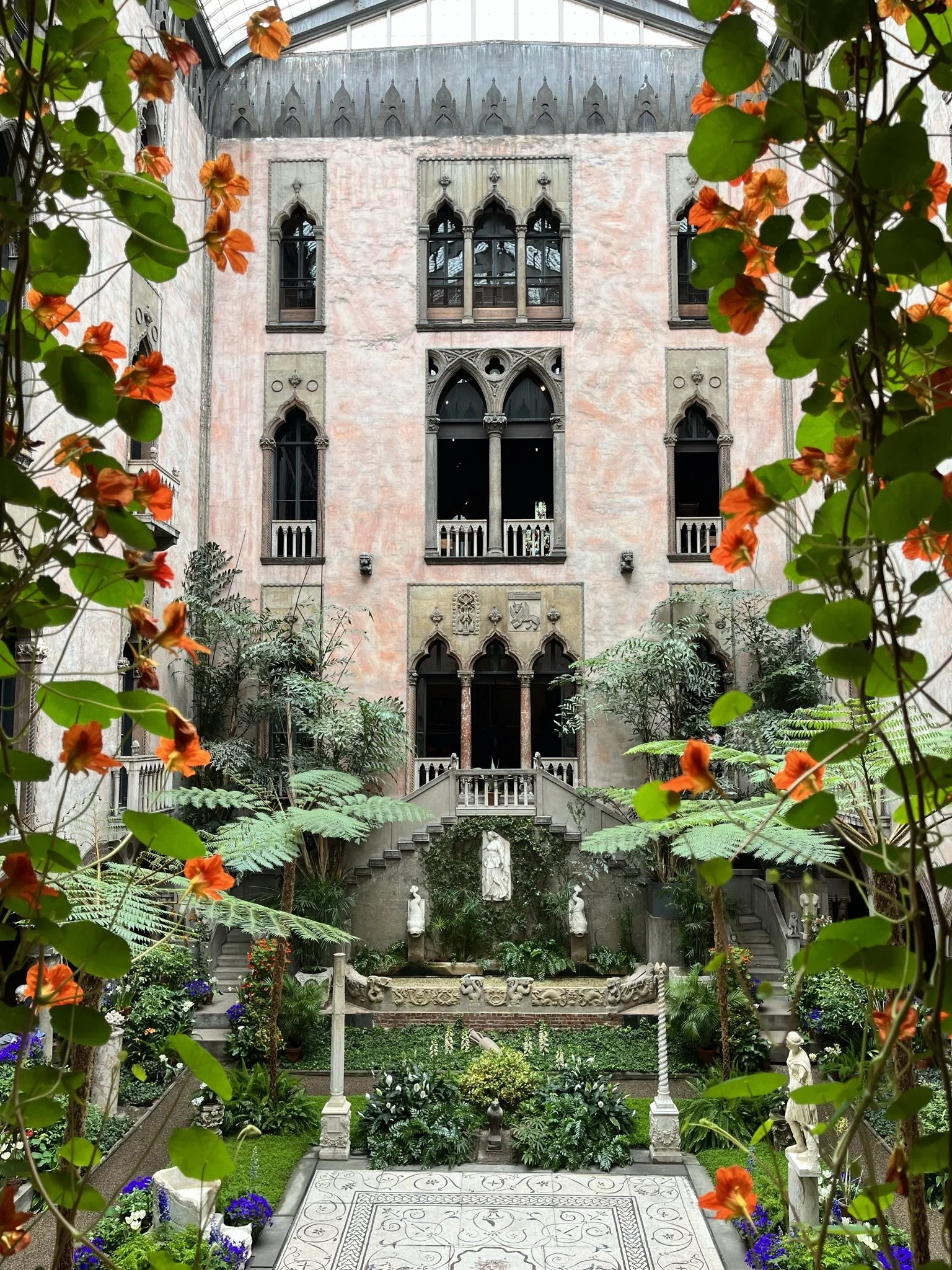
If this is the extent of your knowledge of the museum, you're missing out. There is so much more to the museum than the empty frames. It's a visit for the senses, from the works of art to the atrium with fountains and plants in the center.
I spoke with the director, Peggy Fogelman, about this unique museum. Because Isabella Stewart Gardner left strict instructions that the permanent collection could never be changed, they are a non-collecting museum. Which means they have to mine their existing works of art for stories. Constraints bring about the best stories!
Below are the parts of the interview I wasn't able to include in The Perfect Story.
Peggy Fogelman
Norma Jean Calderwood Director,
Isabella Stewart Gardner Museum
Who was Isabella Stewart Gardner and what was her vision for the museum?
Isabella was a strong-willed woman with a vision for what she wanted to contribute to society. She was born in 1840, married in 1860, and died in 1924. Her life spans the Civil War, World War I, and mass immigration to the United States. She married Jeff Gardner, from a well-to-do Boston Family.
Isabella was very pro-immigration in the early 20th Century as quota laws were being passed. She supported pro-immigration candidates and was very involved with immigrant groups. She had this very progressive and nontraditional side, taking jiu-jitsu lessons and traveling. She was one of the first Western women to travel to Angkor Wat.
All art forms interested her: horticulture, music, visual arts, book arts, poetry, and theater. She collected art intending to establish a museum. She wanted to contribute to American society by bringing people access to beauty who might not otherwise have it.
The museum is like none other. It’s her curation and the way she envisioned an aesthetic experience. She was very driven by the emotional and personal response to works of art as opposed to a very didactic encounter with works of art. She was bothered museums were being set up as a march through the history of art, with plaster casts when they couldn’t get originals. She thought that was really a sterile way of introducing art.
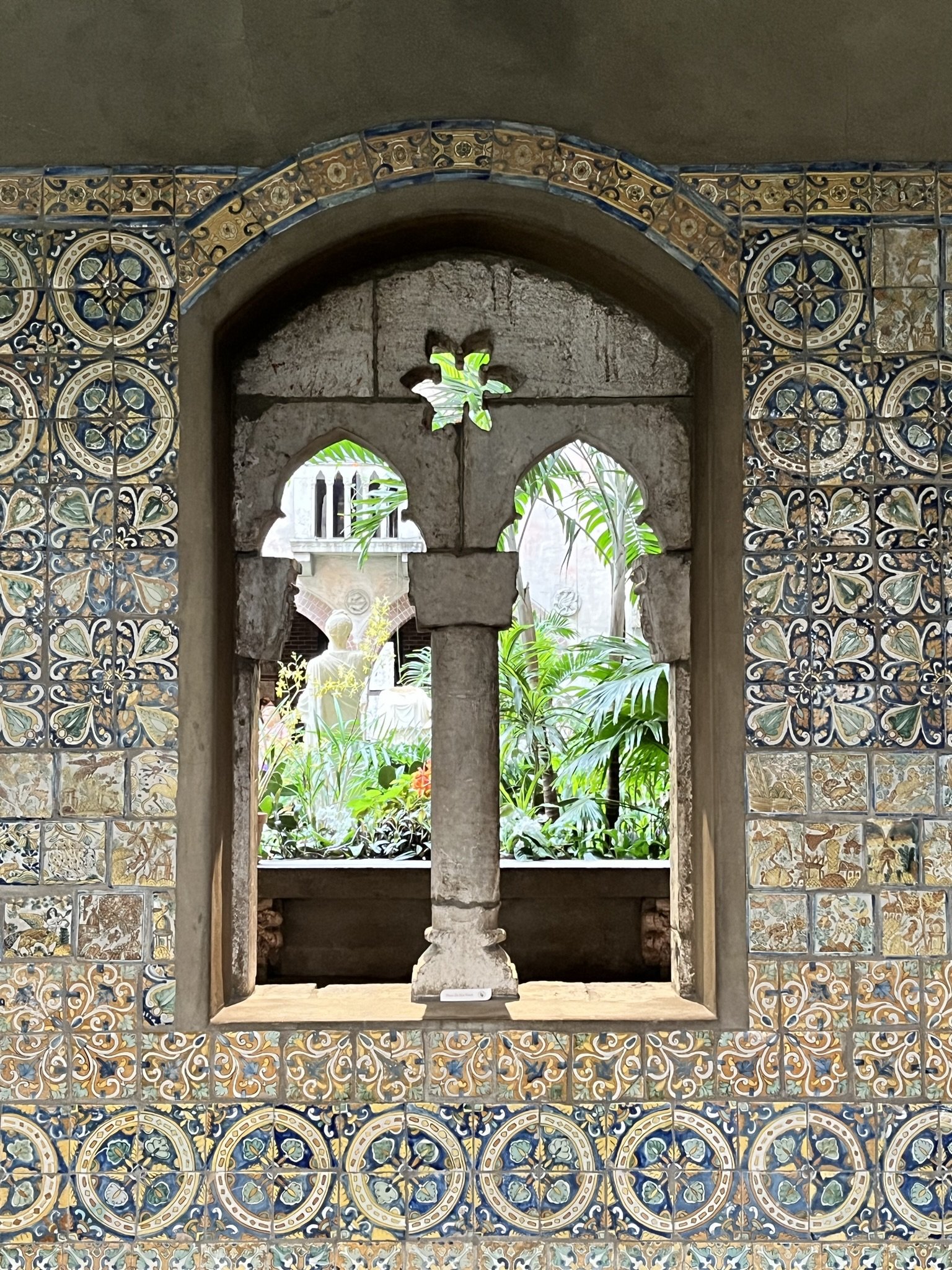
Her museum has a mix of objects. High and low. Eastern and Western. Three-dimensional and two-dimensional. Lots of very clever visual punning in terms of the juxtapositions of various works of art. This very beautiful environment includes all the senses: being able to smell the flowers in the courtyard, hear the trickle of water, and see these beautiful works of art.
It made her very visionary. When we think about what constitutes a meaningful experience of art, it’s based on how people can personally connect with it. She had that vision in 1903 when she opened the museum.
How are you honoring her legacy in the stories you tell?
There are so many stories. The individual works of art. Each gallery has its own personality. There’s the story of the courtyard, the building. She was also very much about catalyzing creativity and innovation.
We have a 25-year-old artist-in-residence program. Artists live at the museum, work, and access the collection for inspiration. This continues the tradition she started when giving John Singer Sargent one of the galleries as his studio.
We’re always probing the works of art in terms of the questions they raise and how they relate to our lives and the issues that we grapple with today. We are a non-collecting museum. Contemporary artists are invited to create new work, help interpret the collection, and tell their own stories. We mine our collection for new meaning, whether through an exhibition, live programming, music, or other kinds of things.
Storytelling comes from the way Isabella set up her museum. Her permanent collection doesn’t have labels. It goes back to it’s not purely an intellectual experience, it’s emotional. She wanted to leave it open for everyone to be able to have their interpretation.
We invite others to tell their stories and give their interpretations of the museum. Audio tours have been recorded by artists going through the collection and sharing the meaning they find in it. We have many Madonna and Child paintings in the collection. The artist Steve Locke talks about how it makes him feel about his mother. That is a very personal story, but one to which we can all relate.
Do you factor in “What would Isabella do or want?” into the stories you tell?
We’ve benefitted from having this very untraditional, irreverent, boundary-breaking, proto-feminist founder. She had this circle of friends that included lots of gay men and people who were marginalized in the society that she lived in.
One example I love: she invited Ruth Saint Denis, the very avant-garde dancer, to do her cobra dance in the museum in 1908. This was a very risqué dance, considered obscene by many at the time. She staged it at a charity event that she held for the hospital for disabled children. She paired the most controversial, sexy performance with a charity for children. She probably loved the scandalous aspect of this. How can you go wrong with a founder like that? It gives you so much latitude in terms of really taking risks and innovating.
The first year I came to the Gardner, we were planning for our Gala, There’s always a performance aspect. We commissioned choreographer Shen Wei for an original dance in the courtyard. Shen Wei often dresses his dancers nude from the waist up, wearing body paint. I remember some of our guests being quite kind of taken aback that there was semi-nudity in the courtyard. I thought, “But Isabella would have loved this!”
How does the museum tell the story of the theft that stole 13 pieces of art in 1990?
It’s a part of our history. It’s an active investigation, and we remain very optimistic that the works will be returned. We don’t avoid telling the story. It’s on our website. We published a book and have an audio tour focused on the facts of what happened.
We try to keep the focus on the works of art. That is what has been lost and is important. We want people to still have those works of art in their minds. We also think a lot about how you frame absence or loss. That is something that metaphorically post-pandemic and George Floyd, I think we can all relate to The empty frames are in the gallery. That was a very intentional decision to keep them there. As a reminder of what has been lost and a poignant stimulant to the imagination.
We’re happy however someone finds their way to the Gardner. Because they can experience the whole museum and they have no idea how amazing and special it is until they get there.
There are a few weeks left to preorder The Perfect Story, register for drawings for free coaching sessions, and receive Jumpstart Your Storytelling course for free.
Want to receive more articles like this one? Sign up for Brain Food here.