81 Minutes
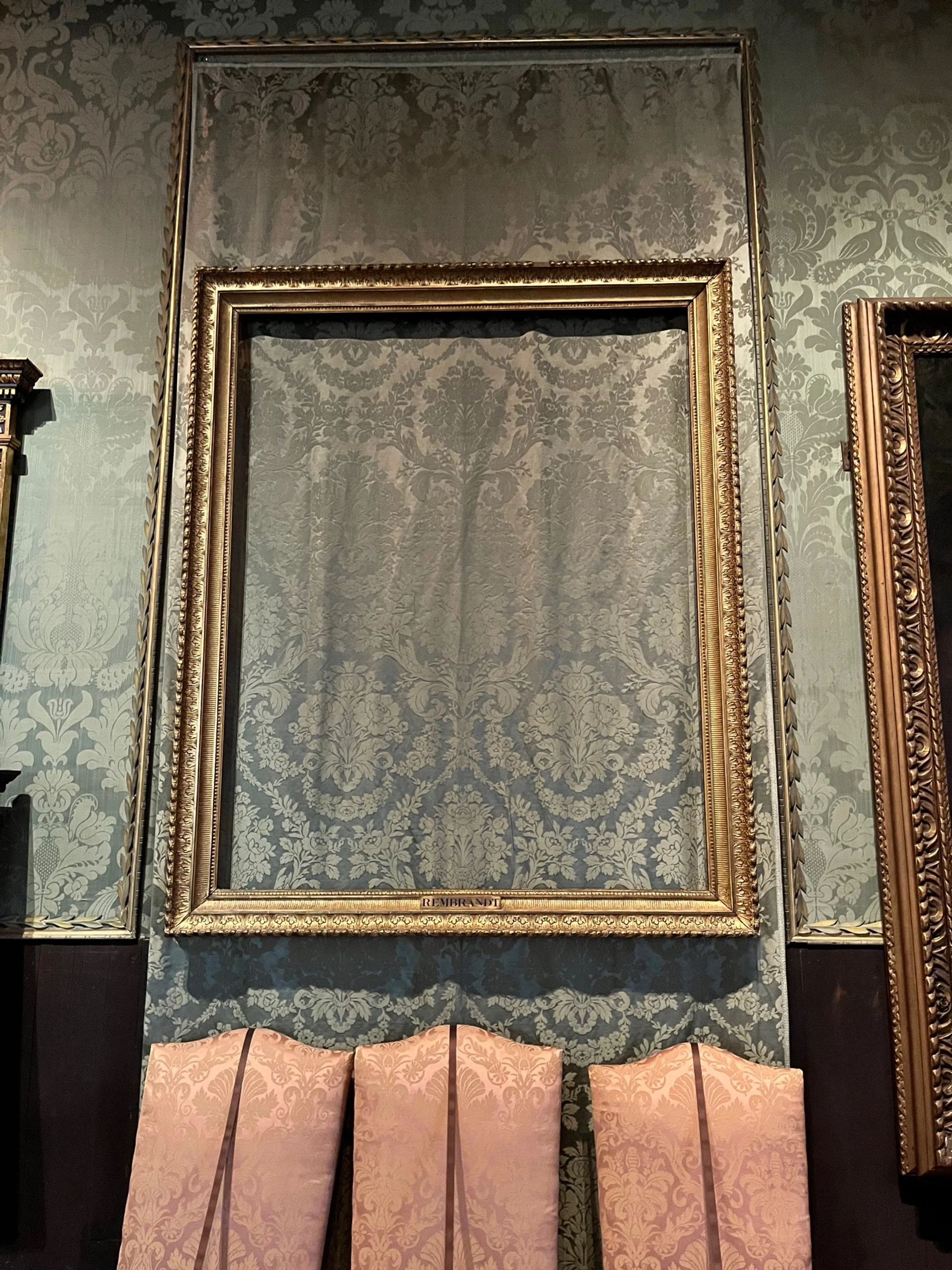
What was left of a stolen Rembrandt painting at the Isabella Stewart Gardner museum in the Dutch Room.
How do you keep a 32-year-old story top of mind for people?
By making them part of the story.
Around 1:20am on March 18, 1990, two men in police uniforms arrived at the Isabella Stewart Gardner Museum in Boston. They said they were investigating a disturbance. Rick Abath, the guard at the front desk buzzed them in. This was the start of an 81-minute theft - what many consider to be the most expensive in history.
13 pieces of art were stolen. Rembrandt, Vermeer, Degas, Manet were among the paintings, sketches, finial, and vessel stolen. The total value was last estimated to be worth $600 million. Despite a $10 million dollar reward, the art has never been recovered and the mystery has never been solved.
This theft has been the topic of many podcasts like "Last Seen" and a recent Netflix special: "This is a Robbery." It is a fascinating story.
THE HEIST
The thieves led the guards away from the desk and button that could have notified police. They were taken to the basement and bound to pipes. Tape looped around their head and covered their eyes and mouth.
For the next hour, the thieves took pieces from different floors. They simultaneously knew what art they wanted and made impulsive decisions. Some of the artwork was cut out of the frame and canvas. Others were carefully unscrewed. Why ruin priceless art and not steal the whole thing? How did they know where to find the artwork? Why didn’t they take the most expensive piece in the museum?
Motion detectors noted each time someone entered a room. One room where a piece was stolen didn’t indicate any movement during the theft. How had the thieves evaded the detection? Were the guards involved, setting the frame aside before the burglary? How did the thieves know where to find the security video tapes to remove evidence?
What was the motive? The art could never be sold publicly. Did it hang in someone’s basement as bragging rights? Was it stolen as insurance by the mob to negotiate a plea deal?
PUBLIC INTEREST
The FBI and the Museum keep telling the story through podcasts and documentaries. Especially during the 25th and 30th anniversaries. The current theory is the thieves have passed away. The stories are told in the hope that someone will remember seeing the art and share information.
Last month when I was in Boston to speak at MIT, I decided to go to the museum to see how they told the story of the theft. I had never visited the Gardner Museum when I lived there – always opting for the Museum of Fine Arts up the road instead. I wasn’t aware of the theft. Local news focused on capturing Whitey Bulger, not the art.
Visitor numbers to the museum are climbing, no doubt due to the Netflix special. Most are there as looky-loos, the way some people go to the Louvre only to see the Mona Lisa. The museum knows this and plays to it.
PARTICIPATE IN THE STORY
Visiting the museum is confusing. It feels more like a mansion than a museum. The building is designed around a center atrium and garden. Vibrant orange, periwinkle and yellow flowers peek out from the plants. The air is humid for the plants, yet somehow the priceless works of art are protected. Rooms flank the atrium on each floor – each with a different color and design.
An audio tour guides you through the museum. One is dedicated to explaining how the theft unfolded. Empty frames hang where the stolen art once displayed. Walking room to room, you try to make sense of how thieves could navigate this huge building for 81 minutes and steal 13 works undetected.
You come away with more questions than answers. It feels a bit creepy looking at empty frames, like where Rembrandt’s Storm on the Sea of Galilee once hung. There is something uncomfortably exciting about wandering the same halls and artwork as the thieves. Especially because it is unresolved.
The museum recognizes that they are a tourist spot. The heist is part of their identity and story. Art theft is fascinating, like a plot to a movie. Standing in the same rooms creates an experience that makes you part of the story.
WHEN SHOULD I TELL A STORY?
Recently, I keep having the same conversation about storytelling.
“When should I tell a story?”
“As often as you can.”
“Really? But other people don’t tell stories in our meetings.”
“That’s kind of the point. Demonstrate great communication, not conforming to an approach that could be more dynamic.”
Just because others aren’t telling stories in meetings or conversations doesn’t mean you shouldn’t. Help people and organizations learn what effective and memorable communication looks like.
Don’t wait for an invitation. The Gardner Museum didn’t wait for people to ask about the heist. They tell stories to build awareness and increase visitation. We create interest by telling stories. Not by waiting for people to ask us to tell them.
Tell stories about things you want your clients and employees to know more about. Create understanding and keep things front of mind for your audience. Share stories about the struggles or aspirations of clients. Describe the a-ha moments of employees when learning something new. Tell the stories of whatever those things are that you wish your clients/employees/leaders/people understood.
I lived in New England for almost nine years. I never once considered visiting the museum – until I heard the stories. Give the experience of you through stories. Correct misconceptions and stay front-of-mind.
Let your story do the persuasive work, even 30 years later.
***
Are you looking to grow storytelling as a core skill in your company? Struggling with identifying the different stories to tell to your audience and skeptics?
Reply here for more information on storytelling workshops and advising services for companies looking to internalize and hack the art of storytelling.
Want to receive more articles like this one? Sign up for Brain Food here.
Follow along with my process of publishing my book or catch up on previous book writing blog posts.