Wicked Smart

Speaking at MIT Sloan earlier this April.
Thank you to Mushaboom Studio for the photography!
Do you focus on your audience or skeptics when telling stories?
I moved to New England right after graduate school.
One of my favorite things to do was to wander the Harvard and MIT campuses in Cambridge.
After hearing about them for years, they almost felt like a mirage of smart people.
On Sunday’s, I’d go rollerblading with friends and explore the campuses.
They were exactly as you would expect.
Harvard was full of traditional brick buildings and paths carved across lawns.
MIT was quirky-shaped glass and concrete buildings – the perfect mix of contemporary and old.
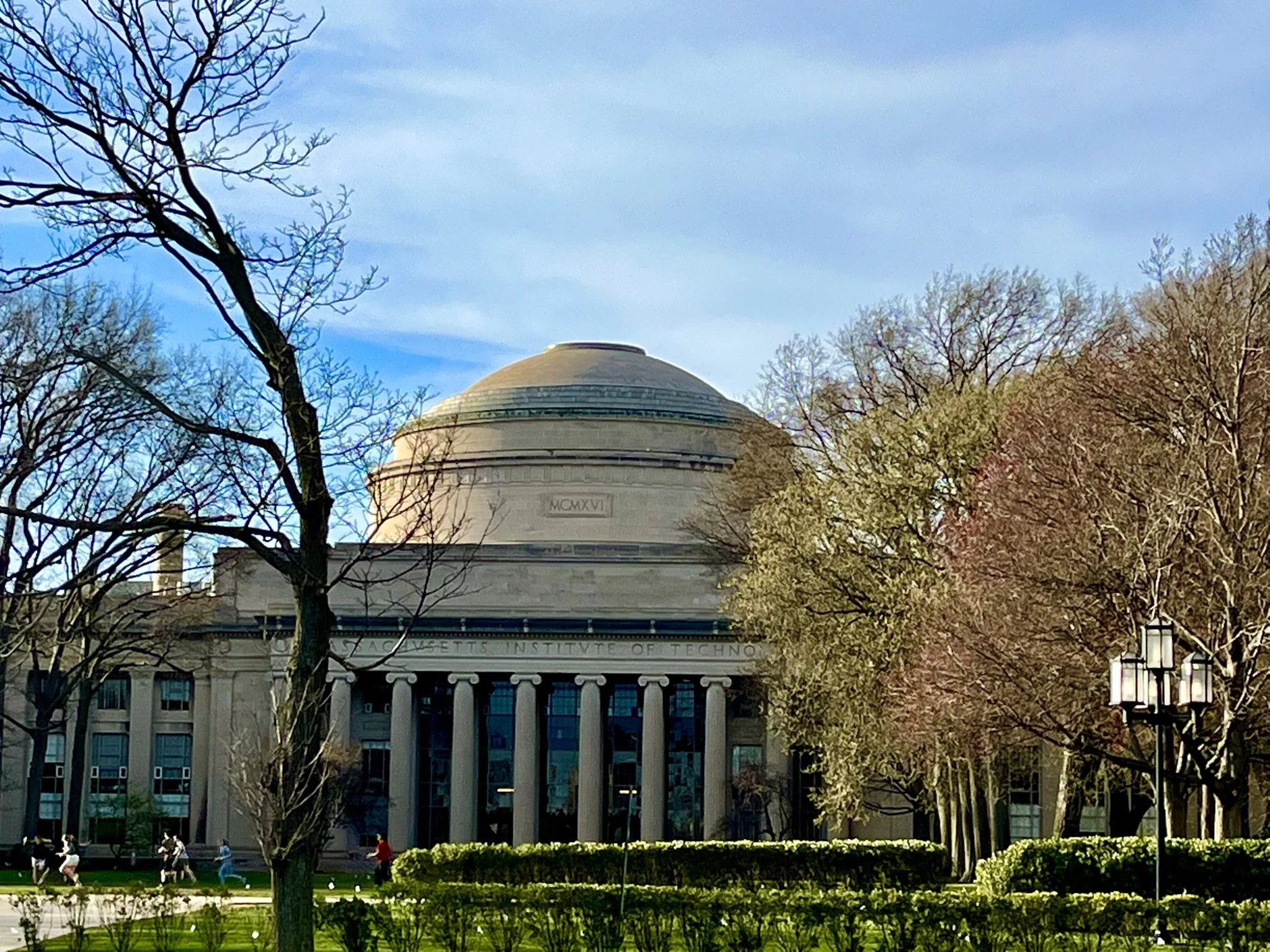
In 1999, the infamous MIT dome got turned into R2D2 as the senior class prank.
Other years it was turned into a lunar module, Pac Man, airplane, firetruck and even turned into the Captain American shield.
I dare you to not smile at the thought of MIT students scheming their class prank.
One of my favorite things is the Smoots measurements.
In the late 50s, an MIT fraternity got the ideas to measure the length of the Harvard Bridge in Smoots.
One of my friends was working on his Ph.D. in robotics at MIT.
Stuart gave me tours of labs and lecture halls.
Each person I met on campus sat at the intersection of intelligence and cleverness.
MIT students have their own unique brand of humor.

Oliver Smoots was a pledge and was made to lay down repeatedly as his length was marked out and painted.
The bridge is 364.4 Smoots and an ear long.
Each year, they are stealthily repainted by the next crop of MIT students.
GETTING THE CALL
Earlier this year I was asked to give a talk on storytelling to MIT Sloan Business School.
I speak to Fortune 500 companies often.
But this would be special - my old stomping grounds!
I jumped two Smoot’s with joy!
Weeks went into my preparations.
I watched Good Will Hunting for the manyth time to picture the lecture hall.
I built personas of the students and faculty to best figure out the right stories to tell.
I leaned hard into storytelling with data and how to challenge the bias that we decide based on data.
Most importantly, I focused on having fun. Because if I had fun, they would have fun.
Speaking at MIT SLOAN
This April, I took my place in front of the iconic black boards and talked to some of the smartest people in the world about telling stories.
And like most of these in-person experiences, magic and a shared experience was created in that room.
I often get the question “How do you know when your story resonates?”
One of the most powerful ways is what is repeated back to you.
As my session ended, a large queue of students gathered.
Each asked questions or shared their own experiences telling stories.
One question stood out.
Carla shared that she tried to embrace storytelling, but often got stuck telling the story that was so clear in her head.
She knew the outcome she wanted. But as soon as she saw the audience, she would focus on the skeptics (often imagined!) and would lose her message.
What resulted was a watered-down story – hard to follow and falling short of its desired outcome.
Feeling nothing like the story she pictured it in her head.
Even wicked smart people struggle with the vulnerability of storytelling.
DON’T FOCUS ON THE OUTLIERS
Have you ever tried to tell a story that didn’t land the way you envisioned?
Particularly when you think there are skeptics mixed in with the broader audience?
Don’t focus on the skeptics and the outliers.
Picture your audience as a bell curve.
Your goal isn’t to tell the story to the edges.
Focus on the majority.
Outliers often need different stories and follow up conversations to sway their thinking.
Something that is much easier after they have already seen the broader audience respond to a message.
It makes them think “What am I missing - I see this differently” and opens the door for a conversation.
If your goal is to communicate solely with the skeptics, then why are you speaking to the larger audience?
STORIES EARN YOU PERMISSION TO TELL MORE STORIES
I often hear people describe the stakes for telling a story as high – that there is one shot to tell a story.
Telling stories earns you permission to tell more stories.
You rarely have one instance to tell a story.
And sometimes one story won’t do everything you’d like.
Your audience may need different stories.
Companies that sell products and services need to tell multiple stories.
Pain points, challenges and how to solve them are tackled throughout different stories.
It’s these specific stories that create the “I’ll have what she is having” feeling in their customers.
Rarely will a company find one story that does all the work they need to influence and inspire action.
They use specific stories for specific audiences to connect them to the desired outcome.
Next time you are telling a story, ask yourself if you are telling it to the majority or the outliers.
Consider if they need the same story and points or different stories.
Define what you want your audience to know, think, do, or feel after your story.
Stand confident in your story and the idea you want to build for your audience.
Not the skeptics.
Experiment with your stories.
Notice what resonates and what doesn’t.
When things don’t land as you hoped, don’t beat yourself up.
As Robin William’s character says in Good Will Hunting, “People call those imperfections, but no, that’s the good stuff.”
Every story that doesn’t get experienced as you want guides the way to the ones that do.
You can mark my Smoots with that.
***
Are you looking to grow storytelling as a core skill in your company? Are you struggling with identifying the different stories to tell to your audience and skeptics?
Reply here for more information on storytelling workshops and advising services for companies looking to internalize and hack the art of storytelling.
Want to receive more articles like this one? Sign up for Brain Food here.