How to Use Sensory Details in Storytelling to Connect, Relate, and Persuade
The Scent of Success
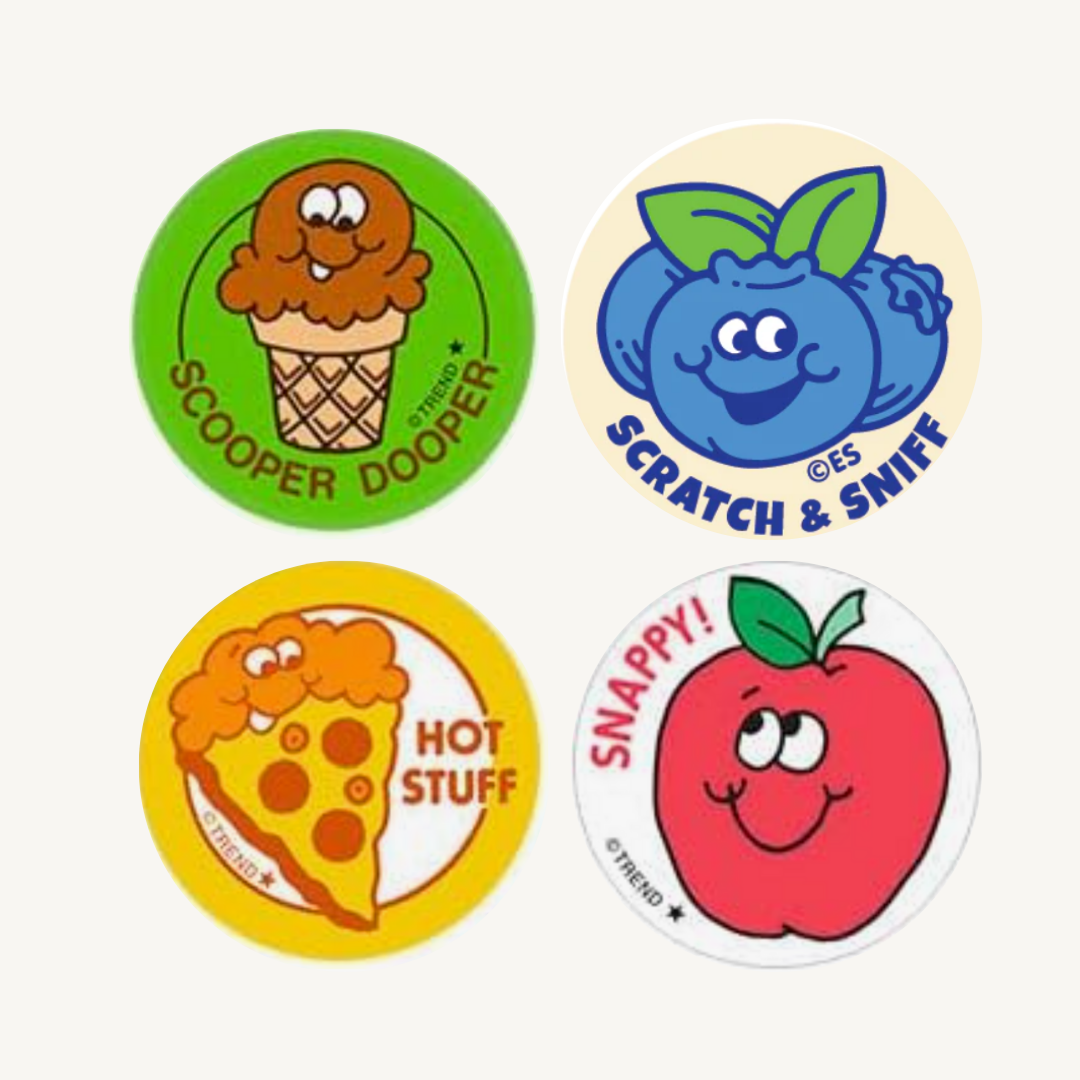
Everything I needed to know about negotiations I learned from my sticker collection when I was seven years old. Each week, my sister, best friend and I would sit with our sticker albums splayed open in our laps.
In case you didn’t know, stickers have a class system, and our negotiations were fierce. Everyone had undesirable stickers—the cheap ones that came in a cereal box or were given to you by the dentist. These were boring and left in the reject pile. We fought for quality. “I’ll trade you this holographic sticker of a unicorn, one of my prized possessions, for your liquid-filled penguin sticker.”
Even the sticker pages were arranged by quality. The tactile stickers made up the top tier. These pages held the fuzzy stickers, the puffy ones, and—my favorite—the iridescent, gel-filled sticker that felt like you were moving oil around with your fingertip. Then came the iridescent, hologram stickers. But the page we spent the most time on was the scratch-n-sniff stickers.
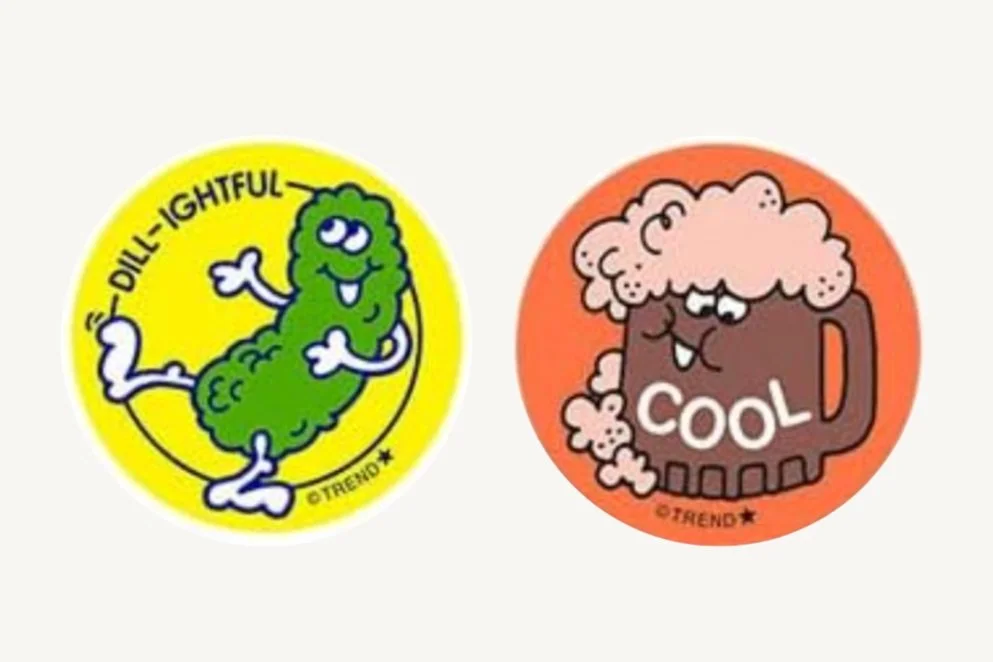
These had an image on them, giving away their smell—a pickle, banana, grape, mug of root beer, ice cream cone, popcorn, or slice of pizza. We scratched them so much that some of the wording rubbed off. We’d play games with our eyes closed to see if we could guess the smell. It was like eating jellybeans and trying to guess the taste. They each smelled OK at best, but the scents left a visceral imprint.
The other day I was scrolling social media and saw the popcorn sticker. I was taken back to those afternoons of negotiating with the splayed sticker albums. The stale buttery smell emerged just from the image. I haven’t sniffed it in many decades, but I could immediately recall the scent from the image.

We used to think that specific regions of the brain and the neurons had specific jobs: like vision, taste, or sound; however, there aren’t boundaries in the brain between senses. Most neurons can carry information for multiple senses. These neurons constantly fire because the brain wants to make predictions and not have to react. (One of my favorite neuroscientists who explains all of this in a relatable way is Dr. Lisa Feldman Barrett)
Smell holds our strongest relationship with memory. We have more than 1000 different receptors for smell. To compare that to the other senses, touch has four and vision has three. It makes sense—our evolution and survival depended on our ability to discern and recall different odors.
Just referring to scents can conjure up what they smell like.
Popcorn at the movie theater
Fresh cut grass
Chlorine in the pool
Smoke just after blowing out a candle
Coffee brewing
Baby powder
A freshly painted room
Newsprint and newspaper ink
Play-Doh
Dill pickles
Woodfire or campfire
The air a few minutes before it rains
Wet dirt
Fresh asphalt
A friend of mine sent me this photo on a recent trip to Dublin.

Can't you smell the leather and dusty old library just by looking at it?
Because smell has the strongest relationship to memory, it also connects you to emotions quickly. There is a reason realtors tell people to bake a batch of cookies before showing their home. The smell of freshly baked cookies takes prospective buyers back to their childhood and what was hopefully a loving home.
Hotels invest in signature scents for their lobbies. Stores like Abercrombie, Victoria's Secret, and Vitamin World use scents to entice you to spend more. Scents fast-track you to emotions, which are the heart of decision-making.
Even the mere mention of the scent can trigger the recall of that scent and associated emotions. If I mention a can of freshly opened tennis balls, you can immediately smell that! But perhaps more important is what tennis balls make you feel. For me, it’s pure joy. A freshly opened can prompts memories of playing with friends and working as a tennis coach.
If you want to influence a group, or help them get unstuck, incorporate the sense of smell. I once said the process we were using was as stale as a middle school locker room. Noses crinkled and people recoiled at the mention. But we updated it!
Leverage smell in your communications with these tips:
Set the context:
Set the scene by describing the smells to help people feel like they are there.
Tap into nostalgia:
Lean into scents that remind people of their childhood and youth.
Connect to shared experiences:
Refer to universal smells like campfires or movie popcorn to connect with the audience and find common ground.
Leverage metaphors:
Say "Something smells fishy," and it indicates something is off. Using scents as metaphors can help connect people to what you want them to feel.
Stimulate Curiosity:
Use intriguing or unusual scents (like burnt rubber) to draw attention.
Lean into the psychology
Want to spark change? Describe fresh, clean scents to inspire action, renewal, and forward movement.
Want to foster trust? Describing someone and including familiar common scents like leather, pine, lemon, clean air, or fresh paper evokes different variations of trust and dependability.
Smell can take us back to a time and place or create an opening that makes us more accepting of an idea. It captures attention, differentiates, and even stimulates thinking.
Don’t overlook this scent of success!