Go Stand on the Sea Wall
How does standing on a seawall help you prepare for a TED Talk?
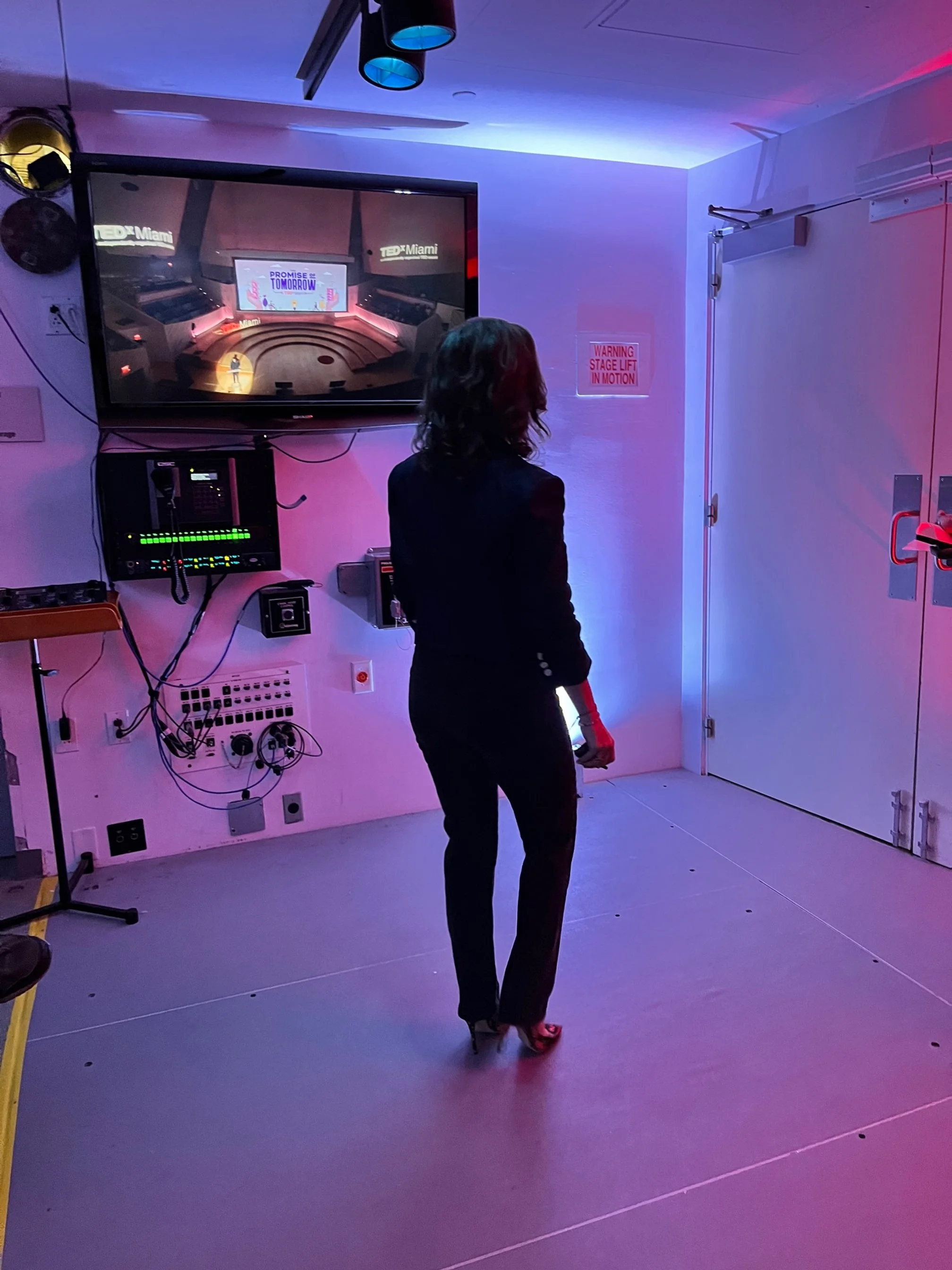
This photo was a year in the making. It’s the final shakeout and last-minute adjustments before Jen Fisher took the stage to give her TEDx Talk in Miami in May. She was backstage awaiting her introduction so she could take her place on the stage shown on the screen above her shoulder.
TEDx talks are funny things. The audience experiences 13 minutes of an interesting idea that feels almost effortless. Yet they have no idea of the months of refinement and the 100+ rehearsals that went into that idea.
I want to take you behind the scenes of Jen’s preparation to give you an idea of the TEDx process. This intentionally won’t cover the topic and contents of her talk – I’ll let you experience the full effect when it is published.
Developing the talk
In June 2022, Jen and I sat together in person. We began by talking about her audience for the talk. TEDx talks always have two. One is the audience in the room for the talk. The other is those watching the recordings. We mapped out the mindset of both audiences and what she wanted them to feel, think, and do after the talk.
Then I asked her questions and listened while she shared ideas, stories, and photos. As she talked, I took notes. The goal was to lay out every possible idea and not edit how or if it would be used at this point. Then we formed an outline for the talk.
Edit, edit, edit!
One question Jen had at the beginning of the process was “How am I going to remember everything?” We intentionally structured the talk by sections. This made it easier to focus on each one instead of remembering a long monologue. It opened with a story that included ideas she would build on throughout. Then she explained the topic, why it was challenging, and the action people could take.
In the months ahead, we created a script for each of those sections. We kept refining it as she tested the concepts in different settings. We cut the talk in half twice. At the second cut, it was immediately clear: “THIS is the talk!” The ideas were tight, built on each other, and it was easy for the audience to follow.
Practicing the delivery
With the talk solid, we focused on the delivery. It always takes experimentation to figure out how to sound conversational onstage. Especially when you practice something so many times. Jen rehearsed with different friends and colleagues. Each week we added gestures, pauses, inflection, and movement. We played with pacing and pitch around the key points. The last step was blocking where to look in the audience, so she didn’t look like she was scanning the crowd.
Go stand on the seawall
Then I gave Jen the crazy assignment. I asked her to stand on the seawall near her home and deliver the talk. This elevated her like she was onstage, and the ocean was her audience. Practicing in front of a laptop doesn’t give you that same open feeling. Standing on top of a seawall makes your body feel exposed. It triggers the same nervous feelings you can get onstage without anything between you and the audience. When you can deliver your talk with the waves crashing in front of you and the seagulls flying overhead, you are ready. This was the moment it all came together for her.
As we rounded the final weeks before her talk, Jen embraced what every speaker must do: stop listening to people’s suggestions...including mine. There is always a point where suggestions don’t make things better, they just make them different. You’ve done the work and can trust yourself.
The final preparation
Part of Jen’s prep included her time and rest. As she describes, she was intentional about her sleep. She said no to more things to make time to practice and focus. She even chose different workouts. As she navigated the emotions leading up to the talk, she increased her journaling. A TEDx is never about a talk, it’s about the journey to it.
A few minutes before I took this photo, we were standing backstage with squeezable stress toys and breath mints. I turned to Jen to give her some final words. She cut me off, looked me in the eyes, and said “I’m good, I’m ready.” She was – she had done the homework and was ready to take the stage.
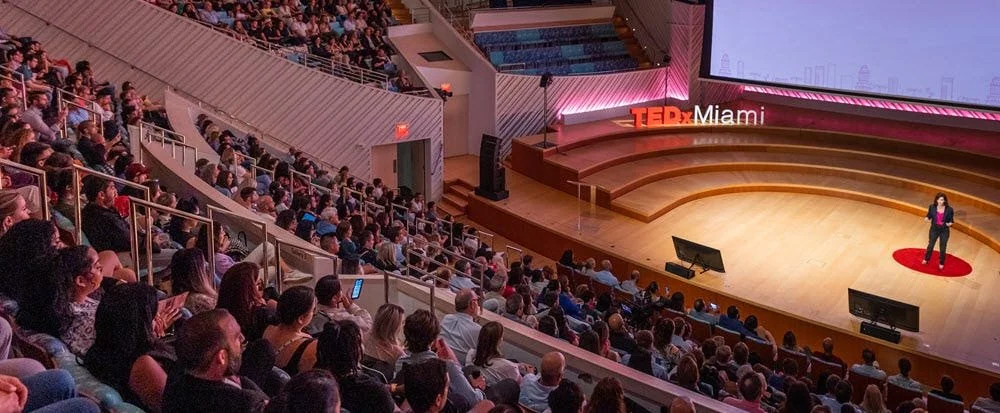
Photo Credit: Odette Photo+Art
An idea worth sharing
All that muscle memory she built from the 100 rehearsals paid off. She not only delivered a moving talk, but she also had fun. She played with the audience in her delivery, adding things that felt right in the moment responding to the energy. They were captivated by what she said and cheered throughout. It may not translate to video, but it is forever memorable to those in the theater.
When people learn about the process for TEDx, they often ask “You do all that work for one talk?” But it’s never one talk. You learn so much about yourself in the process. Your topic and speaking get refined in the process. TED Talks are about having ideas worth spreading. The process helps your ideas flow.
I’m not proud of you, I’m happy for you
Someone said to me, “You must be proud of Jen.” I’m not. That phrase feels patriarchal and implies ownership. She worked incredibly hard to realize this dream and conquer fears in the process. Many people who give TEDx don’t work on it for a year. They don’t put in the effort to tighten the talk or test it with 100 practice runs. She did. Because of that, she’s already been getting messages from people there on how touched they were by her talk.
I’m so happy for her. Her talk is personal, vulnerable, hopeful, and definitely an idea worth spreading.