Behind The Scenes
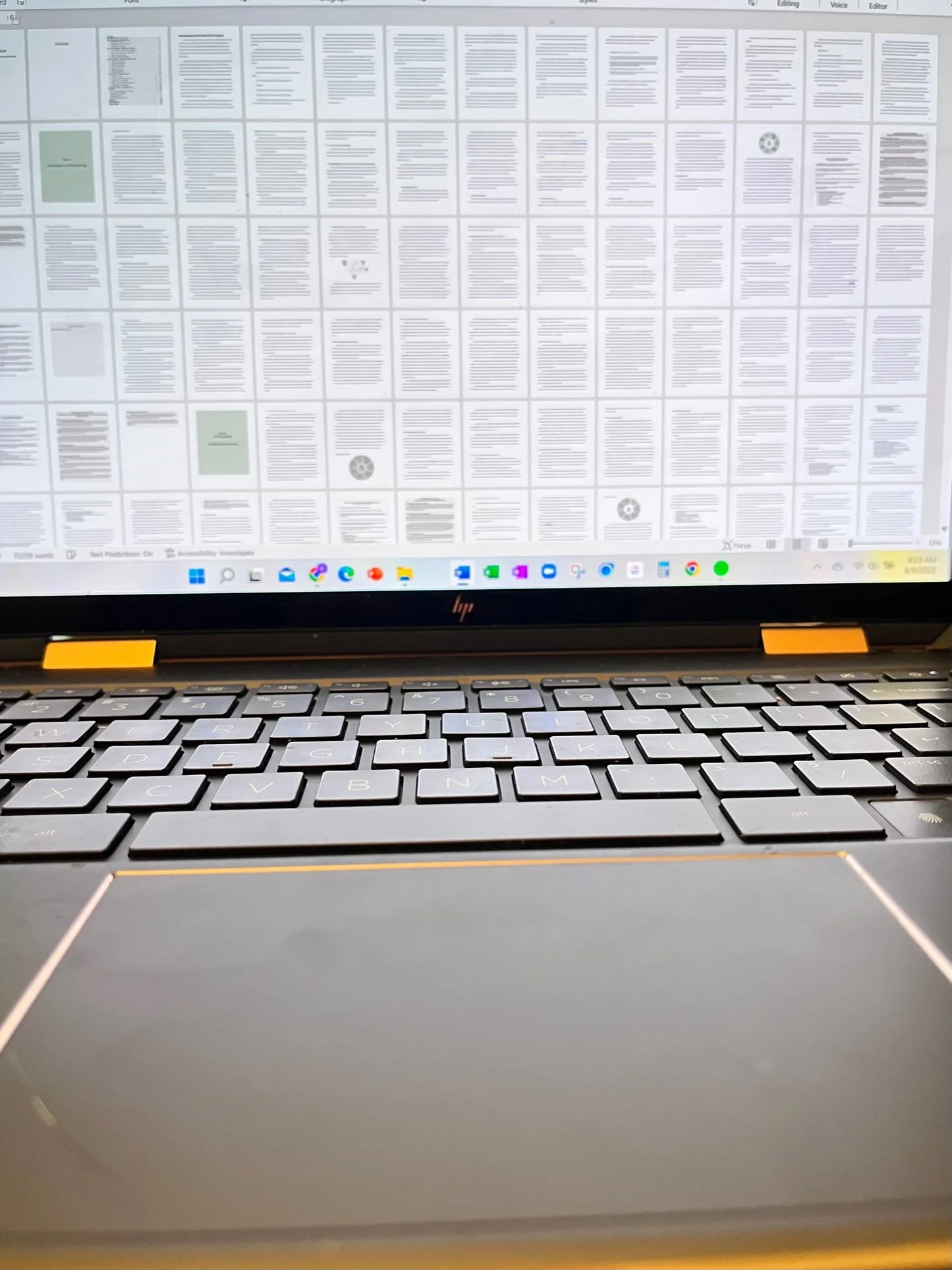
A draft of my book!
Come behind the scenes as I share tips on how to find and develop stories.
I am in my final weeks before I submit my book. I know I previously mentioned submitting a version at the end of May. That was a draft for content review. This is the official submission for copy editing. There will be other submissions to finalize copy editing and approving the final layout. Each marches the book forward to publishing in 2023. But this one is THE big submission.
There are a few stories I want to either swap out or improve before I submit it. They aren’t quite illustrating the point I want. Or I can lean further into them to create more impact. I am working them through my storytelling process. At the same time, I also have three other stories that I need to create for keynotes and articles. I thought I would share some behind-the-scenes tips for developing these stories. These same tips apply whether you are preparing a presentation or story.
Time Is Your Friend
I can’t emphasize this enough. I’ve made sure I had a good four weeks to work on these various stories. So often, the way you see the story in your head isn’t the way it lands on the page. Stories need time to breathe and to be revised. If you don’t leave yourself time to prepare your stories, you will feel stressed and struggle with creative thinking. Leave yourself time!
Trust The Process
In the past several weeks I’ve had thoughts that will sound familiar to you:
“I have no idea where I am going to find these stories.”
“Why can’t this story work?!”
“I don’t have another story in me.”
It’s hard when you don’t know the story you will tell. Especially when you don’t even have a fragment of an idea. But this is the step that always precedes the breakthrough. I know to trust the process. I don’t know what the story will be or where I will find it. But I know I will find it. Any time the discomfort climbs I tell myself, “Trust the process.” It’s never failed me.
Go Find Stories
Unfortunately, stories aren’t delivered to your home through Amazon Prime. I go for walks, talk to people, read articles, look at pictures, and dig into the history of objects or companies. I intentionally put things in front of me while asking the question, “What is a story that helps me build the idea of (insert takeaway idea)?”
My go-to habit that frequently yields the winning idea: taking a walk while listening to music or a podcast. Half the time I zone out and stop listening, but an idea pops into my head. Or I hear someone describe something on a podcast and it triggers a memory or different idea. Don’t expect home delivery, go forth and seek your stories. Put things in front of your path. Notice your reactions and thoughts. See what memories are triggered.
Talk To Someone
When I hit a wall, I have to go have conversations. The process of talking out what isn’t working helps me figure out the path forward. Sometimes different thoughts are triggered. Having someone ask you something simple like “What are you trying to do here?” can often help cut right through the noise and confusion to clarity.
Stop Building PowerPoint Quilts
Are you guilty of piecing together favorite slides from existing PowerPoint presentations to create a new one? Don’t do this. Map out what you want for your audience. Each time I do a keynote, I step back and think about what I want that audience to know, think, feel or do differently. I use that to guide what I create. Often, I start outlining with pen and paper. Or creating slide headers with different Post-its to experiment with the order. Stop defaulting to what you have. Get clear on what you want to communicate before you ever open PowerPoint.
Leave It Unfinished
Whether developing a story or a keynote, I put together an outline or a first draft. Then I leave it intentionally incomplete and walk away. The brain hates for things to be incomplete, and it keeps working in the background. When I come back a day later, I always have new thinking to help move it forward.
Does It Pass The Test?
When I am working on big stories or keynotes, they get tested many times. I want to understand the audience’s experience and interpretation of the story. Do they reach the takeaway I want them to have? Does it fall flat? Sometimes I am too close to the stories to see where their experience is different from what I want.
I have had seven test readers for my book. Their perspective lets me see what the average reader will think when they get the book. It helped me recognize a few stories to make stronger. This is where giving yourself time to develop stories is key. Part of that goes to finding and developing the stories. The other part goes to testing and refining. If nothing else, read your story out loud. The wobbles become clear and it’s easy to see where to tighten.
So – where did I end up? I have found and revised all but one story.
Time to go take another walk!
***
We have a few spots available for storytelling workshops this fall. If you are looking to help your team learn where to find stories and how to tell them, we can help!
Want to receive more articles like this one? Sign up for Brain Food here.
Follow along with my process of publishing my book or catch up on previous book writing blog posts.